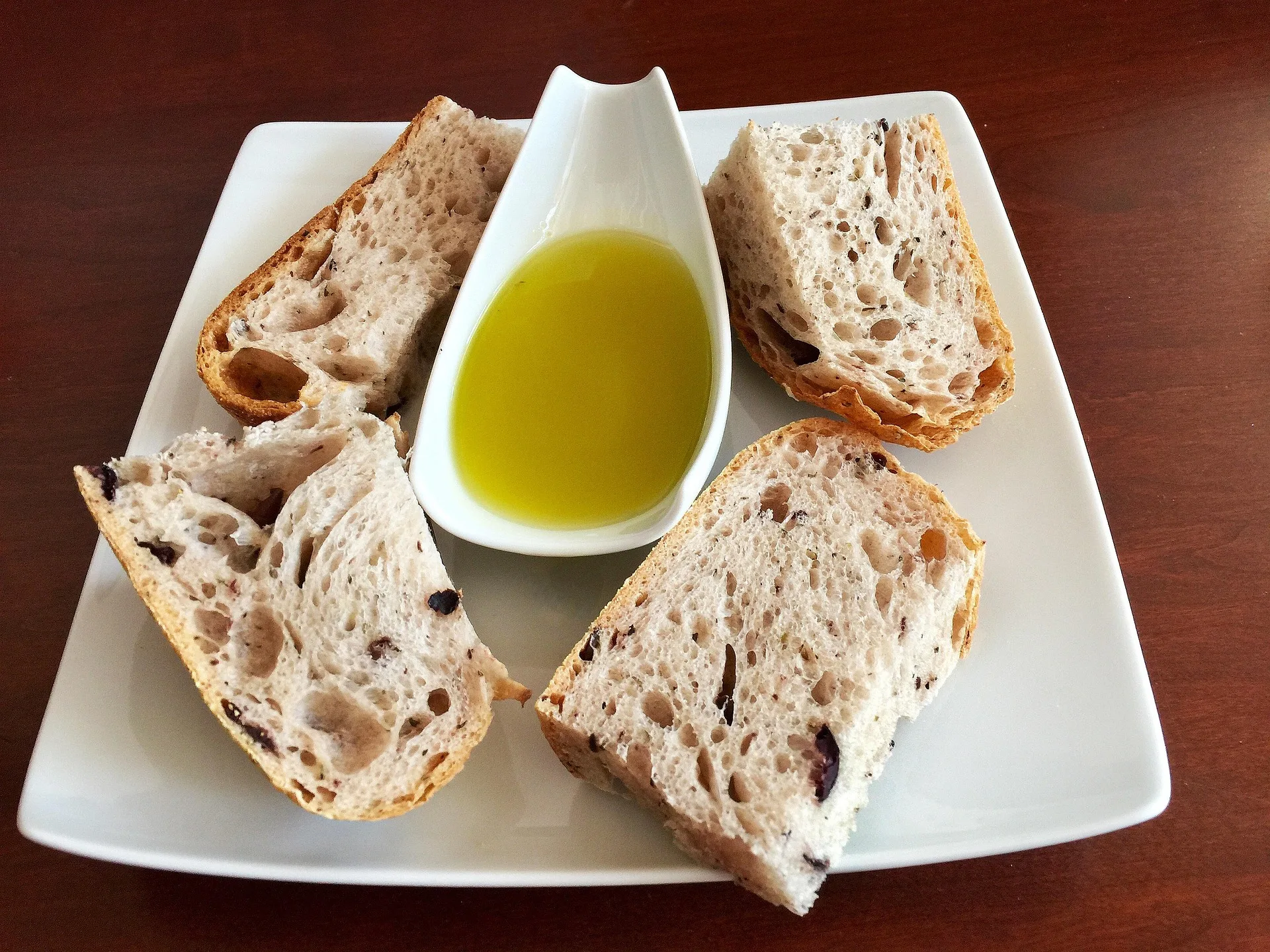
Fez — Across Morocco, breakfast often begins with the same simple scene: fresh khobz torn by hand, a shallow plate of extra virgin olive oil in the center, and everyone dipping from the same pool of gold. At home, in cafés, in countryside villages and big-city apartments, bread and olive oil remain one of the country’s most constant food pairings.
That gesture — dipping bread into raw olive oil — is not just cultural. It is a small, daily expression of the broader Mediterranean way of eating, and part of the reason researchers keep linking this diet to better aging and longer, healthier lives.
Bread, olive oil, and a Moroccan morning
In a classic Moroccan breakfast, the spread can include several types of bread: round khobz baked in the neighborhood oven, msemen or rghaif folded in layers, sometimes harcha or baghrir. On the table, small dishes appear with olives, honey, amlou, and always olive oil (“zit zitoun”) ready to be scooped up with a piece of bread.
The rule is simple: pour, dip, eat. In many families, that plate of oil returns again at lunch and dinner, next to stews or grilled vegetables. The habit is so ingrained that when bread is served without olive oil, it can feel like something is missing.
This is not unique to Morocco. Across the Mediterranean, from southern Spain to Greece, pieces of bread are dipped into fresh oil in much the same way. The gesture crosses borders, even if each country brings a different bread and a different story to the table.
A Mediterranean ritual with serious science behind it
The traditional Mediterranean diet is built on a few pillars: plenty of vegetables, fruits, legumes, nuts, whole grains, modest amounts of fish and dairy, little red meat — and extra virgin olive oil as the main fat.
Decades of research have linked this pattern, especially when rich in olive oil, to a lower risk of heart disease and stroke, better blood pressure control, healthier cholesterol levels, and reduced inflammation.
People at high cardiovascular risk who follow a Mediterranean diet with extra virgin olive oil have around 30% fewer major cardiovascular events than those on a low-fat diet.
Olive oil sits at the center of this pattern not just as a source of calories, but as a kind of daily “micro-treatment” for the body — especially when it is extra virgin and eaten raw, exactly the way Moroccans use it with bread.
What makes extra virgin olive oil special
Extra virgin olive oil is mechanically pressed, not refined. That means it keeps more of the compounds that make it both flavorful and protective.
First, it is rich in monounsaturated fat, mainly oleic acid, which is associated with higher “good” HDL cholesterol, lower “bad” LDL cholesterol, and better overall heart health.
Second, and crucial for aging, extra virgin olive oil contains a dense mix of antioxidants and polyphenols — including hydroxytyrosol, tyrosol, oleuropein, and oleocanthal. These compounds help neutralize free radicals and calm chronic low-grade inflammation, two processes that are tightly linked to how fast our cells age.
Recent reviews note that olive oil rich in these phenolic compounds is associated with better cardiovascular markers, improved blood vessel function, and lower levels of oxidative stress in older adults.
Anti-aging from the kitchen, not the bathroom
When people talk about “anti-aging,” they often think of creams and treatments. Yet some of the most effective support for healthy aging happens through what is on the plate.
Olive oil touches several systems at once. Its antioxidants help protect cells, including the mitochondria that power them, from the wear and tear of daily life. Its fats and polyphenols support the heart and blood vessels, reducing the strain that builds up over years. Research on Mediterranean-style diets suggests a protective effect on the brain as well, with slower cognitive decline and lower rates of certain neurodegenerative diseases for those who maintain a Mediterranean diet.
On the surface, olive oil also supports the skin. Vitamin E and healthy fats help maintain the skin barrier and limit dryness, one reason traditional Moroccan beauty routines often include olive oil alongside argan oil and other natural products.
None of this makes olive oil a magic potion. It is calorie dense and works best when it replaces less healthy fats within an overall balanced diet. But as part of daily meals, especially in the raw form Moroccans favor, it adds up to a gentle, long-term form of care.
Why dipping bread is a clever way to eat it
Additionally, the Moroccan habit of pouring olive oil into a small plate and sweeping it up with bread turns out to be beneficial.
Because the oil is not heated, more of its delicate polyphenols and aromas remain intact. Used this way, it keeps its full character and much of its protective potential. Combined with bread — especially when the bread is made from whole or semi-whole flours — it helps slow digestion, moderating the pace at which sugars enter the bloodstream and keeping energy steadier.
At a typical table, olive oil rarely appears alone. It shares space with olives, raw or cooked vegetables, sometimes nuts, and fresh fruit. All of these match the Mediterranean pattern that scientists associate with longevity and lower rates of chronic disease.
A quiet explanation for a healthy reputation
Moroccans rarely dip bread into olive oil while thinking about studies or biomarkers. They do it because that is how their parents and grandparents ate, because it tastes right, and because it turns simple ingredients into something satisfying.
Seen from the outside, however, that same gesture helps explain why Mediterranean populations have long held a reputation for aging well. A small plate of extra virgin olive oil, shared over bread and conversation, is not a trend or a prescription. It is a daily practice that blends culture, pleasure, and physiology — and one of the reasons the Mediterranean way of eating keeps drawing attention from the rest of the world.