
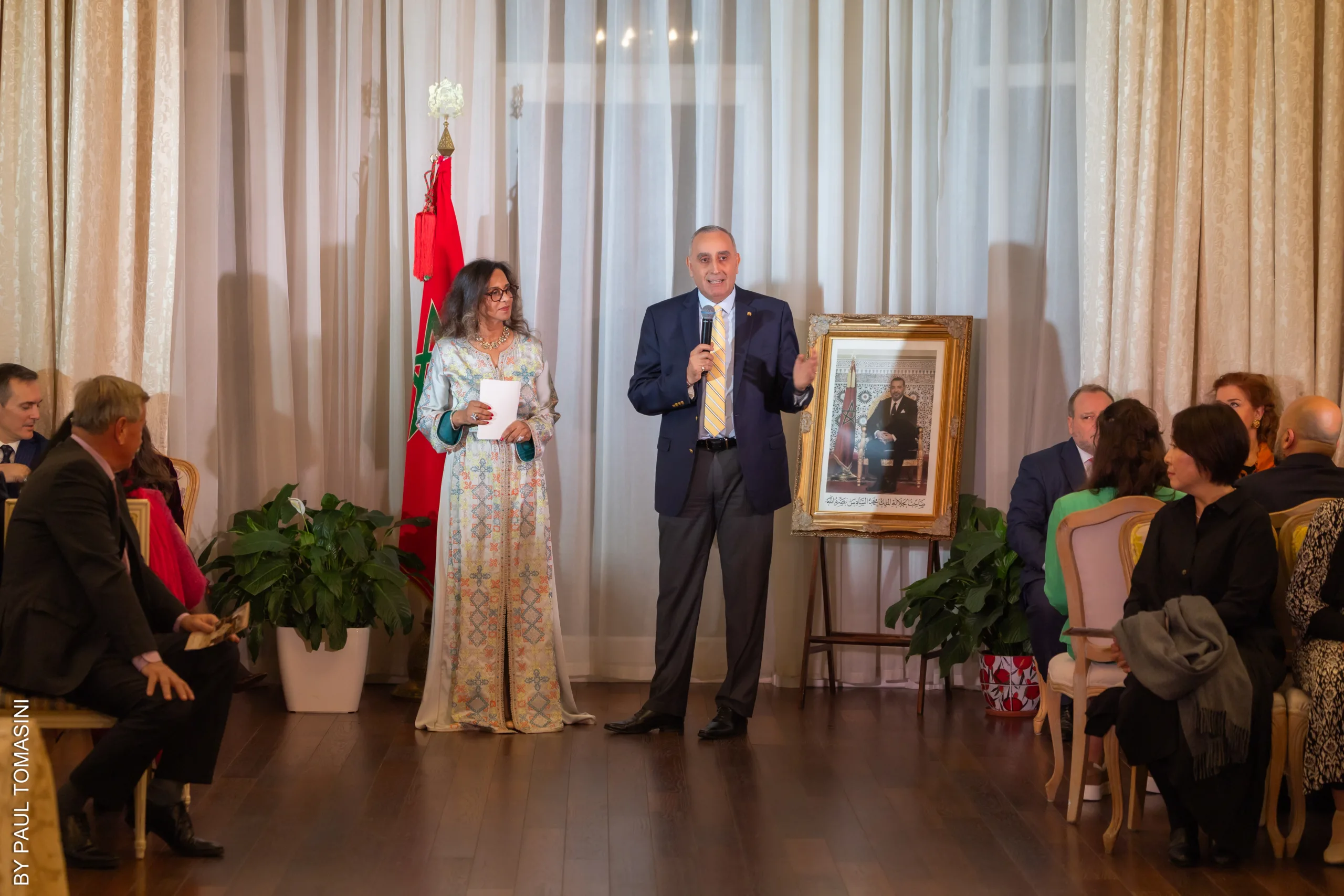
Fez — This week’s Oriental Fashion Show in Baku turned into a celebration of the Moroccan caftan after the garment was added to UNESCO’s list of intangible cultural heritage.

Speaking at the event at the Moroccan ambassador’s residence, Aicha Embarch (the ambassador’s wife) explained what makes the caftan different from other long dresses. 

She described it as a full-length outfit that “covers the whole body, but at the same time follows the lines in a very elegant way.” On the runway, that idea appeared in rich fabrics, structured cuts and detailed embroidery that stayed faithful to the traditional while leaving room for modern styling.

UNESCO recognition behind the runway

In his speech, Ambassador Mohamed Adil Embarch reminded the audience that the fashion show was taking place on a historic night. He announced that the Moroccan caftan had just been registered on UNESCO’s heritage list, a moment he said people in Morocco had been “closely watching” and celebrating. 

He called the recognition a tribute to “hundreds of thousands of designers, seamstresses, embroiderers, artisans” who have, for centuries, kept Moroccan women elegant in this emblematic outfit.

The applause that followed underlined how strongly the caftan is tied to national pride, even when it appears far from home.

Designers carrying the caftan beyond Morocco

On the runway, the evening showed how the caftan now circulates across regions and styles. The Bahrain-based label Naseem Al Andalos, known for its luxurious Moroccan-inspired gowns for Gulf clients, sent out pieces that blended traditional Moroccan cuts with Gulf tastes in fabrics and embellishment. Silks and long flowing layers showed the caftan as a bridge between Maghreb and Gulf wardrobes.

Moroccan designer Wafa Idrissi, who has built a reputation for sharp, contemporary caftans, presented slimmer silhouettes, lighter materials and precise detailing. Her pieces kept classic elements such as sfifa and hand embroidery, but shifted shapes toward red-carpet eveningwear. Together, they showed how the caftan can move from Rabat to Manama to Baku without losing its roots.

‘Not just a traditional garment’

Hind Joudar, founder of the Oriental Fashion Show and long-time promoter of Moroccan dress, used her remarks to place the evening in a longer timeline. She said working on the caftan meant working on “a historical identity that we have preserved in Morocco and developed over several centuries,” and thanked the audience for sharing what she called a “wonderful and historical event” tied to the UNESCO inscription.

Her words echoed the spirit of the show: the caftan as more than fabric and cut, but as a carrier of memory and shared aesthetic codes.

A shared stage for culture and diplomacy

Beyond the clothes, the evening strengthened ties between Morocco and Azerbaijan by putting Moroccan heritage at the center of a cultural program in Baku. The mix of diplomatic protocol, speeches and fashion created a setting where the caftan could be seen both as an everyday garment and as a piece of world heritage.

By the time the models left the stage, one thing was clear: the Moroccan caftan now speaks in many languages and cities, but its story — crafted by generations of artisans — remains unmistakably Moroccan.