Fez — Video games in 2025 did not feel like an industry chasing trends. They felt like a medium settling into itself. After years dominated by technical postmortems, bloated worlds, and cautious design, this was a year where games trusted players again — with difficulty, with ambiguity, and with time.
Rather than relying on scale alone, many of the year’s most compelling releases focused on ideas: systems that taught you how to think differently, worlds that revealed themselves slowly, and stories that lingered long after the controller was set down.
These were not always comfortable games, nor always generous ones. But they were memorable, distinctive, and often quietly ambitious.
Here are the 13 video games that defined 2025.
1. ‘Blue Prince’
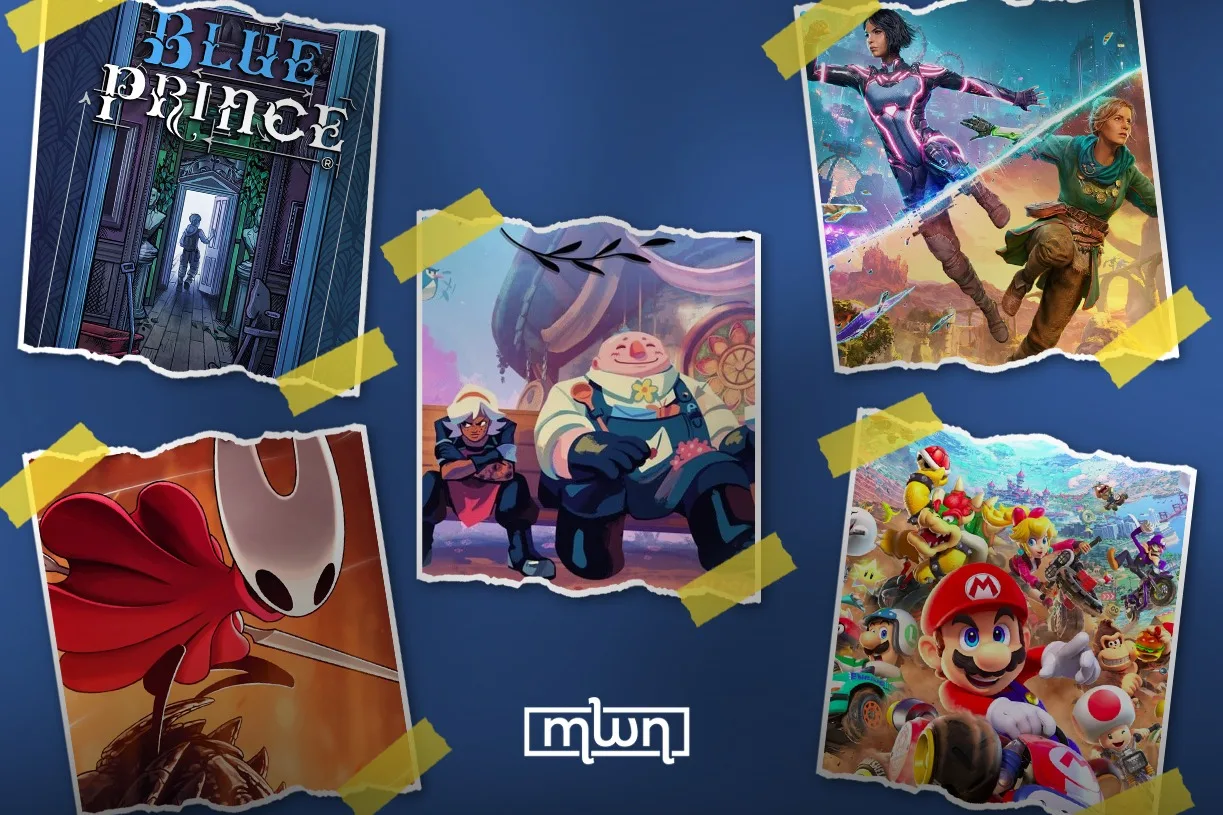
At first glance, Blue Prince appears deceptively modest: a young man, a strange inheritance, and a mansion that rearranges itself every day. In practice, it becomes one of the most absorbing puzzle experiences in years. Every room you choose to build teaches you something — about the house, about its former inhabitants, and about how systems quietly shape behavior. Progress is slow, knowledge accumulative, and solutions feel earned rather than given. By the time you reach its deeper mysteries, the game has trained you to think like an architect, a detective, and a historian all at once. It is elegant, patient, and relentlessly clever.
2. ‘Hollow Knight: Silksong’
Silksong is a game that demands commitment. Its world of Pharloom is hostile, decaying, and often cruel, filled with enemies designed to exhaust both reflexes and resolve. Progress comes through persistence, mastery, and repeated failure. But in return, the game offers moments of genuine wonder: sudden access to forgotten areas, bosses that feel impossible until they suddenly are not, and discoveries that feel uniquely personal. Its difficulty can be unforgiving, but its beauty and sense of scale reward those willing to endure it.
3. ‘Silent Hill f’
By relocating the series to 1960s Japan, Silent Hill recontextualizes familiar horror into something newly unsettling. Fog, monsters, and puzzles remain, but they are infused with folklore, social repression, and gendered violence. The result is a game that feels both recognizably Silent Hill and quietly radical in its themes. It is not interested in nostalgia. Instead, it uses the series’ language to explore rage, shame, and inherited trauma, making it one of the most intellectually unsettling horror games in years.
4. ‘The Seance of Blake Manor’
Part detective story, part folk horror meditation, this slow-burning mystery rewards attention and patience. Set in a remote Irish hotel at the end of the 19th century, the game gradually reveals a story shaped by class, colonialism, and belief. Clues are subtle, dialogue layered, and supernatural elements unsettling rather than sensational. It trusts the player to connect dots without constant guidance, resulting in an experience that feels literary, atmospheric, and deeply considered.
5. ‘Mario Kart World’
Nintendo’s flagship racing series took a confident step forward by connecting its tracks into a shared open landscape. While the core racing remains as joyful and chaotic as ever, the new structure encourages exploration, discovery, and shared play beyond individual cups. It feels designed not just for competition, but for families, friendships, and longevity — a reminder of Nintendo’s unmatched understanding of communal fun.
6. ‘Consume Me’
Consume Me is an uncomfortably funny game about being a teenager in the early 2000s, obsessed with dieting, grades, popularity, and parental approval. Its mechanics turn everyday pressures into systems to be managed: arranging food on a plate, scheduling social time, enduring awkward conversations. Beneath its absurd presentation lies a sharp critique of how control and anxiety shape adolescence. It is silly, painful, and unexpectedly tender.
7. ‘Clair Obscur: Expedition 33’
Extravagant, melancholic, and unapologetically French, this RPG follows a group of doomed travelers attempting to stop an artist who erases entire generations once a year. It is melodramatic and occasionally indulgent, but its ambition is undeniable. The game blends striking art direction with themes of inevitability, resistance, and hope, carving out a distinct identity in a genre often afraid of emotional excess.
8. ‘Death Stranding 2’
Hideo Kojima’s sequel does not attempt to explain itself so much as expand its mood. Set amid vast, desolate Australian landscapes, it deepens the original’s themes of connection and isolation through eccentric storytelling and refined traversal mechanics. Its narrative remains opaque, but its world-building is hypnotic, inviting players to exist within it rather than conquer it.
9. ‘Ghost of Yotei’
This samurai action game makes no attempt to subvert genre expectations — and succeeds precisely because of that confidence. Sword duels, revenge arcs, tranquil moments in nature, and beautifully composed vistas combine into an experience that is elegant and emotionally accessible. It is not complicated, but it is expertly made, offering refined entertainment without pretension.
10. ‘Despelote’
Set during Ecuador’s journey to the 2002 World Cup, Despelote uses football as a lens to explore childhood, memory, and national identity. Rather than focusing on competition, it emphasizes atmosphere, family life, and the quiet excitement of shared moments. It is gentle, personal, and refreshingly unconcerned with spectacle.
11. ‘The Alters’
A survival game that becomes a meditation on identity, The Alters forces its protagonist to clone himself to survive an alien planet. Each version reflects a different life path, leading to conflicts that are philosophical rather than mechanical. Managing resources becomes inseparable from managing regret, making the experience unusually thoughtful.
12. ‘Split Fiction’
This cooperative adventure constantly shifts genre, tone, and mechanics as two writers navigate each other’s imagined worlds. Its success lies not just in creativity, but in how it requires communication and patience between players. It turns cooperation into both a narrative and mechanical necessity.
13. ‘Wanderstop’
Gentle and restorative, Wanderstop reframes play as care. Running a teashop in a forest, engaging in conversation, and making drinks becomes a quiet meditation on burnout and recovery. It offers no urgency, only presence — and in doing so, stands out as one of the year’s most emotionally generous games.
As an industry recalibrates, the best games of 2025 showed that confidence no longer comes from excess. These titles succeeded because they trusted players with complexity, patience, and feeling — proof that video games, at their best, remain one of the most expressive cultural forms available.