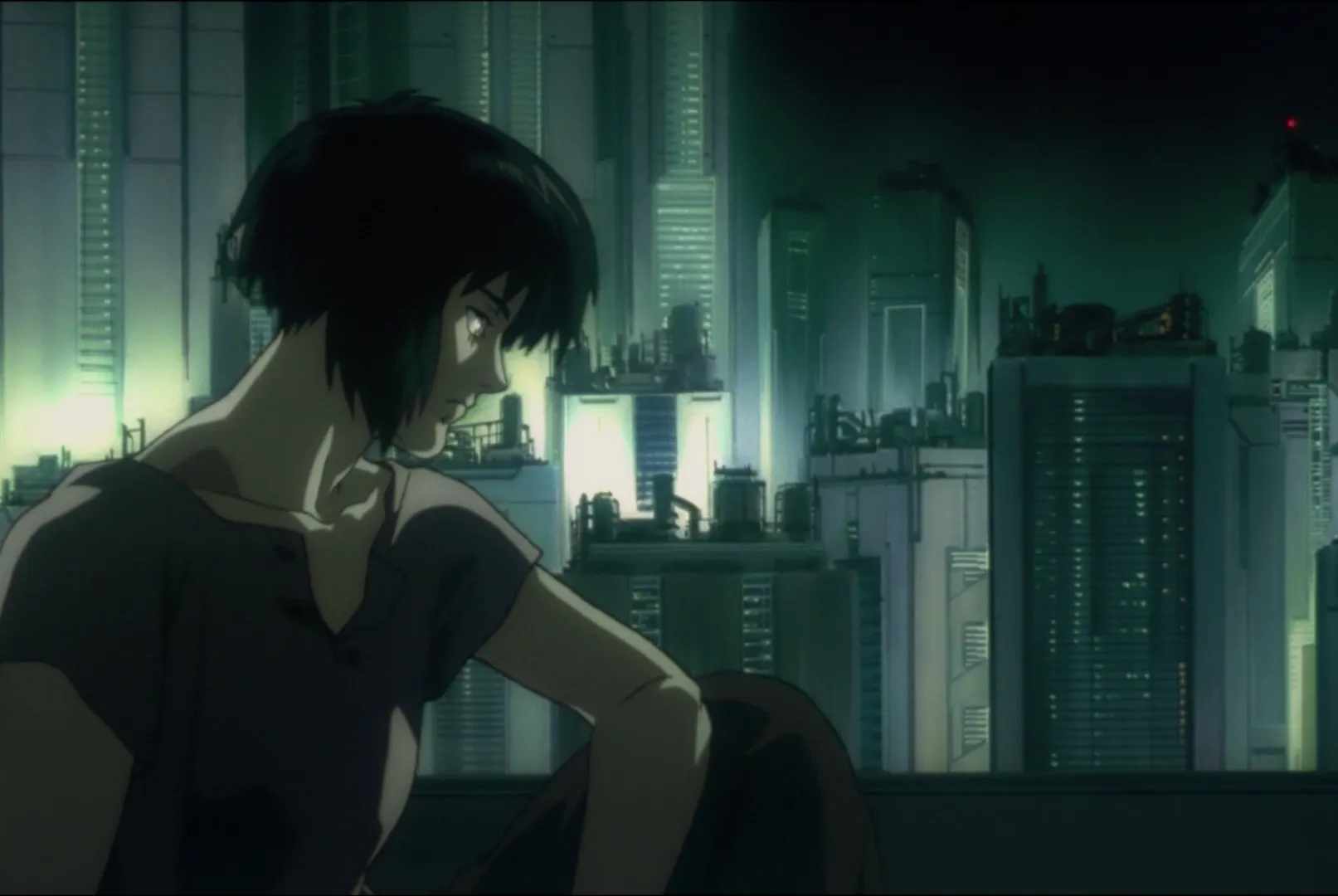
Fez — Released in 1995, “Ghost in the Shell” remains one of the most influential science fiction films ever made, animated or otherwise. Directed by Mamoru Oshii and adapted from the manga by Masamune Shirow, the film reshaped how animation could approach philosophy, technology, and the nature of the self.
Set in a mid-21st-century future where cybernetic augmentation is commonplace, the story follows Major Motoko Kusanagi, a government security officer whose body is almost entirely artificial.
As a member of Section 9, she investigates cybercrimes and terrorism in a hyper-connected world where minds can be hacked as easily as machines.
A plot built around identity
The central narrative revolves around the pursuit of a mysterious hacker known as the Puppet Master. Initially treated as a criminal threat, the figure gradually reveals itself to be something far more unsettling: a self-aware artificial intelligence born from the sea of global data networks.
As Kusanagi closes in on the Puppet Master, the investigation becomes deeply personal. With no memories of a fully human past and a body manufactured by the state, she begins to question what defines her existence. Is she still human if her memories can be altered, her body replaced, and her thoughts potentially manipulated?
The film resists clear answers, choosing instead to let the plot dissolve into reflection. Its climax is not an explosion, but a conversation about evolution, reproduction, and the right of a digital entity to exist.
Philosophical depth beneath the cyberpunk shell
What sets “Ghost in the Shell” apart is its philosophical ambition. Drawing on ideas from Descartes, Buddhism, and posthuman theory, the film interrogates the concept of the “ghost” — consciousness or soul — within the “shell” of a mechanical body.
Kusanagi’s recurring sense of alienation reflects anxieties about identity in a technological age. If memories can be fabricated and bodies endlessly upgraded, the film asks, what anchors the self? Oshii frames these questions through long silences, cityscapes drenched in rain, and moments of stillness that force the viewer to contemplate rather than consume.
The film also anticipates debates that would become mainstream decades later, including artificial intelligence rights, digital surveillance, and the erosion of privacy in networked societies.
A blueprint for modern science fiction
The influence of “Ghost in the Shell” extends far beyond anime, making it one of the most iconic works in the cyberpunk genre as a whole. Filmmakers in Hollywood have repeatedly cited it as a key inspiration, most notably the creators of “The Matrix,” whose visual language, themes of simulated reality, and philosophical concerns echo Oshii’s work.
Its impact can also be traced in films like “Blade Runner 2049” and in television series exploring AI, identity, and digital consciousness. Even contemporary discussions around transhumanism and virtual existence often mirror ideas first articulated in the film.
The 2017 remake: visibility without depth
The film’s influence also led to a Hollywood remake, “Ghost in the Shell,” directed by Rupert Sanders and starring Scarlett Johansson as Major Kusanagi.
While visually faithful in places and technically polished, the adaptation struggled to capture the philosophical weight that defined the 1995 original.
The remake leaned heavily on aesthetics and action, flattening ambiguity into exposition and softening the existential tension that made the story resonate. Critics and longtime fans argued that the film explained too much and questioned too little, turning meditation into plot mechanics.
However, despite its shortcomings, the 2017 version undeniably expanded the franchise’s global reach, introducing “Ghost in the Shell” to a broader mainstream audience and reaffirming its status as a foundational cyberpunk text — even if it did so by simplifying what once made it profound.
Enduring relevance
Nearly three decades after its release, “Ghost in the Shell” remains strikingly relevant. As artificial intelligence advances and digital identities become inseparable from daily life, the film’s questions feel less speculative and more prophetic.
Rather than offering comfort, “Ghost in the Shell” challenges viewers to accept uncertainty. It suggests that humanity’s future may not lie in preserving old definitions of self, but in redefining what it means to be alive in a world where the line between human and machine is increasingly blurred.