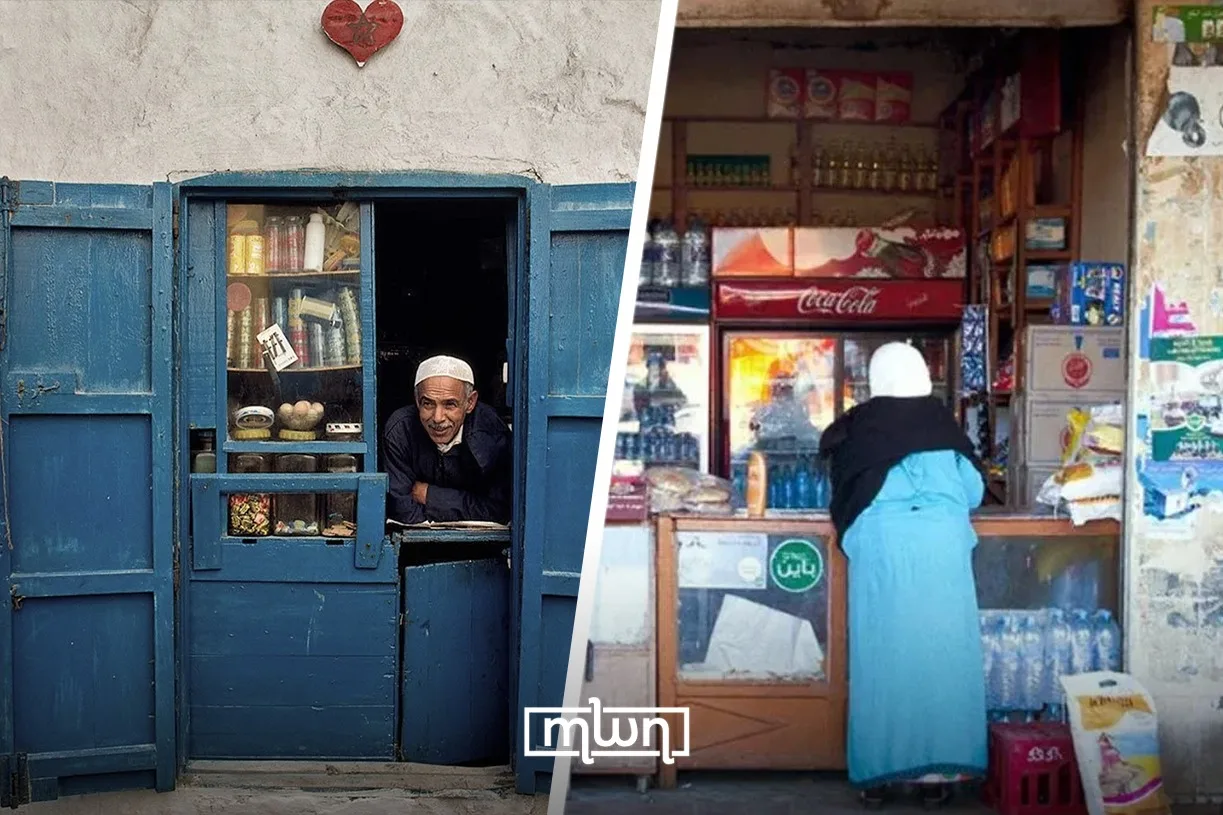
Fez — The Moroccan hanout is one of the country’s most familiar institutions, but calling it a corner shop does not fully explain what it does.
It sells bread, milk, eggs, sugar, tea, cigarettes, phone credit, bottled water, soap, biscuits, and the emergency garlic someone forgot before lunch. But the hanout also carries a quieter economy built on memory, trust, and daily dependence.
In many neighborhoods, “moul l’hanout” knows who buys what, who pays at the end of the month, whose child was sent with a coin, and which family needs an item before payday. The shop is small, but its social reach is large.
Traditional retailers still hold a major place in Morocco’s consumer market. A Boston Consulting Group report on African retail said traditional retailers account for 82% of sales in Morocco, and that 90% offer credit, one reason they remain resilient despite the expansion of modern chains.
The credit book behind the counter
The most important object in many hanouts is not the fridge or the scale. It is the shopkeeper’s notebook.
Inside it, the shopkeeper writes names, amounts, and small debts: bread, milk, oil, flour, diapers, cigarettes, detergent. For many families, this informal credit system helps cover the gap between salary, daily expenses, and sudden need.
A supermarket can offer discounts, bright aisles, and wider choice. But it rarely lets a customer say, “Write it down, I will pay you later.” The hanout does.
That system depends on proximity. The shopkeeper is not lending to an anonymous consumer. He is dealing with neighbors, regulars, relatives of regulars, and people he sees every day. Credit becomes possible because the relationship is continuous.
This hidden economy is not always easy. Shopkeepers also carry risk. Some customers delay payment, disappear, or accumulate more debt than the shop can absorb. But the practice survives because it answers a real need that formal retail does not always meet.
A small shop with big social functions
The hanout is also a neighborhood information desk. People stop to ask whether the plumber passed by, whether someone has moved out, whether a road is blocked, or whether a missing child was seen nearby.
This does not make the shopkeeper a gossiper by profession. It makes him a witness. His position at street level gives him a daily view of neighborhood rhythm: who leaves early, who returns late, who is new, who is sick, and who has not been seen in days.
In many streets, the hanout also provides a soft form of security. Children are sent there alone because parents know the shopkeeper. Women may choose one shop over another because it feels safer or more respectful. Elderly people depend on nearby shops because walking to a supermarket is not always possible.
In this sense, the shop is part and parcel of the neighborhood’s nervous system. It notices small changes before institutions do.
Why the hanout still survives
Morocco’s retail landscape has changed rapidly in recent years, with chains such as BIM, Marjane, Carrefour, Supeco, and Kazyon expanding across cities and smaller towns. Yet the hanout remains hard to replace.
Part of that resilience is practical. A hanout is close. It is open early, often closes late, and allows people to buy in tiny quantities: one egg, one yogurt, one dirham of parsley, a few slices of cheese, a single sachet of shampoo.
This matters in households where budgets are planned day by day. Modern retail rewards bulk buying, car access, and planned shopping. The hanout serves interruption, shortage, and last-minute life.
Government figures cited by trade sources have estimated Morocco’s traditional grocery stores at around 45,000, generally small and often managed by one person.
Other recent market estimates put the wider number of neighborhood convenience shops much higher, showing how central the format remains to food spending and distribution.
The numbers may vary by definition, but the reality is visible on almost every street. Morocco’s cities are not built only around malls and supermarkets. They are built around small doors, handwritten prices, crates of soda, and a shopkeeper who knows when to say, “Take it now, pay me later.”
The economy of familiarity
The hanout’s strength is not nostalgia alone. It survives because it solves problems that modern retail often ignores.
It gives credit without paperwork. It sells small quantities without judgment. It holds keys, receives packages, watches children, passes messages, and anchors routine. It turns commerce into recognition.
That does not mean the hanout is safe from pressure. Rising prices, competition from discount chains, supplier challenges, and changing consumer habits all affect small shopkeepers. Many work long hours for thin margins, trapped between customers who need flexibility and wholesalers who demand payment.
Still, the Moroccan hanout remains one of the clearest examples of how an economy can be both financial and social. It is where money moves, but also where trust is measured.