Fez — Morocco and the European Union have launched three new projects to support young talent in the cultural and creative industries, the Ministry of Youth, Culture and Communication said.
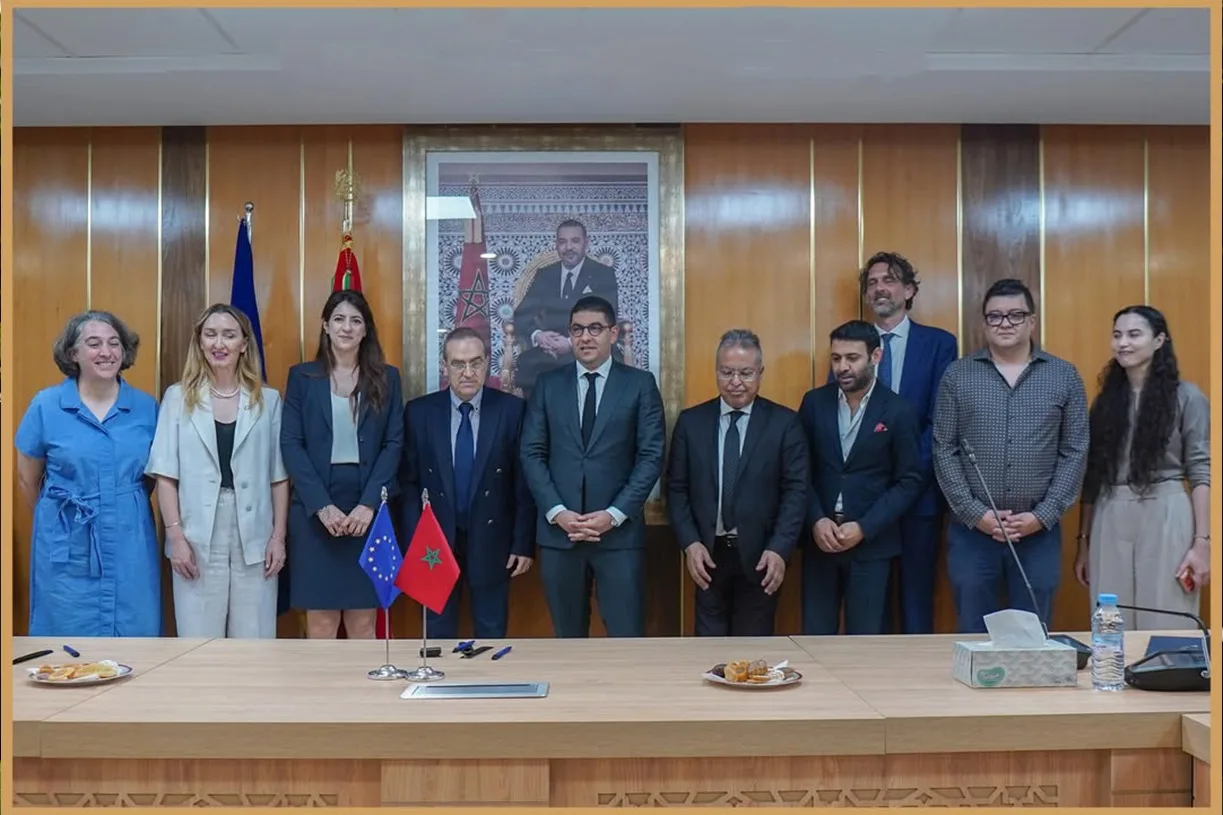
The projects were signed today in Rabat during a ceremony chaired by Mohammed Mehdi Bensaid, Minister of Youth, Culture and Communication, and Dimiter Tzantchev, the EU ambassador to Morocco.
The initiatives are part of Morocco’s wider push to make cultural and creative industries a stronger part of the national economy. The ministry has previously described the sector as a source of wealth, jobs, and professional opportunities for young people.
Three projects, one goal
The first project, “IQLAA votre accélérateur culturel” (IQLAA, Your Cultural Accelerator), will be led by Africalia with the Fondation Hiba and the Institut français.
The program will support young companies working in cultural and creative industries. It aims to help them improve their structure, grow their activities, and build stronger business models.
The second project, “Hi-Fenn connect, create resonate,” will be led by the Goethe-Institut with the Fondation Ali Zaoua and Wallonie Bruxelles International.
This initiative focuses on links between Moroccan and European creative ecosystems. It aims to encourage artistic co-creation, expertise-sharing, and practical collaborations between cultural actors on both sides of the Mediterranean.
The third project, “Creative Morocco Gate,” will be led by the Fondation Hiba with the Independent Radio and Television Association, known as ARTI.
The project aims to make it easier for cultural entrepreneurs to find information, professional networks, funding opportunities, and development tools.
Culture as an economic sector
Bensaid said the projects fit into Morocco’s broader development vision. He described cultural and creative industries as one of the future pillars of the national economy.
The minister also framed the Morocco-EU cultural partnership as a model of multidimensional cooperation between the two shores of the Mediterranean.
For the EU, the projects are meant to support innovation, employment, and opportunities for young people. Tzantchev said the initiatives reflect the spirit of the Pact for the Mediterranean, which aims to strengthen ties around culture, heritage, innovation, and shared value creation.
The ministry presented the three projects as part of a common effort to build a more organized and sustainable creative economy in Morocco.
That goal depends on public institutions, private actors, associations, and cultural entrepreneurs working in the same direction.