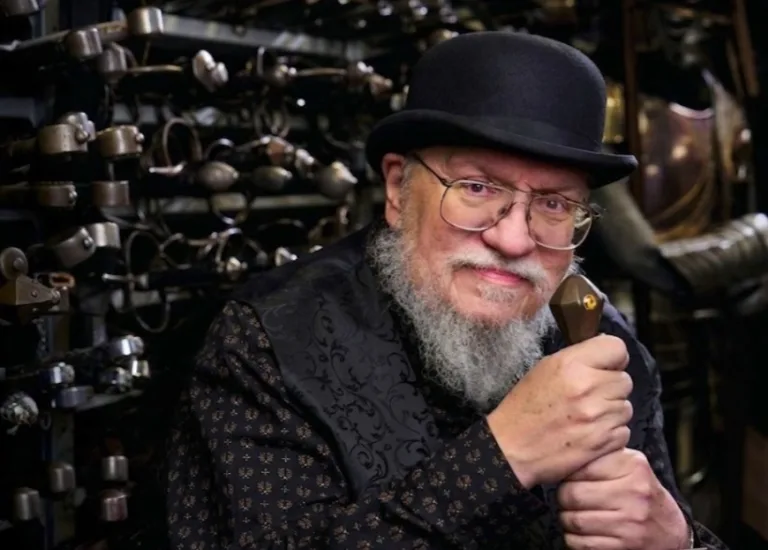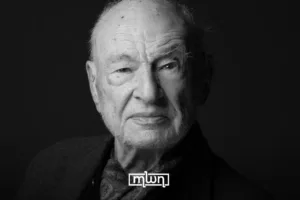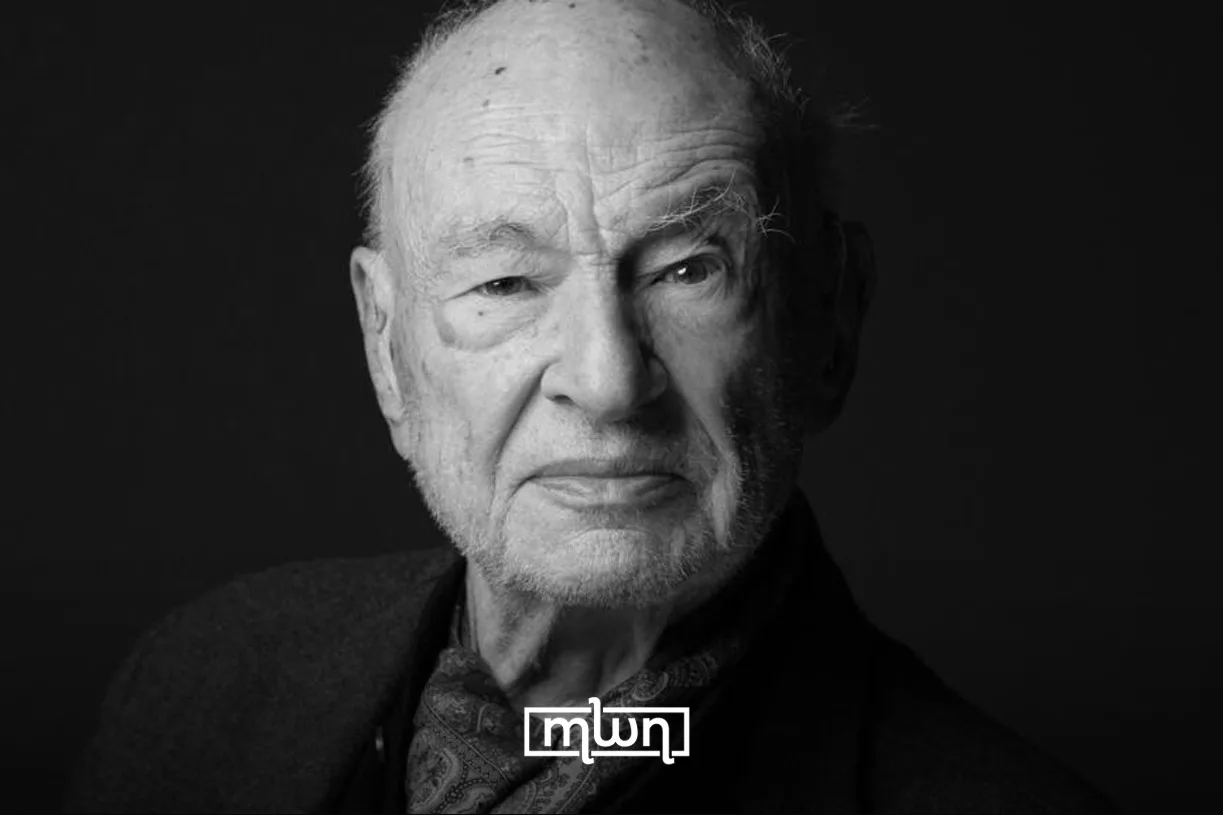
Fez — French philosopher and sociologist Edgar Morin, one of the most influential thinkers of the 20th and 21st centuries, has died at the age of 104.
Morin died yesterday in Paris, according to his family. His death ends a remarkably long intellectual life shaped by war, politics, science, doubt, and a constant refusal to reduce the world to easy formulas.
Born Edgar Nahoum in Paris on July 8, 1921, Morin came from a Sephardic Jewish family with roots in Salonica. He was marked early by the death of his mother, then by the upheavals of World War II, when he joined the French Resistance against Nazi occupation. During that period, he adopted the name “Morin,” which he kept for the rest of his life.
After the war, Morin became involved with the French Communist Party, before breaking with Stalinism and developing an independent intellectual path. That independence would become one of his defining traits. He remained politically engaged, but rarely comfortable inside fixed ideological camps.
A thinker of complexity
Morin became best known for “complex thought,” an approach that challenged fragmented ways of understanding society, knowledge, and human life.
Rather than separating disciplines into isolated boxes, he argued that politics, biology, history, ecology, culture, and emotion constantly interact. His major work, “La Méthode,” published across several volumes from the late 1970s onward, became the foundation of that vision.
His work moved across sociology, philosophy, anthropology, cinema, education, and media studies. He wrote about mass culture, rumor, death, youth, ecology, and the crises of modern civilization.
That range sometimes made him difficult to classify. It also made him widely read far beyond academic circles.
Morin’s influence was especially strong in Latin America, where his ideas on education, uncertainty, and interconnected knowledge found lasting resonance. He remained intellectually active deep into old age, continuing to publish and give interviews well past his 100th birthday.
A life against simplification
Morin’s life was shaped by the great ruptures of the modern era: fascism, communism, decolonization, globalization, ecological crisis, and the rise of mass media.
He often warned against the dangers of certainty. For him, intelligence required doubt, and politics required an awareness of contradiction. He believed humanity could not face its crises without accepting their complexity.
Moroccan connection
Morin also had a personal link to Morocco through his wife, Moroccan urban sociologist Sabah Abouessalam. The couple married in 2012 after meeting in Morocco, and later collaborated on several intellectual projects.
In his final years, Morin spent time in Marrakech, where he continued to write and reflect alongside Abouessalam. The city became one of the quiet settings of his late life, tying his final chapter to Morocco without reducing his legacy to geography.
Morin leaves behind a body of work built on one stubborn conviction: that human beings must learn to think more fully, more humbly, and more together.
His death marks the passing of a thinker who spent more than a century trying to understand a world that never stopped becoming more complicated.