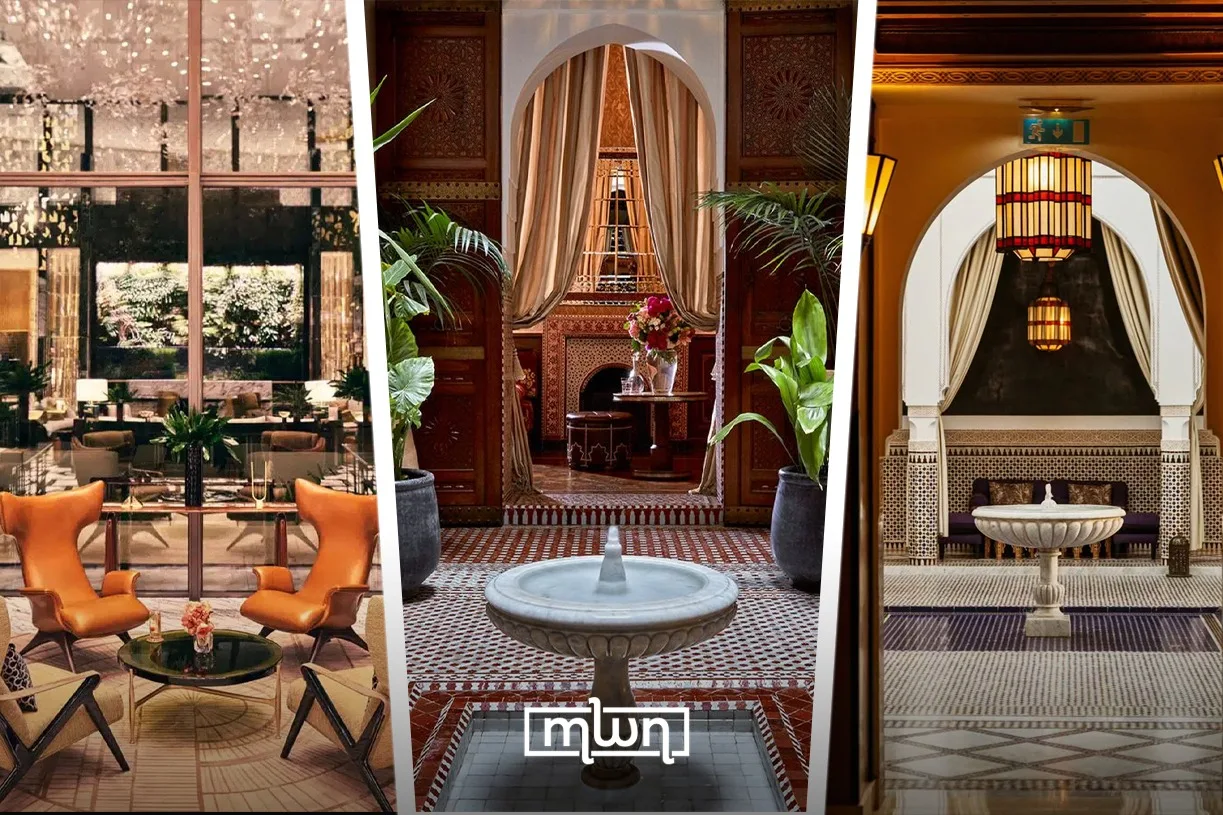
Fez — Moroccan hotels are turning heritage into high-end design as the country’s tourism boom pushes hospitality brands to offer more than rooms, pools, and polished service.
The shift is backed by strong numbers. Morocco welcomed a record 19.8 million tourists in 2025, up 14% from 2024, while tourism revenues reached MAD 124 billion ($13 billion) by the end of November. The country is also targeting 26 million visitors by 2030, when it will co-host the FIFA World Cup with Spain and Portugal.
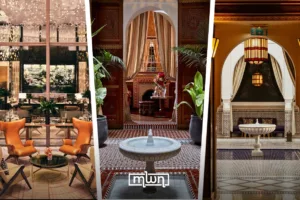
That growth is changing what luxury hotels need to provide. For Morocco, the strongest selling point is not only comfort, but a sense of place. The most successful properties are turning Moroccan architecture, craftsmanship, and historical memory into premium experiences.
Royal Mansour Marrakech
Royal Mansour Marrakech is one of the clearest examples. Instead of standard hotel rooms, the property offers 53 private riads, each designed with Moroccan handicraft, patios, terraces, and views toward the Atlas Mountains.
The data shows the strategy works. In 2025, Royal Mansour Marrakech ranked 13th on “The World’s 50 Best Hotels” list, won “Best Hotel in Africa,” and received the “Highest Climber Award.”
La Mamounia
La Mamounia sells heritage through scale and legend. “The World’s 50 Best Hotels” describes its design as a mix of Moroccan architectural references, Art Deco influence, and modern elegance. The hotel has 209 rooms and a listed starting rate of $900 (MAD 9,300).
Its appeal comes from turning Marrakech’s palace-style aesthetic into a global luxury language. Gardens, zellige, arches, terraces, and curated boutiques all become part of the same high-end story.
Royal Mansour Casablanca
Royal Mansour Casablanca shows that heritage design is not only about medinas and riads. The hotel reopened in April 2024 as the rebirth of a 1950s Casablanca landmark, with 149 rooms, suites, and private apartments.
The property leans into Casablanca’s Art Deco identity, offering a different Moroccan luxury code: urban, cinematic, and tied to the city’s mid-century history. Leading Hotels of the World describes the rooms as enhancing the charm of the 1950s in Art Deco style.
La Sultana Marrakech
La Sultana Marrakech is a smaller, more intimate model. The hotel has 28 rooms and suites in the historic Kasbah district, with a 2,000-square-meter rooftop overlooking architectural landmarks.
Small Luxury Hotels notes that the property sits in the UNESCO-listed medina and uses riad architecture, patios, thick brick walls, fountains, traditional decoration techniques, local artisan goods, and Moroccan-sourced products in its food and spa offer.
Kasbah d’If
Kasbah d’If, near Marrakech’s Agafay Desert, turns the traditional kasbah into a modern luxury retreat. The 34-hectare property took 16 years to build, involved more than 150 artisans, and now includes 37 suites, three restaurants, a spa, and rooftop terraces.
Its starting rate of around $570 (MAD 5,300) places it clearly in the luxury segment, but its value rests on craft, adobe architecture, Berber motifs, Tamegroute pottery, and desert views rather than generic resort design.
Together, these hotels show why heritage has become one of Morocco’s strongest luxury assets. As the country prepares for a larger tourism market, the hotels most likely to stand out are those that make Moroccan identity feel refined, contemporary, and worth traveling for.