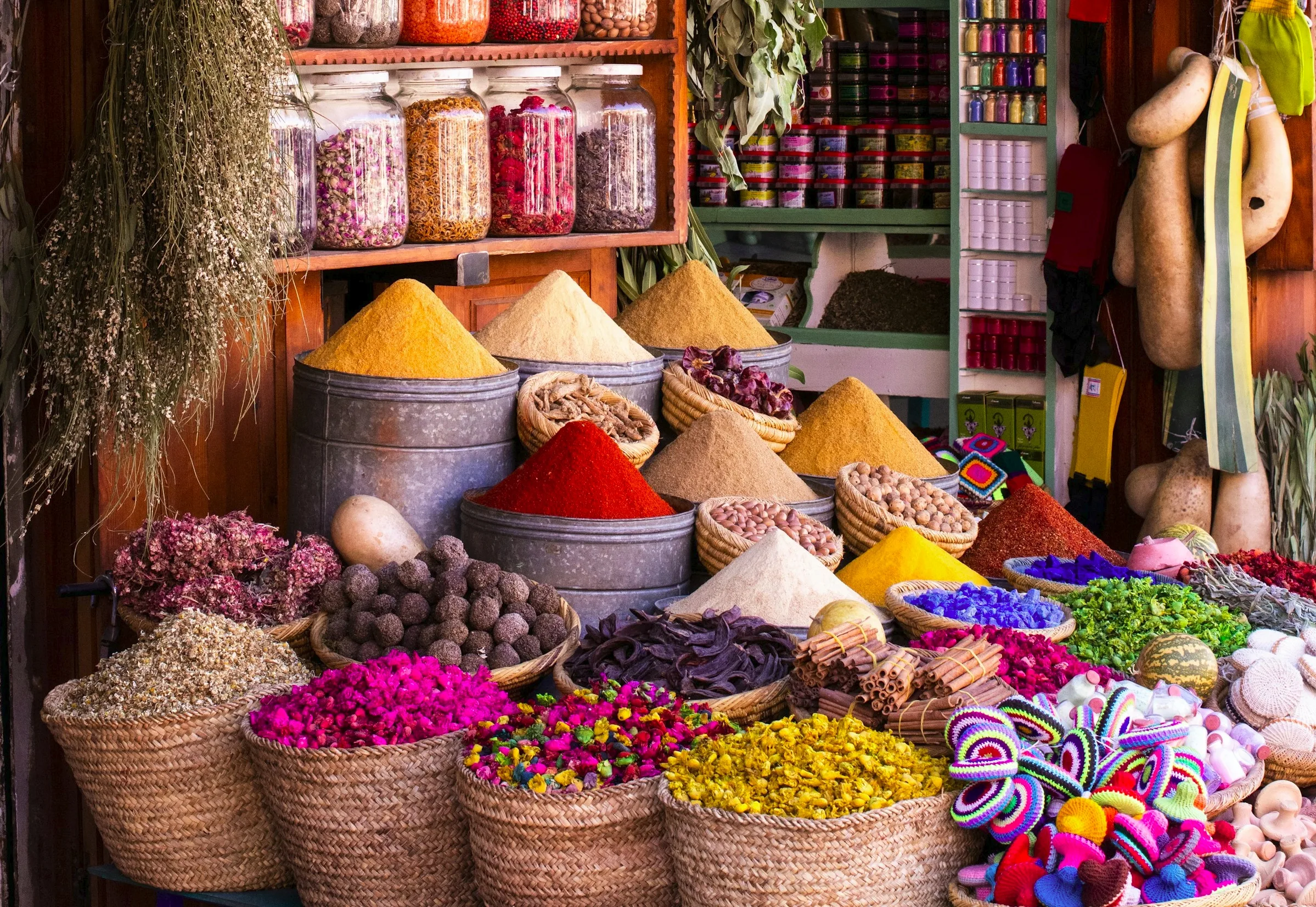
Rabat – Your spice cabinet says a lot more about you than what you might think. Sometimes the addition of one extra element can upgrade your meal from good to mouthwatering.
In Moroccan cuisine, there are a few staples that always come in handy to enrich the flavor.
Ras el Hanout
Meaning “head of the shop,” implying the unique blend of spices each merchant has to combine.
There is no fixed recipe. A market blend from Marrakech might mix 20 spices while a merchant from the old medina of Meknes might use 30 or more spices including ginger, turmeric, cinnamon, nutmeg and many more.
That means every spice shop creates its own slightly different take on Ras el Hanout. Even so, the blend keeps its signature profile: warm, earthy, gently peppery, with subtle floral notes and a hint of sweetness underneath.
It is typically added early in cooking and allowed to bloom in oil or simmer slowly in a tagine. It is an essential spice blend in many staple Moroccan dishes.
Saffron from Taliouine
Saffron is one of those rare spices where origin matters as much as the ingredient itself. In Morocco, the town of Taliouine produces around 90% of the country’s saffron, earning it the nickname “capital of red gold.”
The labor behind it is staggering! It takes roughly 150 flowers to produce one gram of saffron threads. It releases a rich golden-yellow color when infused, but it is not used only as a color additive, it has a real flavor signature.
Saffron gives tagines a rich, complex, and bittersweet finish. It is described as the backbone of the region’s tagines, and it can be the backbone to your dishes as well!
It can also be added to tea and sweet pastries. Saffron adds a very floral and earthy flavor.
Preserved lemon (L’Hamed Msiyr)
Not to be mistaken for fresh Lemon, Preserved lemon is a completely different ingredient, prized for its deep, tangy, and intensely savory flavor.
It has been part of Moroccan cooking for roughly eight centuries. Made by curing fresh lemons in salt and their own juice, they rely on lacto-fermentation, an age-old preservation method that helped Moroccans keep lemons through the heat of long summers.
The final result is a soft rind that is mellow and very savory rather than sharp or bitter. Preserved lemons are essential in many classic dishes and they pair really well with chicken. They also pair well with olives and garlic and produce beautiful layered flavors.
Smen
It is not only lemons that get fermented, butter goes through the same process too.
Smen is a fermented butter made from sheep, goat, or cow’s milk which is salted and fermented before aging. This gives it a distinctive funky, blue-cheese-like aroma.
It was born out of necessity. Before pasteurization, sour milk’s natural acidity protected butter from bad bacteria and that same lactic acid is what gives smen its distinctive scent and shelf-stability.
Aged Smen is often treated like vintage wine, valued more deeply with time. In Fez, an entire market known as “Kaat Smen,” or “Smen Square,” is devoted to vendors whose families have spent generations refining the craft.
A small spoonful of it can transform couscous or tagines. It is, quite literally, an heirloom you can eat.
Cumin
Cumin is one of the most used spices in Moroccan cooking. It is an earthy and slightly bitter spice that shows up everywhere; from a simple omelette to the most divine soups and tagines.
Arab traders brought cuman to Morocco from the eastern mediterranean many centuries alongside cinnamon, ginger, and turmeric.
It is also the spice that most likely ends up on the table itself. Think of it like how you would find salt and pepper in restaurant tables in many countries. However, in Morocco, the duo is salt and cumin which work really well with grilled or steamed meat.