As a Moroccan Muslim woman, I am entirely concerned about feminism as well as religious legislation in Morocco. I always believe that one day both sides will find a compromise to get along better as one should not refute the other.
However, time flies by and no significant progress has been made since the establishment of the family law released in 2004. Moroccan women’s status is kept prisoned in endless debates and arguments between protagonist parties while many victims are still suffering because of some unfair Moroccan laws based on religion.
Therefore, I was wondering what has shaped our Islamic jurisprudence; is it taking into consideration our own cultural and national self-identification?
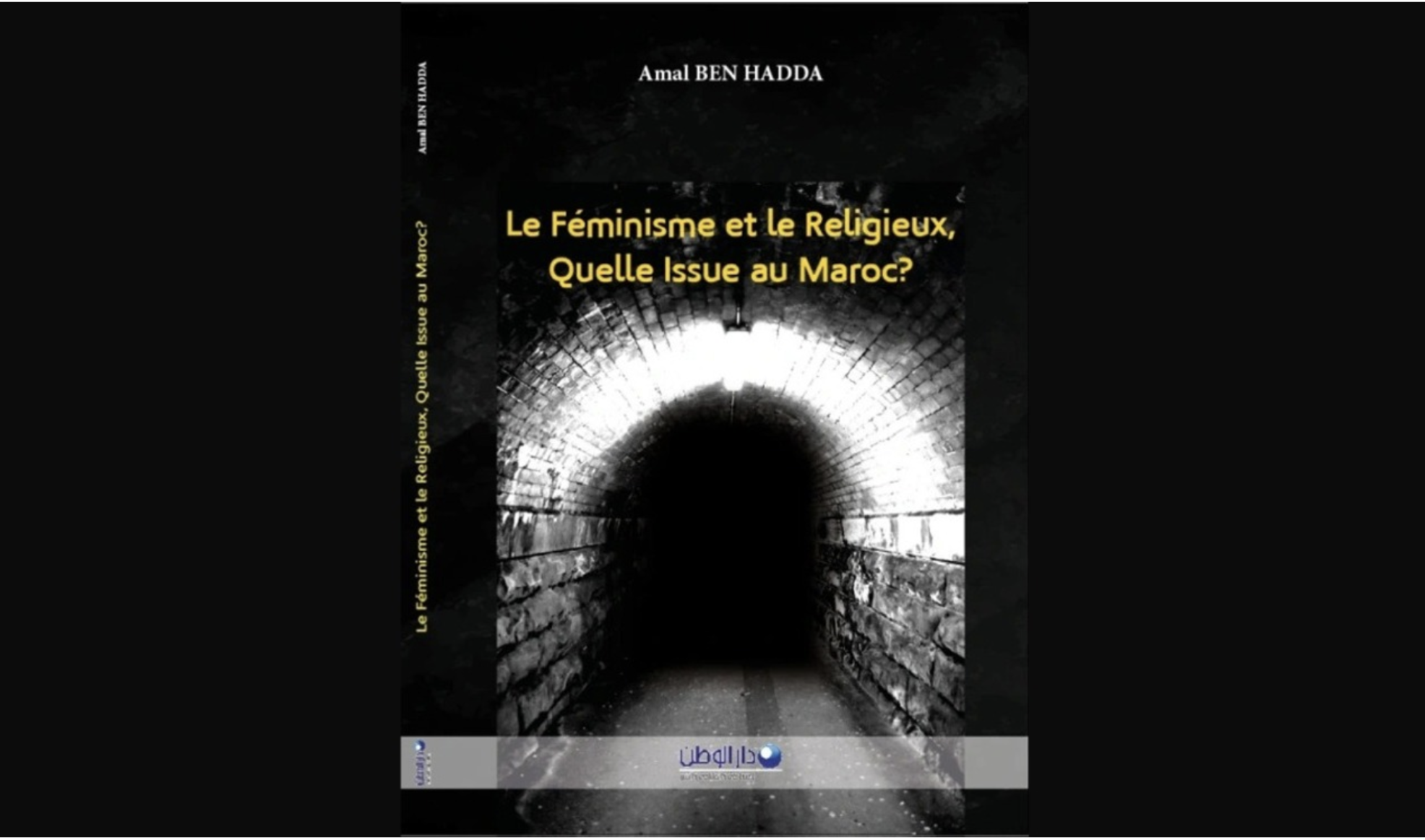
In my essay “Le feminisme et le religieux, quelle issue au Maroc?” literally translated into English as “The outcome of feminism and religion in Morocco,” I tried to compile all the relevant arguments that surround women’s rights in Morocco in a stride forward to hopefully move on and reach the end of this long ideological tunnel.
Since the early stages of the Quran revelation until nowadays, women have been demanding rights that have been spoiled by the masculine interpretations of the religion.
In the seventh century, Fatima, the Prophet Mohammed’s daughter, fought for her right to her father’s inheritance. Her remarkable courage in front of the whole community is the most relevant starting point of a long fight for Muslim women to claim their rights after the death of the last prophet of Islam.
In 2011, Moroccans voted for a new constitution promoting gender equality as per article 19. However, equality cannot be set without fulfilling the religious conditions defined as the constants of the kingdom and its laws.
Consequently, there are still some major issues that women are facing in Morocco such as sexual harassment that can, unfortunately, be justified by some religious discourses based on women’s way of clothing.
Single mothers who are facing prison for having sex outside marriage and therefore being forced to abandon their babies dead or alive in the street while their biological fathers are exempted from their duties by the Moroccan family law, as stated in article 146.
Female orphans who realize that their inheritance is being taken by their uncles or cousins are threatened to be kicked out from their family home only because they do not have a brother to take over their inheritance.
Feminism in Morocco is struggling to change misogynist laws even with more women’s presence in religious and political fields. However, this physical presence is obviously not enough to be victorious.
Are these women really able or allowed to challenge men’s authority in religion and provide feminist insights that have been missing all these centuries in the three monotheistic beliefs?
Religious feminism in Morocco faces stubborn traditional and theological barriers that instrumentalize the constants of the kingdom to deny any amendment in the text laws to help and support women.
From the creationist story of Adam and Eve to the fine details of how a woman should dress to supposedly avoid “being harassed or raped,” these kinds of interpretations and commands are mainly elaborated from the oral transmission and the exegesis called Sunnah.
However, the Maliki Fiqh, as one of the constitutional constants of the kingdom, involves the application of reasoning on a continuous basis for a more rational thought process of the revelation.
The highest instance of scholars (Oulemas) is designated to decree religious amendments in Morocco and Moroccan text laws. This structure is set to manage any kind of extremism or Shi’i political manipulation, and to proceed to renew the Islamic jurisprudence in accordance with the contemporary crisis and knowledge.
However, this renewal is still suffering from the traditional understanding of the revelation and therefore preventing Moroccan laws from aligning with gender equality promoted by the constitution.
Sufism, as another religious constant of the kingdom is even defined as a kind of practical theistic ethics is being marginalized. Some scholars consider Sufism as the highest level of spirituality rather than a good input for moral rationalism that should be reflected in the Moroccan laws especially when it comes to a human being’s dignity.
Other means could also be involved to contribute to this renewal such as modern science as well as the study of the Arabic script of the Quran through ancient semitic philology rather than classical Arabic philology.
Meanwhile, Moroccan women are still being discriminated against on behalf of religion.
Hence, why women get vulnerably exposed to any political agenda in society, either conservative or modernist, that could be using the conditions women face as a tool to serve hidden plans rather than improving the status of Moroccan women.