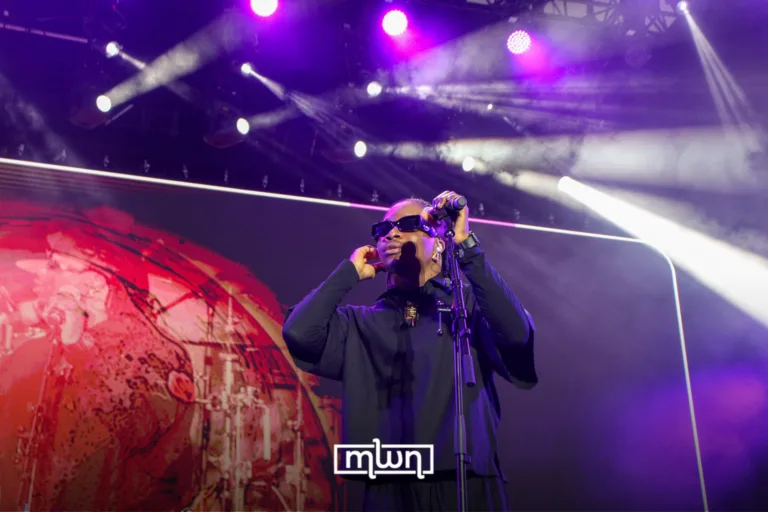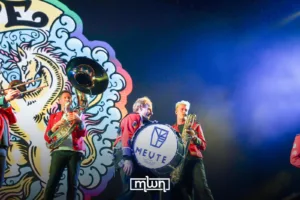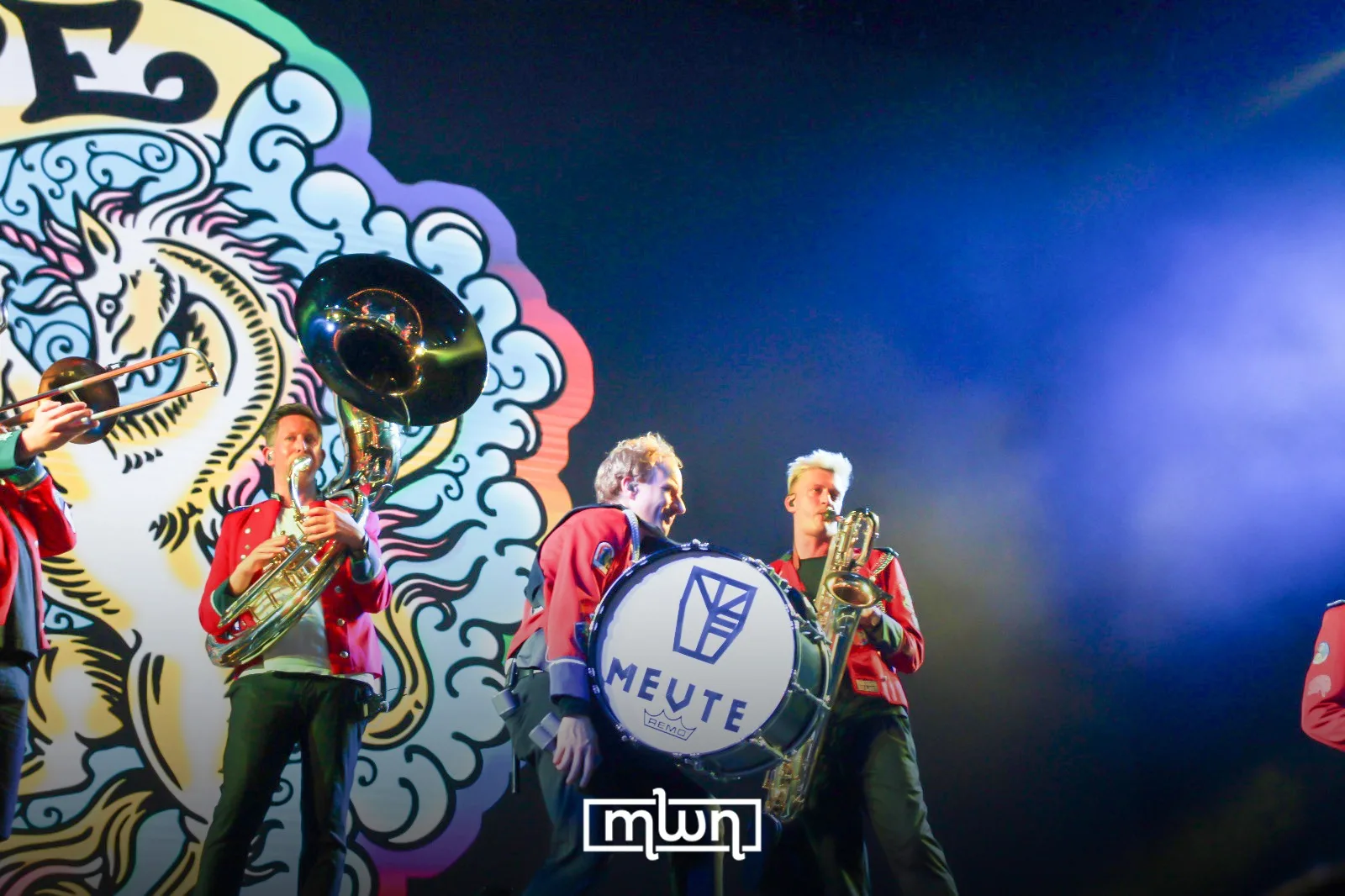
Fez — MEUTE brought a different kind of storm to Jazzablanca on Monday night, turning Anfa Park into a brass-powered rave driven by drums, horns, and nonstop movement.
The German collective performed on July 6 during Jazzablanca’s 19th edition in Casablanca, sharing the night with Danyl, daoud, Nubiyan Twist, and Gaouta.
From the first blasts, the set felt designed to erase the distance between concert and club. MEUTE’s sound does not rely on laptops or a DJ booth. The Hamburg-based group describes itself as a techno marching band made of 11 drummers and horn players who recreate the function of a DJ with acoustic instruments.
Techno without the DJ booth
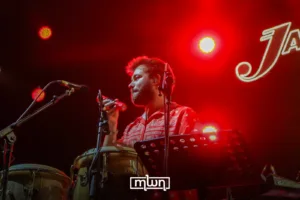
On stage, that concept became physical. The drums carried the weight of a four-on-the-floor pulse, while brass lines replaced synth stabs, bass pressure, and melodic hooks.
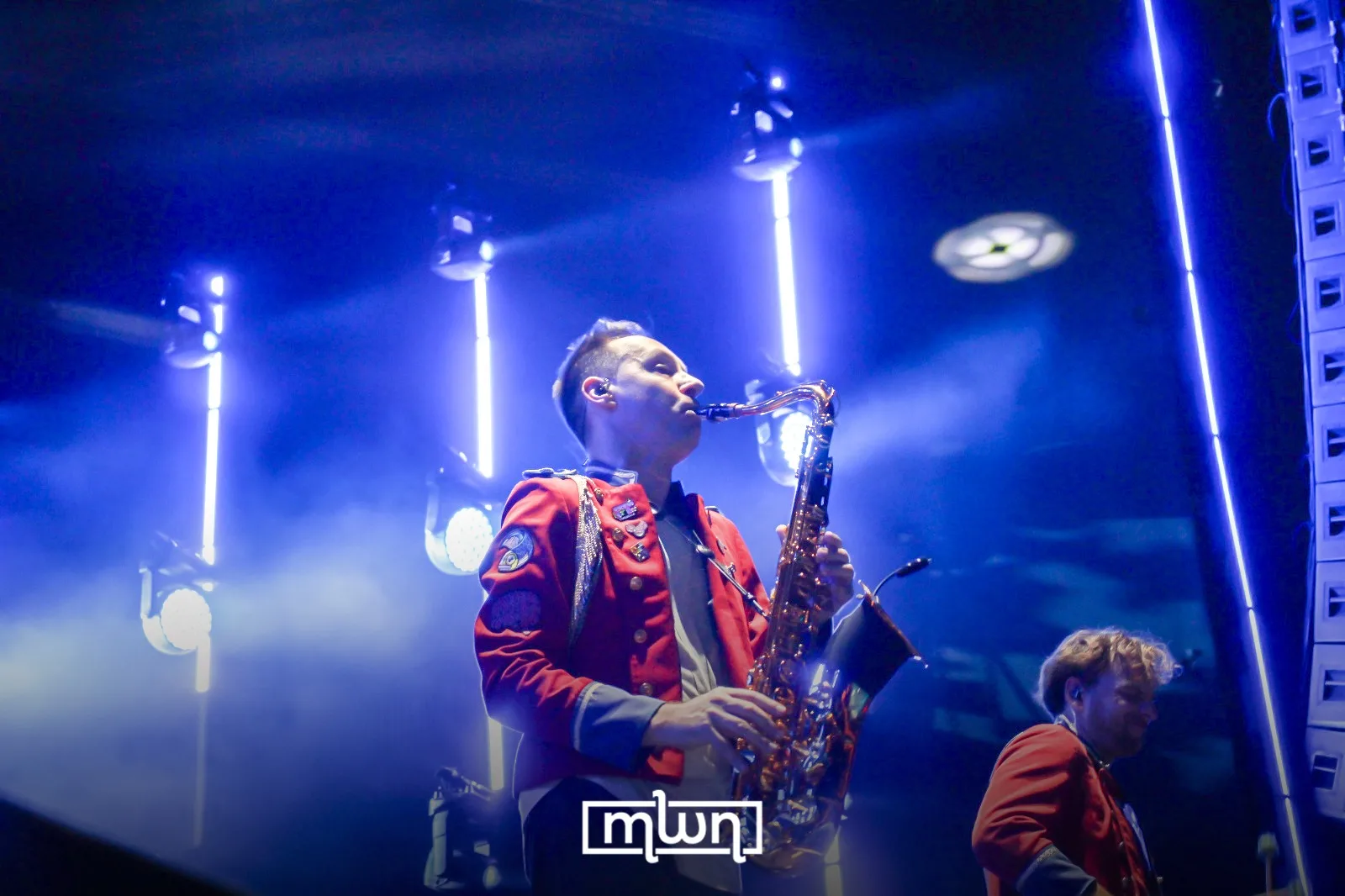
The result was not a novelty act. It was a full-body performance where every beat had a visible source. Each drop came from breath, muscle, and coordination, making the crowd feel the mechanics of dance music in real time.
MEUTE’s strength lies in that contradiction. The music feels electronic in structure, but human in execution. It keeps the repetition and build of techno, while replacing the machine surface with sweat, brass, and marching-band force.
A crowd pulled into motion
Jazzablanca has already moved through pop, funk, soul, jazz, and classic rock in its first days. MEUTE gave the festival another register entirely. Their set was loud, communal, and built around release.
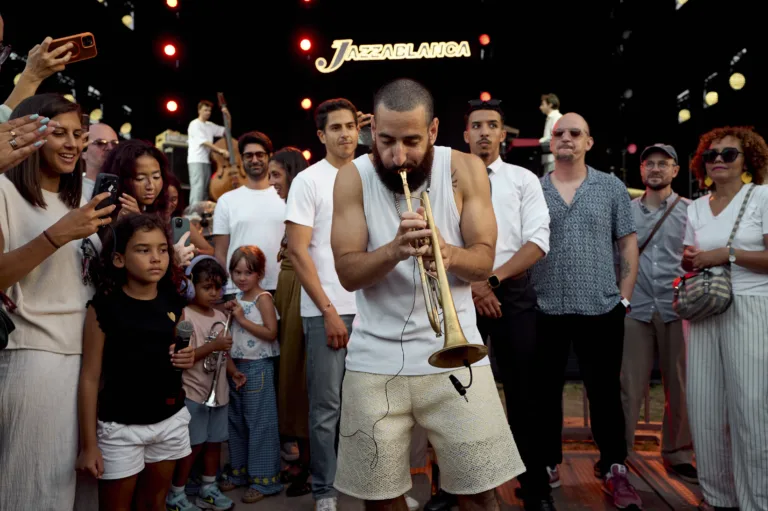
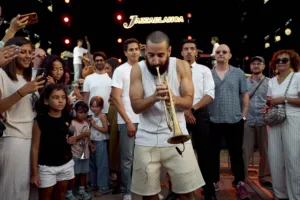
The crowd responded to the band’s physicality. As the rhythms tightened, the audience moved with the same instinctive energy usually reserved for club nights. Hands went up, bodies followed the beat, and Anfa Park briefly felt less like a festival ground and more like an open-air dance floor.
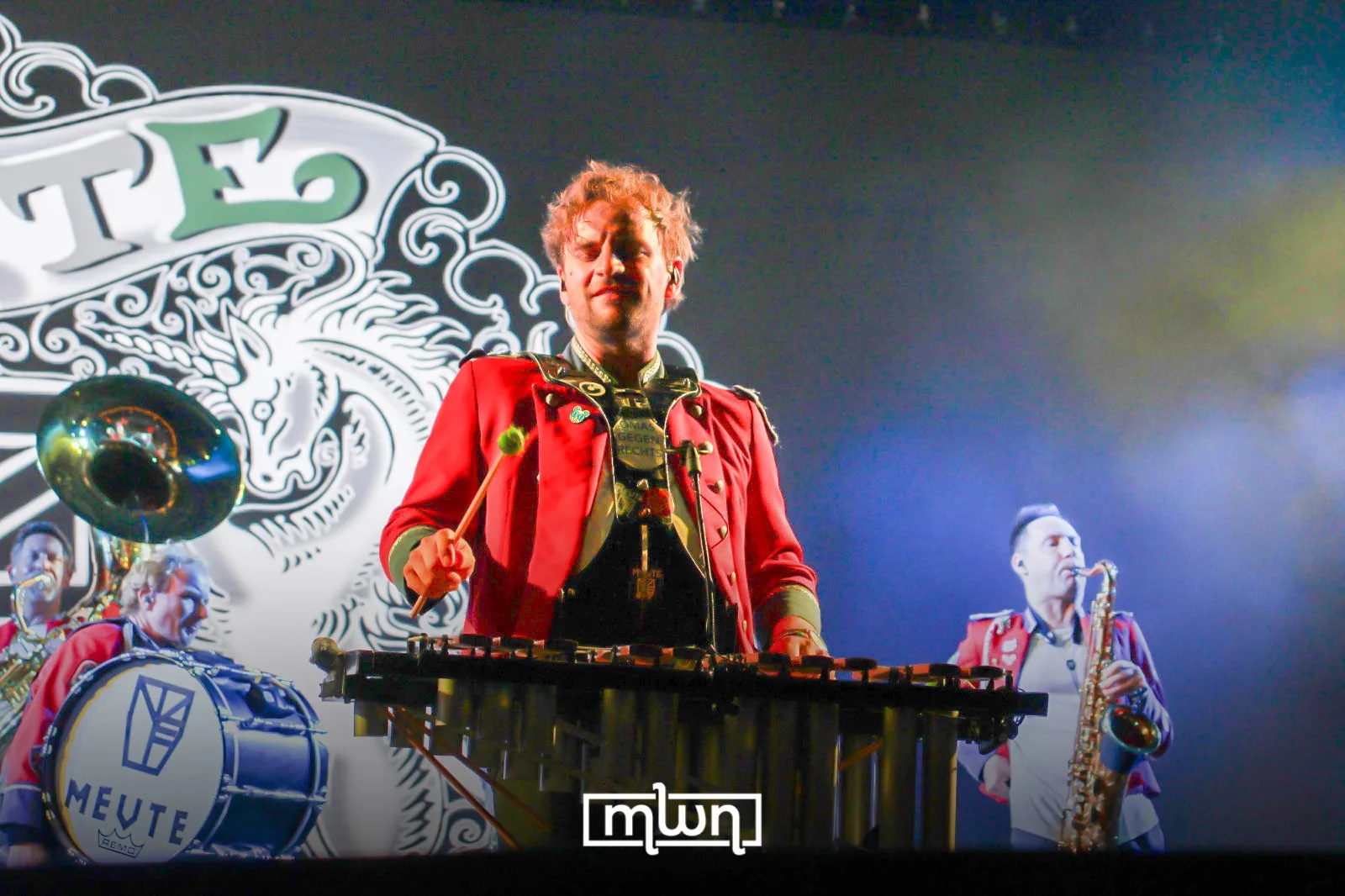
That energy has helped MEUTE become one of Europe’s most unusual live acts. The group has built its reputation by taking techno, house, and deep house out of the DJ booth and onto festival stages, streets, clubs, and concert halls.
In Casablanca, the formula landed because it was immediate. There was nothing distant or overly polished about the performance. The music moved forward with force, and the audience followed.
MEUTE’s Jazzablanca set stood out because it transformed a familiar festival night into something more physical and collective. The band did not simply play techno with horns. It showed how rhythm can move through bodies before it becomes sound.
For Casablanca, the performance added another bright turn to Jazzablanca’s 19th edition. It proved that the festival’s strongest moments can come when genres collide, and when a crowd is asked not only to listen, but to move.