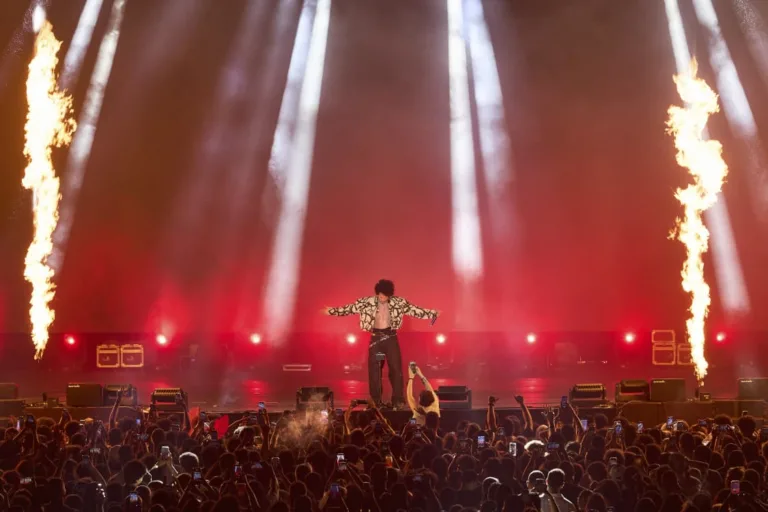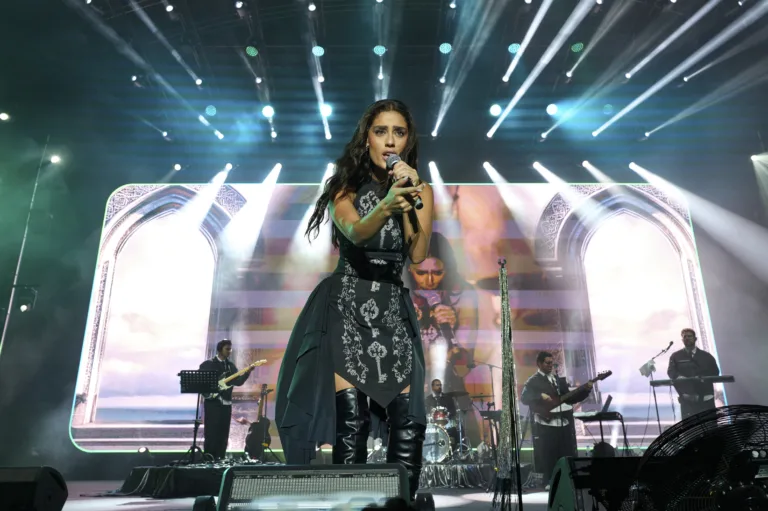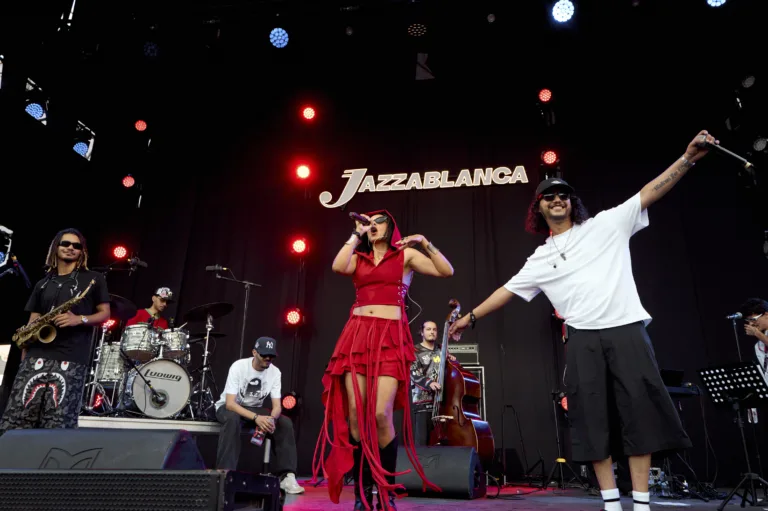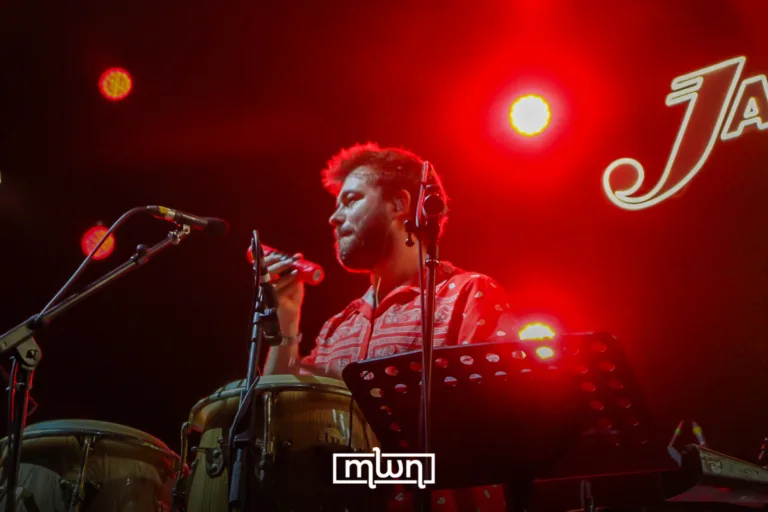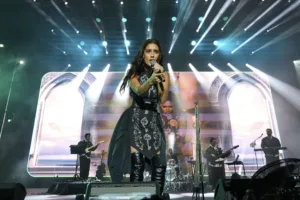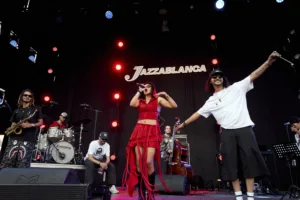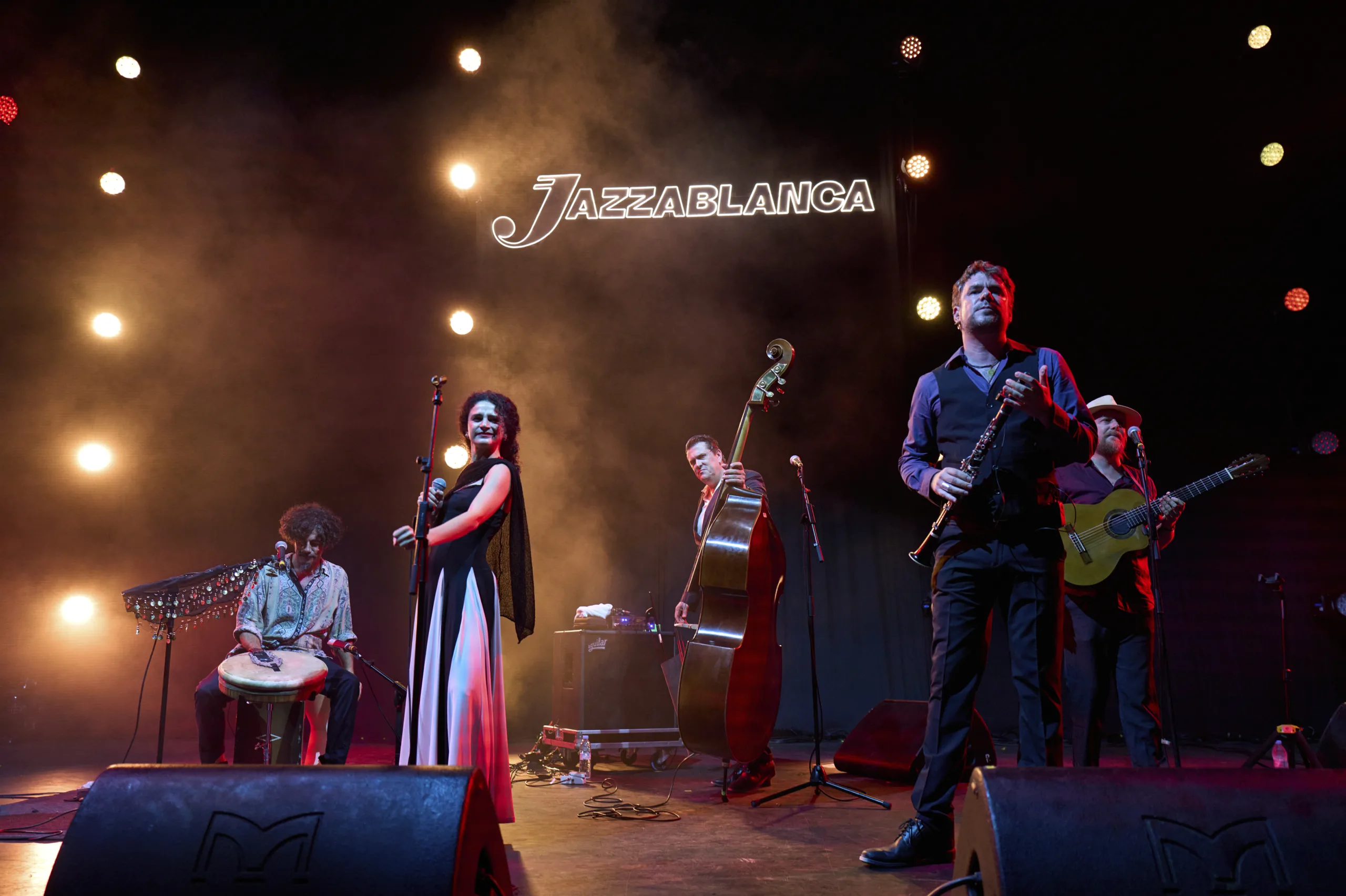
Fez — Barcelona Gipsy Balkan Orchestra turned Scène 21 into a vibrant musical journey on Tuesday night, bringing Casablanca a performance shaped by gypsy tradition, Eastern European melodies, Middle Eastern colors, and the contagious joy of a band fully alive on stage.
The group, often known as BGKO, performed at Jazzablanca on July 7, giving the festival one of its most elegant and energetic world-music moments. Their set carried the audience across borders without ever making the trip feel academic. It was stylish, warm, and deeply physical, built for listening but also for movement.
BGKO has built its identity around reinterpretations of traditional music from the Balkans, the Middle East, and the Mediterranean, attracting audiences through a sound that feels both rooted and nomadic. Jazzablanca presented the group as a cosmopolitan septet led by the voice of Margherita Abita, marking 13 years of touring with a concert designed as a bridge beyond borders.
A stage full of color and precision
On Scène 21, the band’s strength came from the balance between refinement and fire. The musicians looked elegant and played with discipline, but the music never felt stiff. Each phrase carried movement, and each rhythm seemed to invite the audience further into the group’s universe.
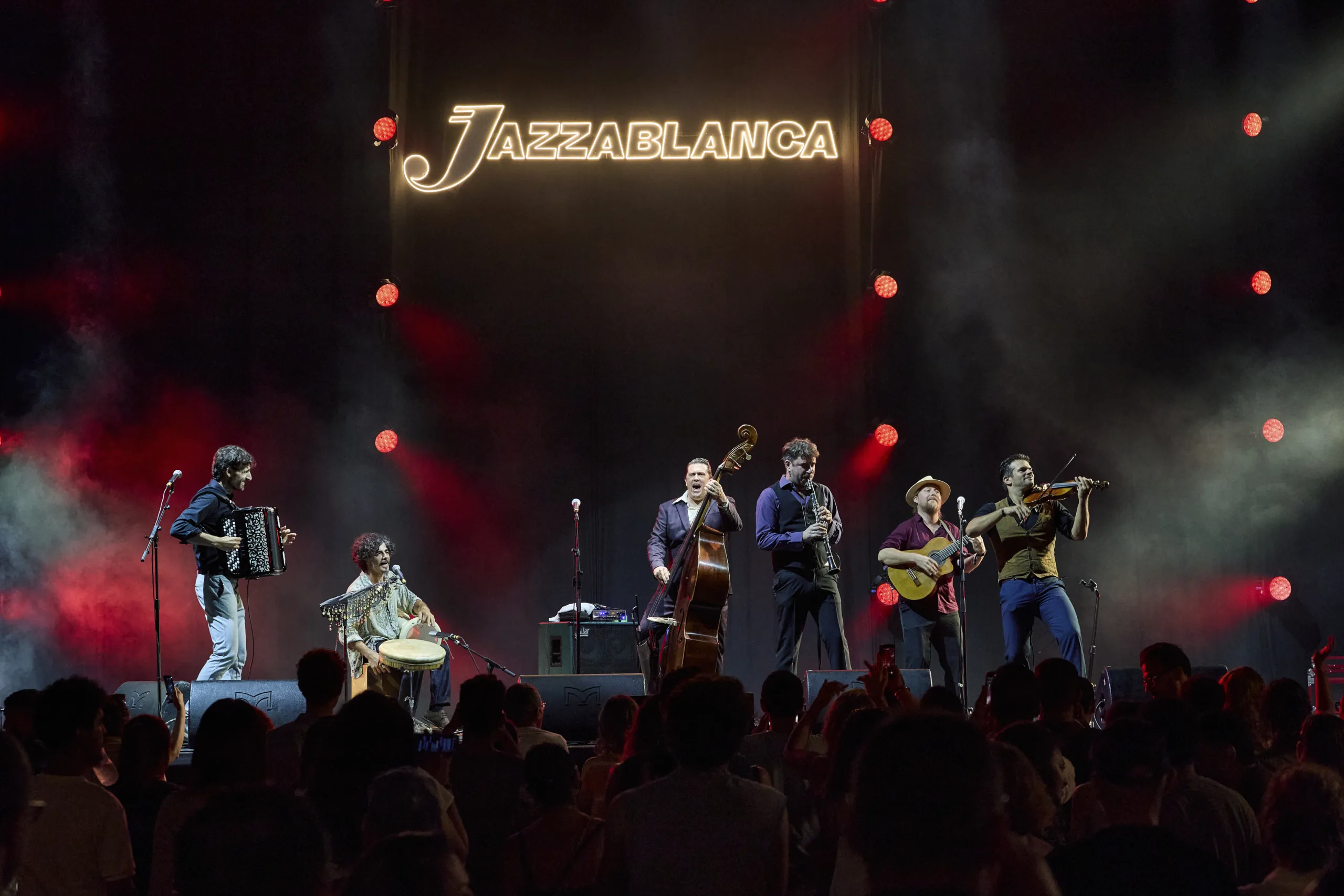
Their performance drew from the folk languages of Eastern Europe and the Mediterranean, with Slovenian and Romanian songs sitting naturally beside Arabic and Turkish colors. That mixture gave the concert its richness. The music could feel festive one moment, melancholic the next, then suddenly open into a dance-like release.
Pieces from the group’s wider repertoire, such as “Lule Lule,” “Od Ebra do Dunava,” “Makedonsko devojče,” and “Djelem Djelem,” show the kind of musical map BGKO carries with them, moving between Balkan, Romani, Sephardic, Mediterranean, and Middle Eastern influences.
One of the set’s highlights came when the band performed “El Bint El Shalabiya,” the beloved Arabic classic closely associated with Fairuz. The song brought a familiar emotional charge to Scène 21, giving the Casablanca audience a moment of recognition within the group’s wider journey through Eastern European and Middle Eastern sounds.
Gypsy spirit with a modern stage presence
What made the Casablanca set stand out was not only the range of traditions. It was the way BGKO made them feel connected. Their music did not sound like a playlist of regions. It sounded like one living language, shaped by travel, memory, rhythm, and shared emotion.
The band’s stage presence helped carry that feeling. Talented, elegant, stylish, and full of energy, the musicians gave Scène 21 a performance that felt both polished and spontaneous. The vocals brought drama and warmth, while the strings and rhythm section gave the songs their restless momentum.
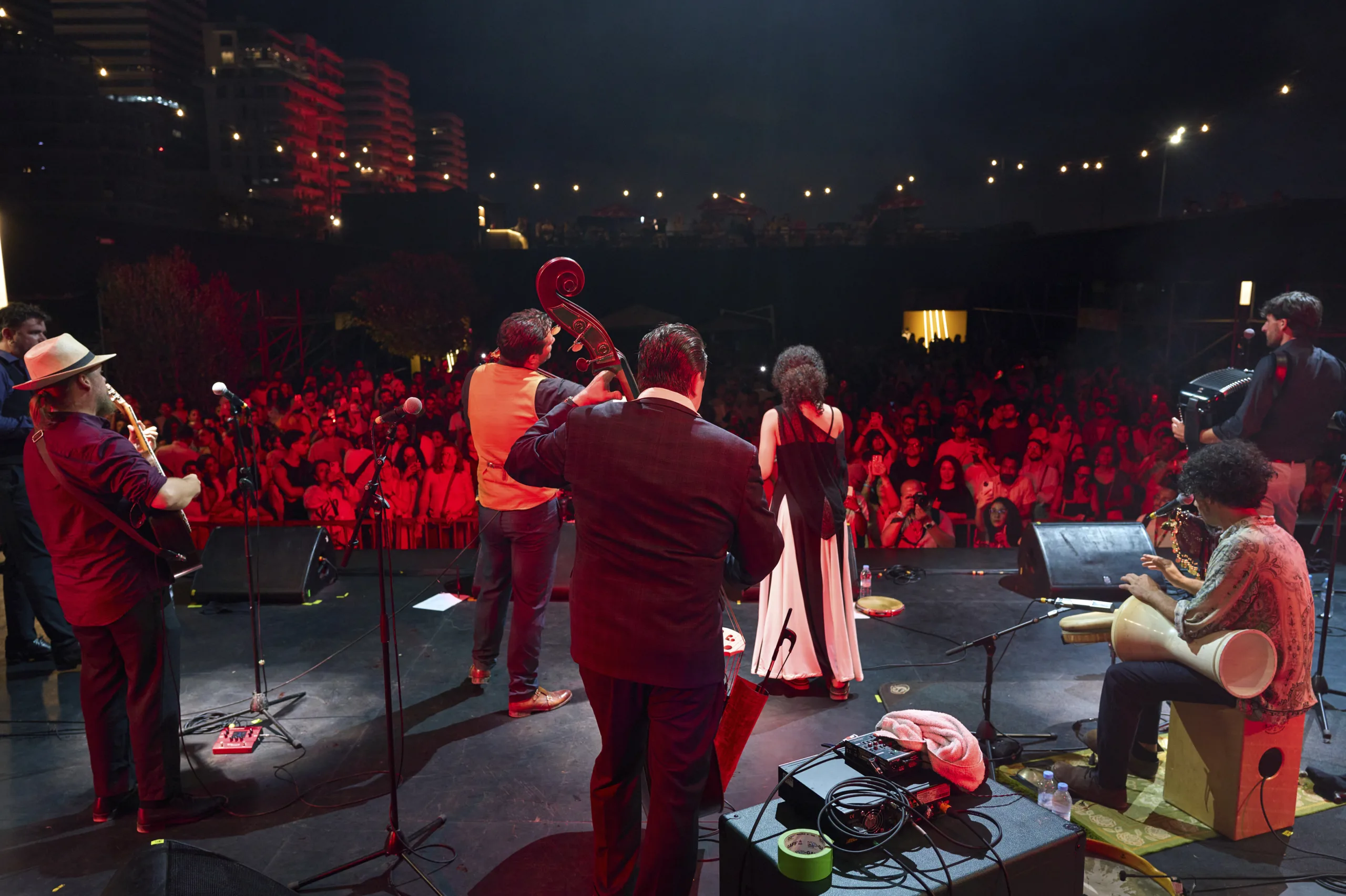
That is the appeal of Barcelona Gipsy Balkan Orchestra. They treat heritage as something alive, not frozen. Their performance showed how old melodies can still move a modern crowd when played with conviction, taste, and joy.
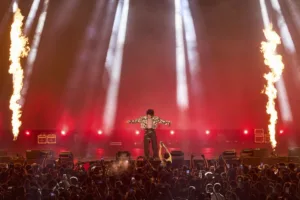
For Jazzablanca, the concert added another strong color to a week already moving between jazz, funk, soul, rock, rap, and global pop. BGKO gave Casablanca a different kind of festival high, one rooted in migration, memory, and the pleasure of musical crossings.
By the end of the set, Scène 21 felt less like a fixed stage and more like a traveling caravan of sound. Barcelona Gipsy Balkan Orchestra did not simply perform songs from different places. They turned them into a shared celebration, reminding Casablanca that music often becomes most powerful when it refuses to stay within borders.