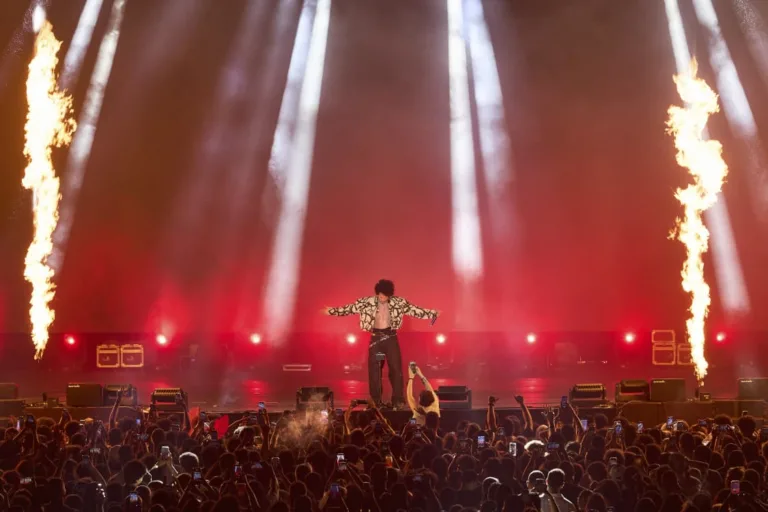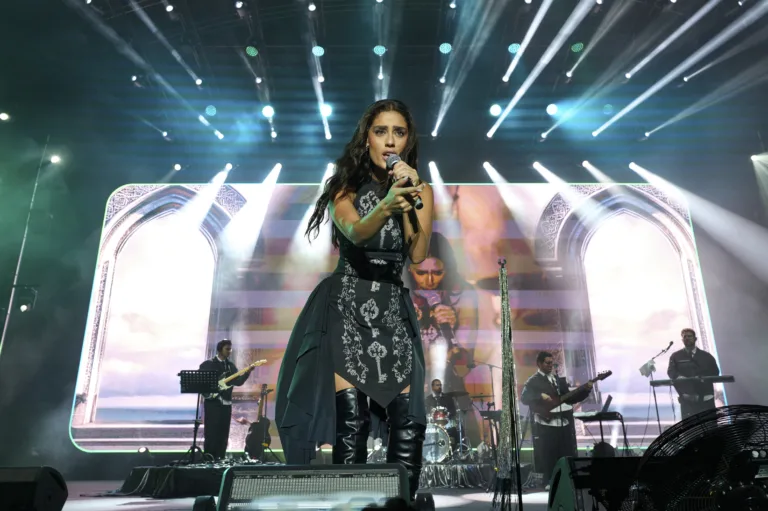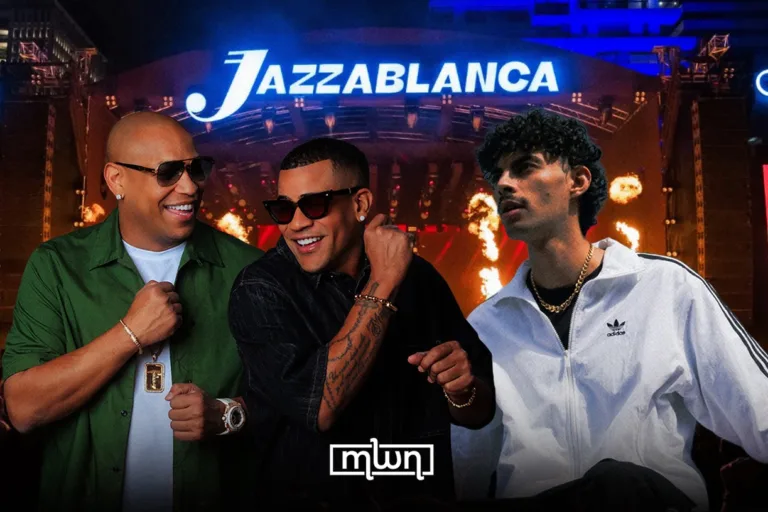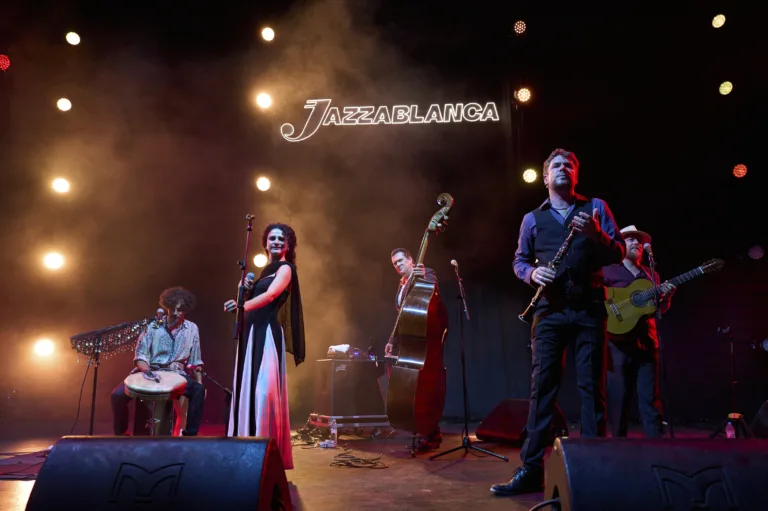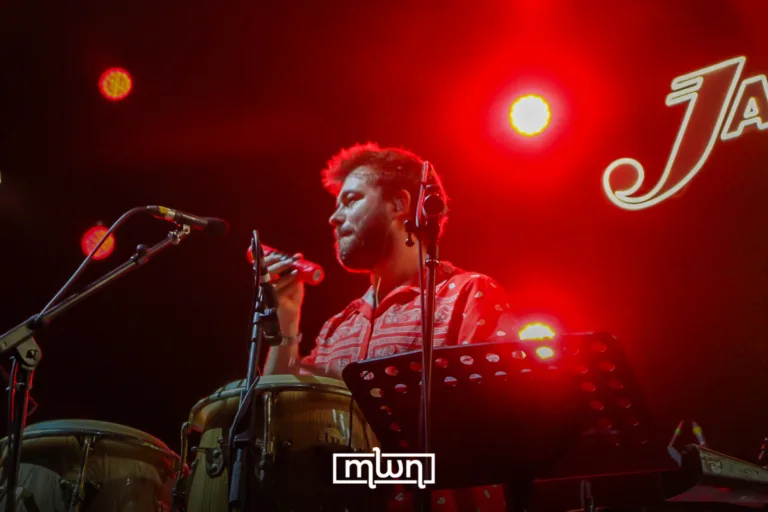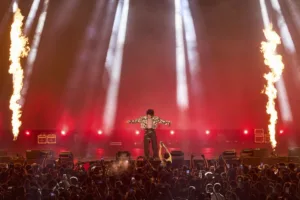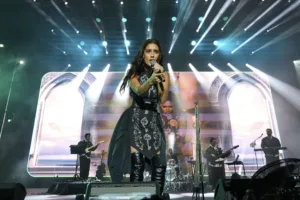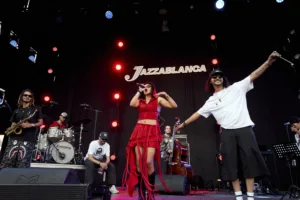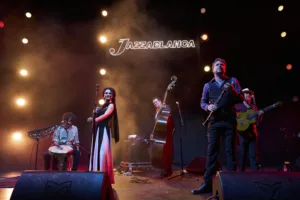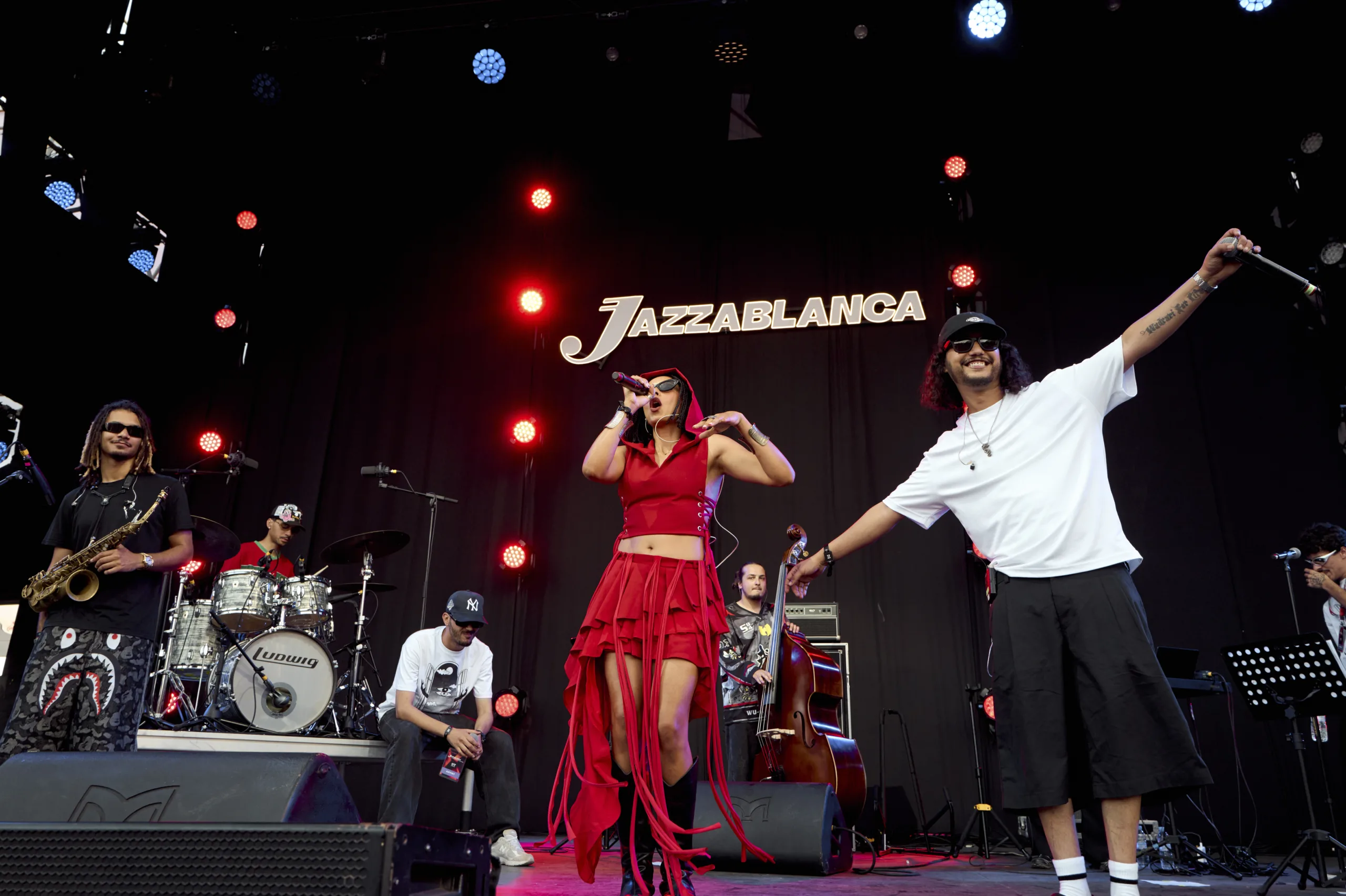
Fez — Small X and Saib delivered one of Jazzablanca’s most distinctive performances, turning their collaboration around “Nafida” into a fully live experience where Moroccan rap, jazz musicianship, samples, and improvisation met with force.
The show stood out because it did not feel like a rapper simply performing over a band. It felt like a complete musical reimagining. Small X’s voice, Saib’s jazzy hip-hop universe, AMG’s presence, and Antoine Fleury’s live direction created a sound that was fuller, riskier, and more alive than a standard concert format.
Before the performance, Small X told MWN Lifestyle magazine that playing with a live band changes everything.
“Live means everything is being played live, the music is alive, the energy is alive,” he said. “What you are hearing is being played right there in that moment. There is no backing track, no semi-playback or anything like that.”
A live sound with real weight
That difference was clear on stage. The music carried the structure of hip-hop, but the band gave it movement, breath, and tension. Piano, guitar, bass, double bass, and drums pushed the tracks into new shapes, creating a sound that felt completely different from the recorded versions.
Small X described that live energy as something the audience could see and feel directly.
“The energy that comes out, you can see it in front of you, coming 100% from the people,” he said. “There is a sound that is completely different from what you hear in the original version when it is performed live.”
That made the show powerful. The performance had the sharpness of rap, but also the freedom of jazz. It allowed the songs to expand without losing their identity.
“Nafida” as a meeting point
The collaboration between Small X and Saib began naturally. Small X said he used to listen to Saib’s music before even knowing he was Moroccan.
“I used to listen to Saib’s music at a time when I did not know he was Moroccan,” Small X told MWN Lifestyle magazine. “When the project came up and we wanted to do something new, my manager told me Saib is Moroccan. I said, ‘What? From where? From Casa?’”
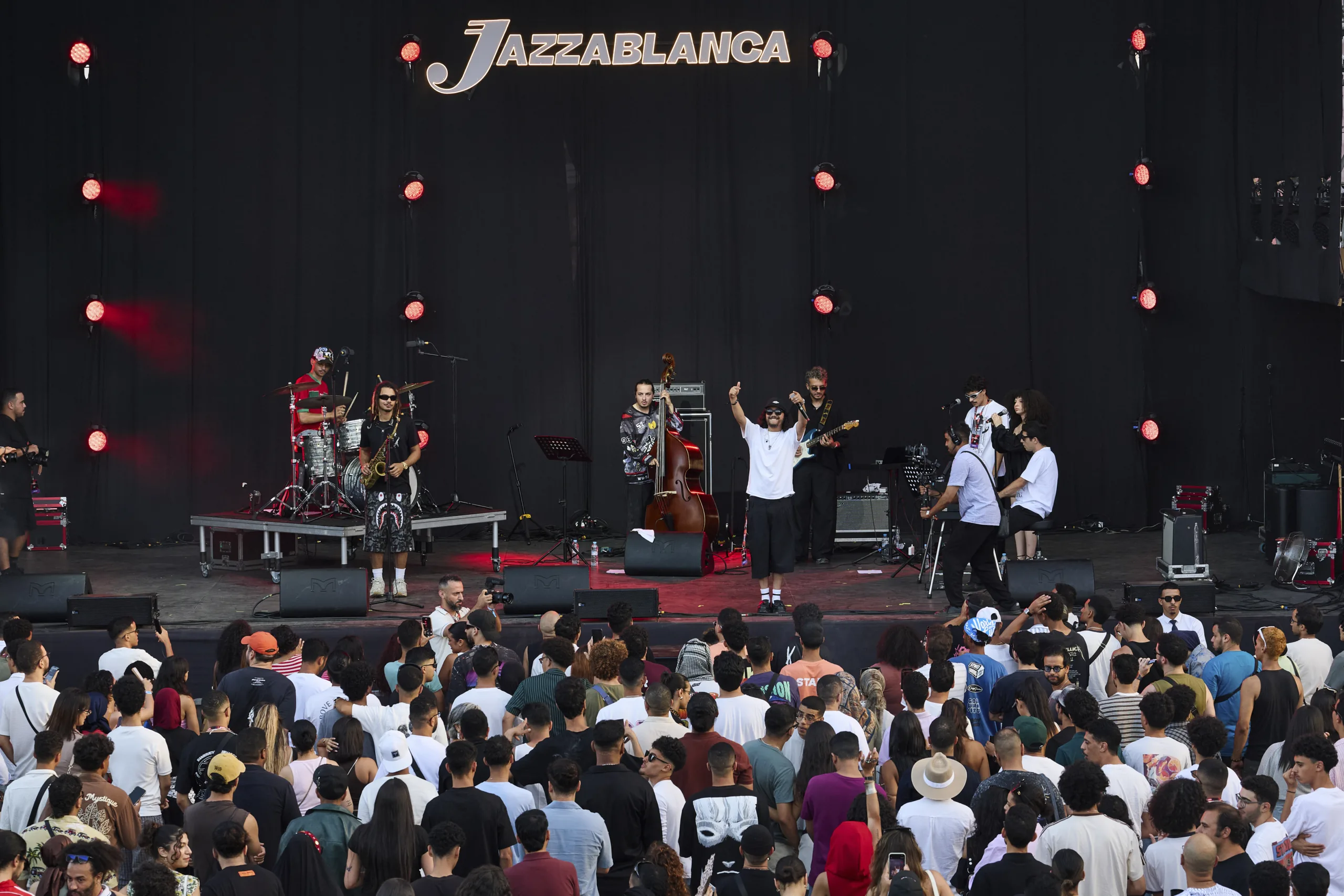
For Small X, the connection was not only musical. He said the two artists clicked on a human level before building the project further.
“Apart from the music, we connected over what he likes and what I like,” he said. “We found common ground and connected well.”
Saib echoed that feeling, explaining that he had long wanted to return to Morocco through a meaningful musical project.
“I had always wanted that connection, to come back to Morocco and work with someone, but honestly, I could not find the right person to work with,” Saib told MWN Lifestyle magazine. “Then Small came in.”
The two eventually spent time in Morocco working on “Nafida,” building the songs through a residency that helped turn the project into a shared language.
“The current passed well between us,” Saib said. “The two of us understood each other musically, humanly, everything.”
Freedom on stage
Antoine Fleury said adapting to Small X’s style came naturally because rap was already part of the musicians’ lives.
“We listen to a lot of rap,” Fleury told MWN Lifestyle magazine. “It is something we grew up with. Even though we make instrumental music, rap is part of our lives.”
That background helped the show avoid stiffness. The performance was guided, but not locked. Saib described it as a space where improvisation remained central.
“Always something new, always improvisation,” he said. “There is no paper telling us what to play, no tablature or anything like that. We play everything improvised.”
That freedom gave the Jazzablanca set its strongest identity. It was unique because it brought together Moroccan rap and live jazz without forcing either side to become decorative. It was powerful because the musicians trusted the moment, letting the music grow in front of the audience.
For Casablanca, the performance showed how far Moroccan rap can travel when placed inside a live, open, and ambitious musical setting. Small X and Saib did not only perform “Nafida.” They turned it into a living project, shaped by connection, improvisation, and the rare energy of artists listening closely to one another.