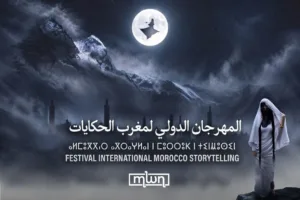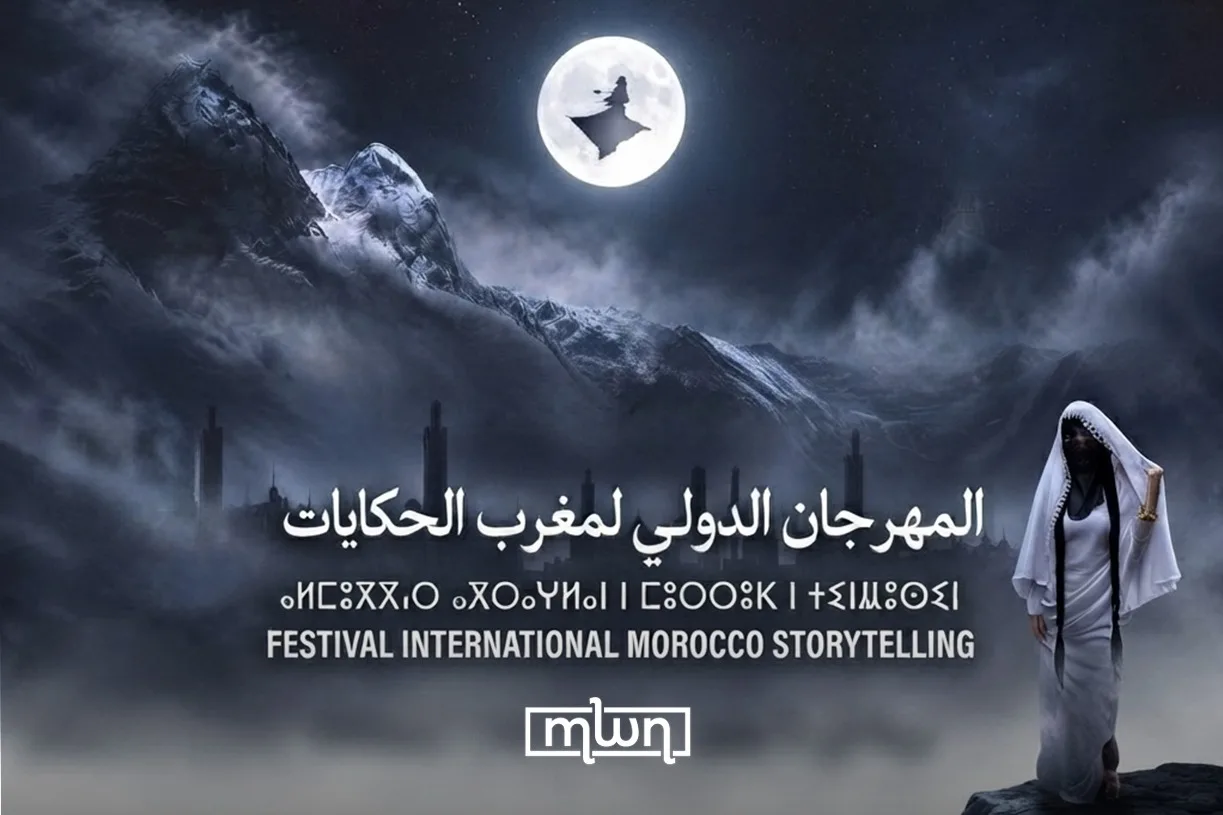
Safi – The 23rd International Morocco Storytelling Festival opened in Rabat on Monday and runs through July 20, marking its 23rd edition under the theme “If the Homeland Spoke.”
The International Academy of Intangible Cultural Heritage organizes it in partnership with the Ministry of Youth, Culture and Communication and the Rabat-Salé-Kénitra regional authority, while the Academy’s president, Najima Thay Thay, serves as its director.
The official opening ceremony will take place on July 15 at 8:30 p.m. at the Jardin d’Essais Botaniques (Botanical Trail Garden).
Where the tales are told
At the heart of it lies the “halqa,” the traditional storytelling circle that gathers listeners around a storyteller in the open air. It takes over Bab El Had square most nights, from 8:30 p.m. until midnight.
Before the square fills, the storytellers travel across the region, making stops in the Oudayas, Al Manal, Harhoura, a youth center in Khemisset, and the park along the Bouregreg banks.
The storytellers also reach audiences who cannot make their way to the festival. In the opening days, the festival carried the spirit of the “halqa” into the Lalla Meryem center for children and the Lalla Amina center for teenagers, as well as the Al Nahda and Ain Aouda homes for the elderly.
Each night follows its own geography. One evening turns toward the desert and the Bedouin, with storytellers from Laayoune-Sakia El Hamra, Saudi Arabia, Mauritania and Yemen taking the circle, while July 17 will shift to the Mediterranean with Tunisia and the countries along the sea’s northern shore.
Beyond the circle
The festival also spills into Rabat’s streets and cultural spaces through a diverse daytime program.
On July 16, a heritage parade will depart from Bab Chellah at 7:30 p.m., winding through the Souika and Legza before arriving at Bab El Had, where it will conclude the “Baba Aichour” caravan.
Earlier that day, a storytellers’ cafe will take place from 11 a.m. to 2 p.m. at the training center in Hay Al Nahda, alongside a workshop dedicated to heritage trades.
And it’s not only about storytelling, academic discussions also have its place.
On July 15 and 16, the Institute of African, Euro-Mediterranean and Ibero-American Studies will host a symposium from 9 a.m. to 6 p.m. titled “If the Legend Spoke of the Homeland,” exploring myths of nationhood across different cultures.
Younger audiences are also included in the program, as summer camps at Abdelkrim Flouss in Salé, Sidi Taibi and the Mamora forest will host sessions on July 17.
The festival will then move onto water, with the “halqa” taking place on boats on July 18 at 7 p.m., before guided visits to the region’s historical monuments conclude the week on July 19.
The word goes to Aicha Kandicha
Beyond the first theme, the event’s second thematic focus, “Tales of Aicha Kandicha,” turns to Morocco’s most enduring legendary figures, inviting storytellers to imagine what the mythical character would say about the homeland.
Through July 20, a capital that has long written its history sits down to hear it told.
Read also: Ayoub Abouchadi Turns Aisha Kandicha Into the Woman Behind the Legend