Safi – Moroccan game developer Ayoub Abouchadi has transformed one of the country’s most famous ghost legends, Aisha Kandicha, into a first-person horror game, revealing the woman behind the myth one level at a time.The game, titled “Aisha,” invites players to stop running from the evil figure long enough to uncover the woman hidden beneath the legend.
He built it in about eight days, alone, for a game jam, an online contest in which developers make a game from scratch around a set theme. This edition’s theme was folklore, and the choice of subject came easily.
“The jam’s theme was folklore, so I obviously had to work with something from Morocco,” Abouchadi told MWN Lifestyle magazine.
Games let Abouchadi work on several things he loves at once.
“I started learning about making games because it’s a process that involves many aspects that I really enjoy working on, like art, programming, writing, sound design,” he explained.
The short deadline pushed him toward first-person horror, a genre with ready-made assets that let him spend his time on the folklore rather than the machinery.
Aisha Kandicha reached him the way she reaches most Moroccans, long before any of this.
“At some point, someone tells you about this famous, scary spirit when you’re a kid, and over time, you start hearing stories about people actually seeing her,” he emphasized.
When the theme was folklore, she arrived first. “She’s the most popular one, she was the first one that came to mind, so I went with her.”
A ghost story told backward
His first instinct was the familiar one, a vengeful spirit that chases the player through the dark. Reading into how the legend formed changed the plan.
“I believed it would be more appropriate to reduce Aisha’s hostility and turn her more peaceful as the game progresses,” he said.
So he built the game to run against the clock of history. Players begin in the near present and travel deeper into the past with each level, and the spirit grows angrier the further back they go.
With no time to build three full worlds, Abouchadi marked each era with the light in the player’s hand.
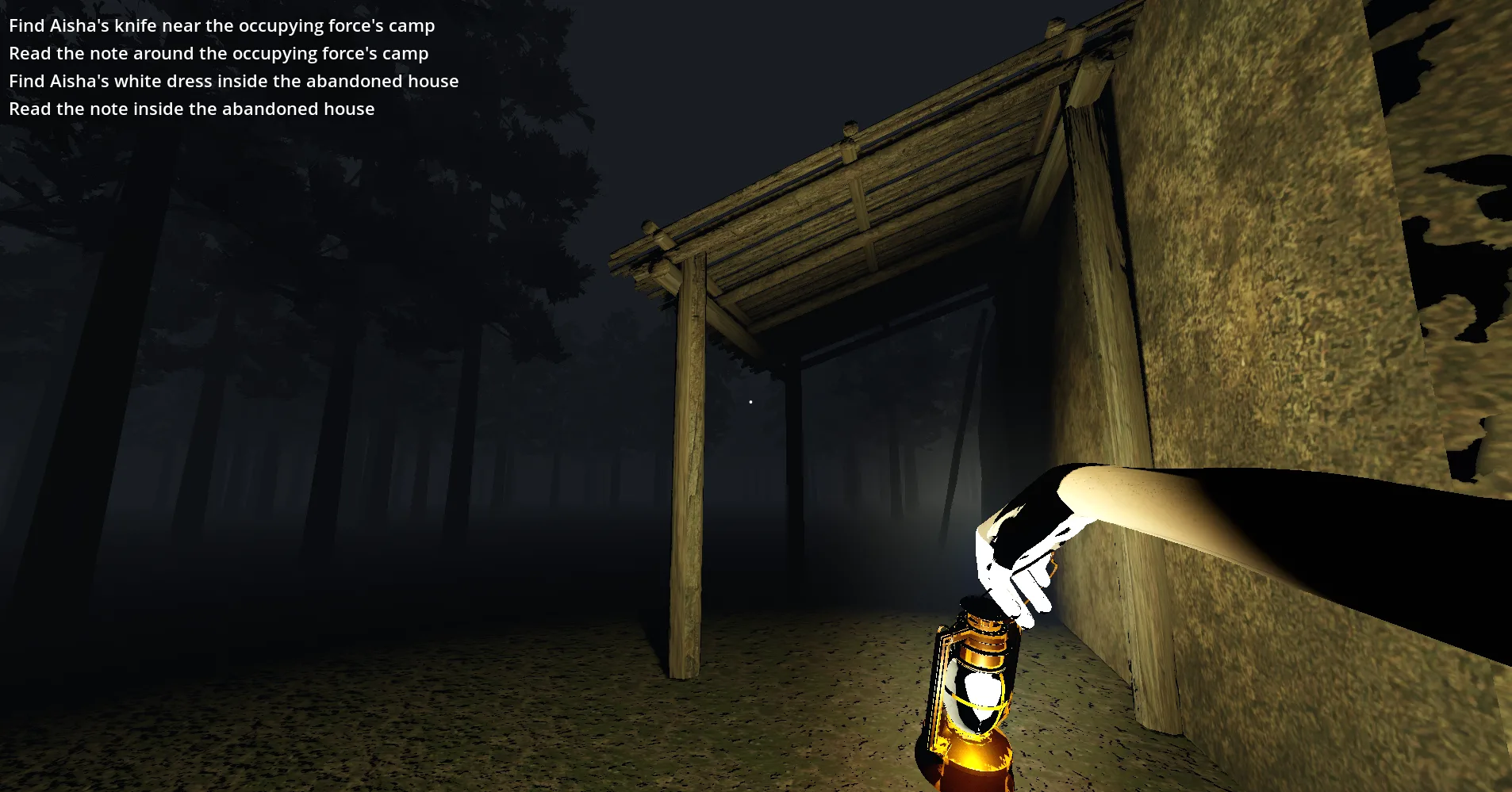
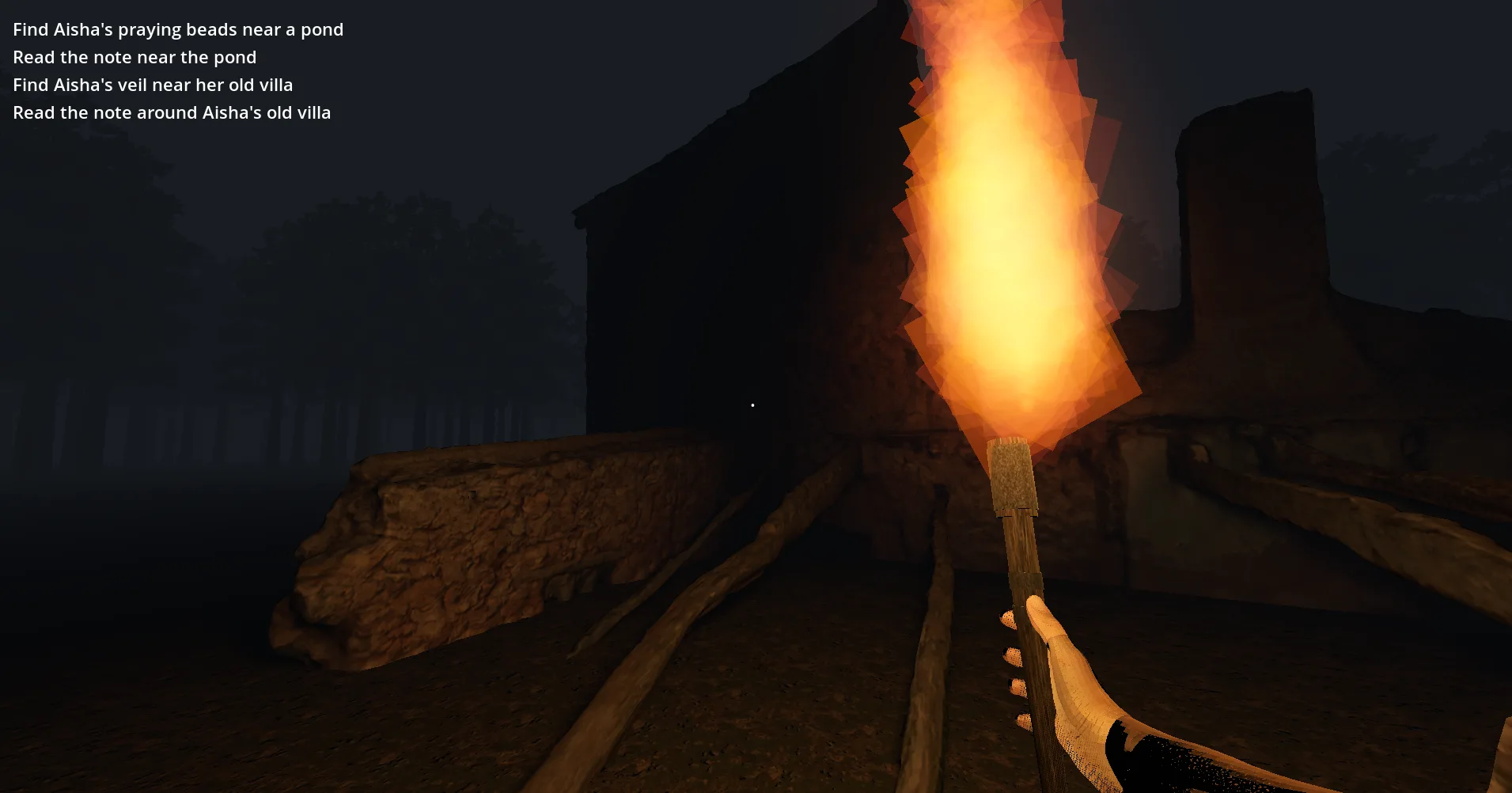
The first level is set in 1970 and lit by a flashlight. The second, in 1770, gives the player a lantern. The last, in 1570, leaves only a burning torch. The tools grow older as the story does, and the forests and ruined walls fall darker around them.
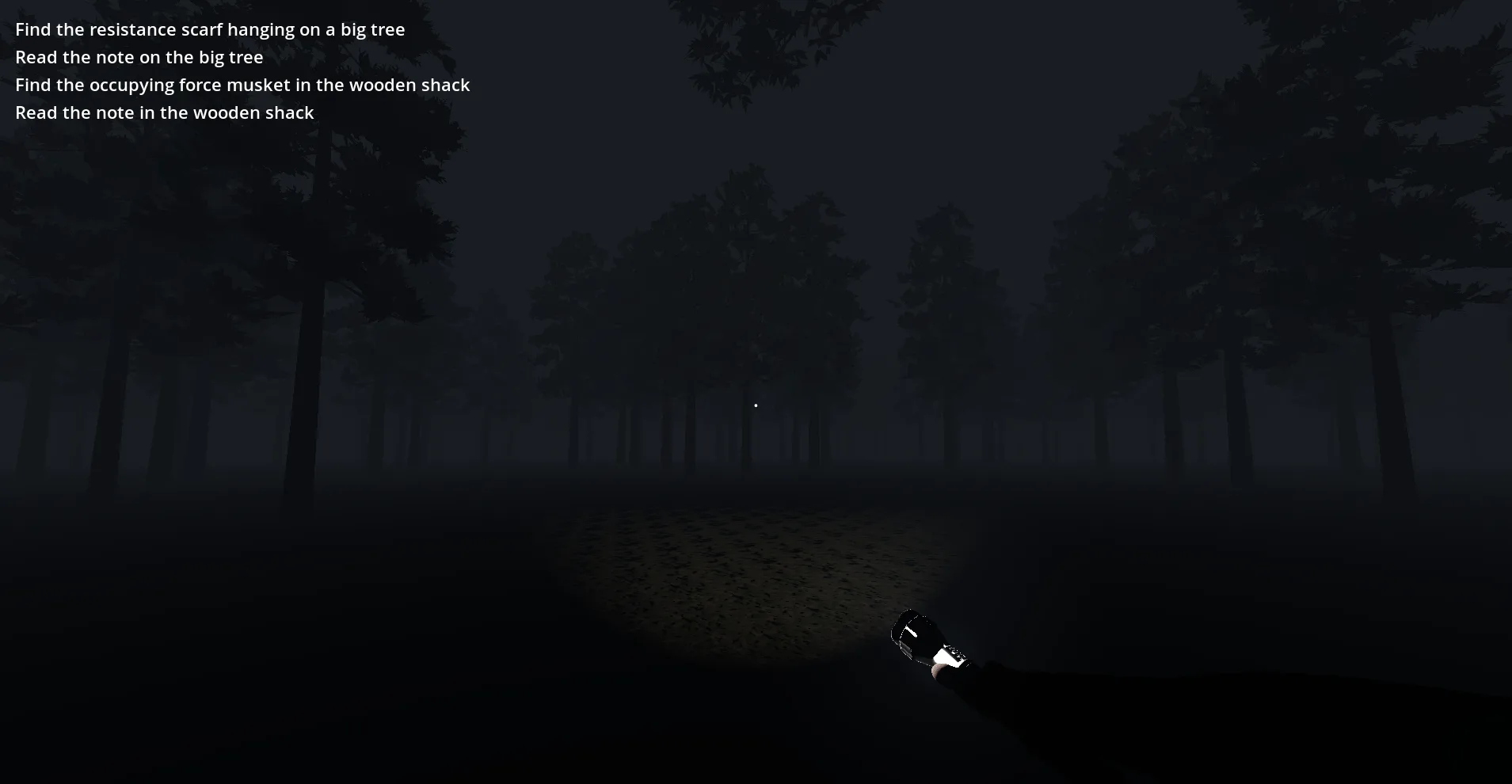
Polish, under that clock, meant working small and clean. “Since the time was so little, I just tried my best to make the game look as polished as possible while using basic assets,” he added.
Three Aishas, one woman
Each era presents a different version of Aicha’s story. In one, she is a resistance fighter who hunts down enemy soldiers under the cover of darkness.
In another, she is a village woman seeking revenge for her husband’s murder. In a third, she is a Portuguese countess abducted by Moroccan pirates.
The contradictions are intentional. Abouchadi designed the game so that each retelling reshapes Aicha’s life, reflecting how legends evolve with every storyteller. “I had one main goal, which was to showcase Aicha’s different stories without modifying anything for them,” he said.
The version he grew up with sits between the first two. “You hear about this woman who fought the Portuguese soldiers a long time ago by seducing and then killing them until they caught her and killed her, but she continued doing the killing as a spirit even after death,” he recalled.
The things she left behind
Rather than fight Aisha, the player spends the game gathering what she left behind. Across the three eras those objects add up to a life: a resistance scarf hung on a tree and an enemy musket in a wooden shack, then her knife near the soldiers’ camp and a white dress in an abandoned house, and finally her praying beads by a pond and her veil at her old villa.
A handwritten note waits beside each one, filling in the story piece by piece.
The collecting is the emotional core of the design. “The idea was that by having the player interact with all her items, it would humanize her a bit by bit, because at the end the goal was to show the real Aicha and not the myth,” Abouchadi explained.
The woman behind the legend
The history under the game is real, if contested. As Portugal seized Moroccan ports in the sixteenth century, a woman from the El Jadida area is said to have lured enemy soldiers into night ambushes where fighters waited to kill them.
Unable to catch her, the Portuguese are said to have called her “La Condessa,” the countess, a title later worn down into Kandicha.
Over the centuries that fighter dissolved into the seductress of folklore, a beautiful woman with the legs of a goat who haunts rivers and the sea.
Abouchadi thinks Moroccans have begun reaching back past the fright. “We’re at a point where most people are familiar enough with who Aisha really was and how this whole myth came to be because of Portuguese soldiers,” he noted.
When the scares stop mattering
Fear, in the end, was never the real aim. Abouchadi believes local players flinch at different things than foreign ones.
“Moroccans in general tend to get scared more by religious-themed horrors, especially jinn-related stuff,” he said, naming the same possession stories that frightened him as a boy.
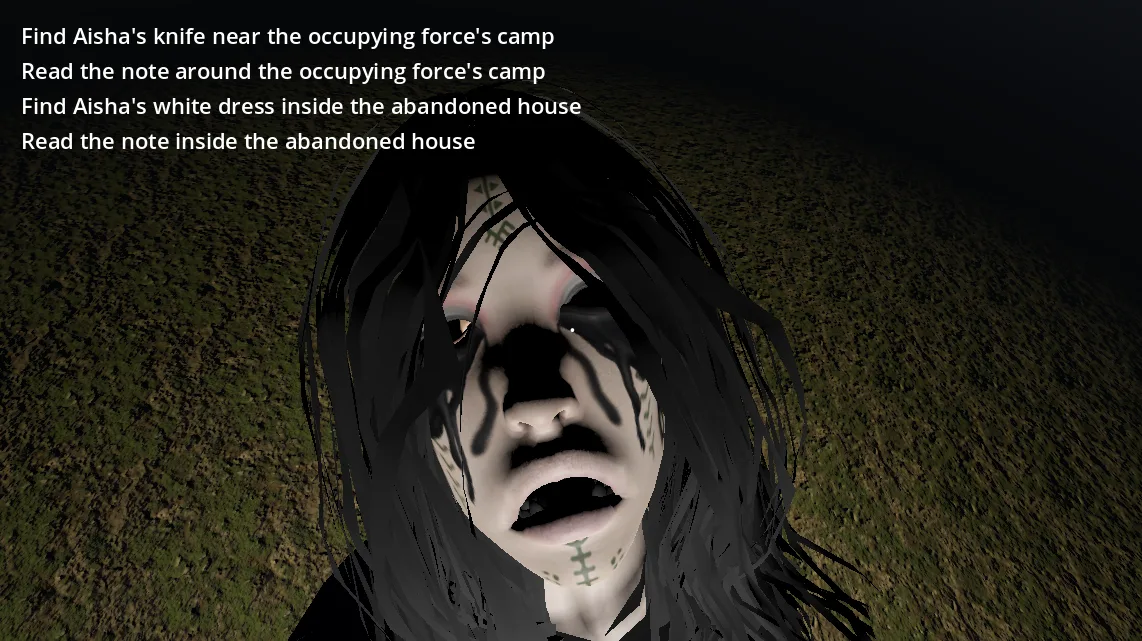
In “Aisha,” the frights thin out by design. By the final and oldest chapter, the spirit has become harmless, and the woman is all that remains.
“Aisha” is still a jam project rather than a finished release, and its maker is already looking past it.
His next game is bigger. “I’ve been working on a roguelite, though it’s a pretty ambitious project, so progress will probably be slow with my current schedule,” he added. Whatever he releases next, he has already managed the harder trick once, taking a name some Moroccans still will not say out loud and handing it back as a person.