


Fez — Somewhere in New York, Meriem Sakrouhi is walking through a city that knows more about her father than most of the people passing her on the sidewalk ever will.
For years, the Moroccan filmmaker and architect called him almost every day as she left her apartment, allowing their conversations to accompany her through the streets of New York.
He was usually in Casablanca, thousands of miles away, yet he knew where she was going, what occupied her thoughts, and what had happened since their last conversation.
He jokingly called himself her “free taxi,” a nickname that would eventually give its name to “Mon Taxi,” her deeply personal eight-minute documentary about love, memory, and grief.

Her father has since passed away, but the conversations have continued, becoming the foundation of a film that premiered at the Tribeca Film Festival in June 2026.
In an interview with Lifestyle Magazine, Sakrouhi opened up about the deeply personal story behind “Mon Taxi,” her relationship with her late father, and how making the film transformed her experience of grief and her connection to New York.
What began as an intimate creative response to loss has since reached audiences across North America and Europe, with further screenings scheduled in Africa and the United States.
The phone calls that became a film
The story behind “Mon Taxi” begins long before Sakrouhi considered making a documentary, with an ordinary family ritual that gradually became inseparable from her experience of living abroad.
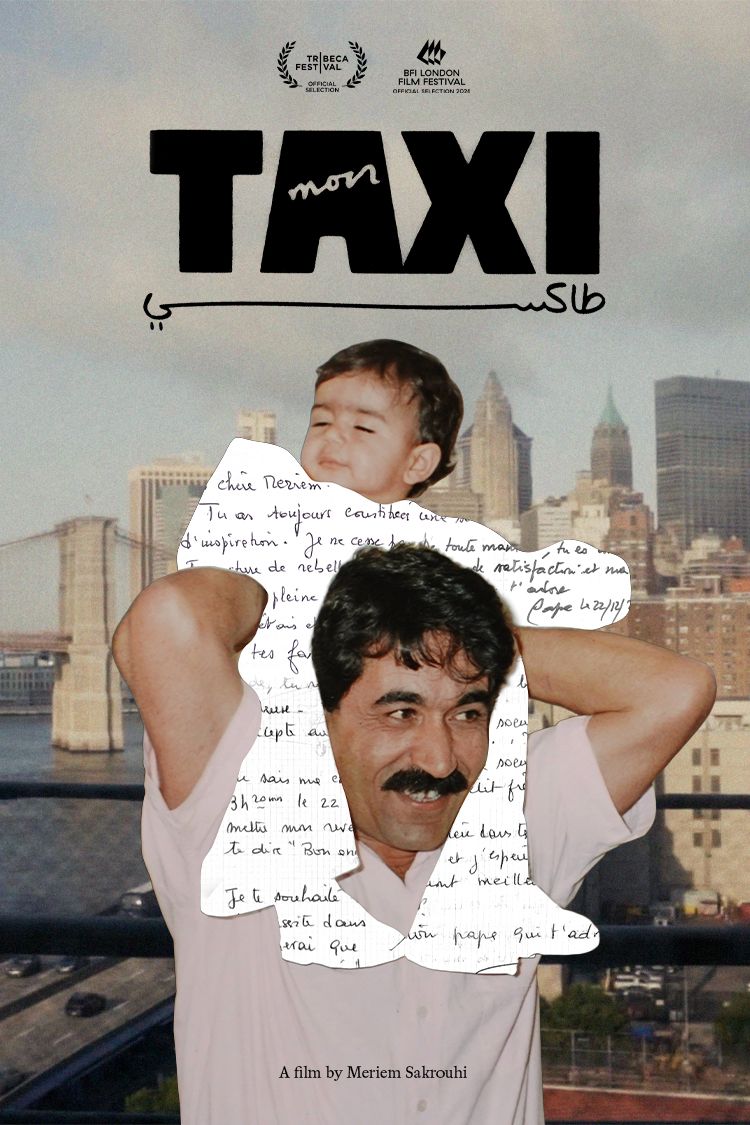
She left Morocco at 17, and the telephone became an important connection to her father, who remained a familiar presence throughout her daily life overseas.
“Part of my relationship with my dad is through New York, and part of my relationship with New York is through my dad,” Sakrouhi told Lifestyle Magazine.
For the final two years of his life, father and daughter also spent considerable time together in New York, exploring the city on foot whenever they could.
Their longest walk took them from Battery Park to Harlem, a journey spanning neighborhoods that would later become part of the emotional geography of her film.
After his death, Sakrouhi continued recording messages to him, carrying on the conversations even though the person who had always listened could no longer answer.
The idea of transforming those recordings into cinema came unexpectedly during a trip, when she encountered a fig tree that reminded her of her father’s affection.
He had expressed his love through small gestures, including waking early to visit the market and carefully selecting the freshest figs for his family.
She photographed the tree and instinctively prepared to send him the image, only to remember that she no longer could.
“Something then clicked, and I wrote on my phone: ‘Make a short film with the voicemails,'” she recalled.
At first, she had no intention of showing the project publicly, treating the recordings as a private way to express feelings she was still learning to understand.
That changed when someone who had also lost their father watched an early version and told Sakrouhi that the film had made them feel less alone.
Months later, she began submitting “Mon Taxi” to festivals, allowing a personal conversation to become something that strangers could recognize within their own experiences.
New York as a living memory
As an architect, Sakrouhi approaches space with particular sensitivity, understanding that streets and buildings acquire meaning through the lives unfolding around and within them.
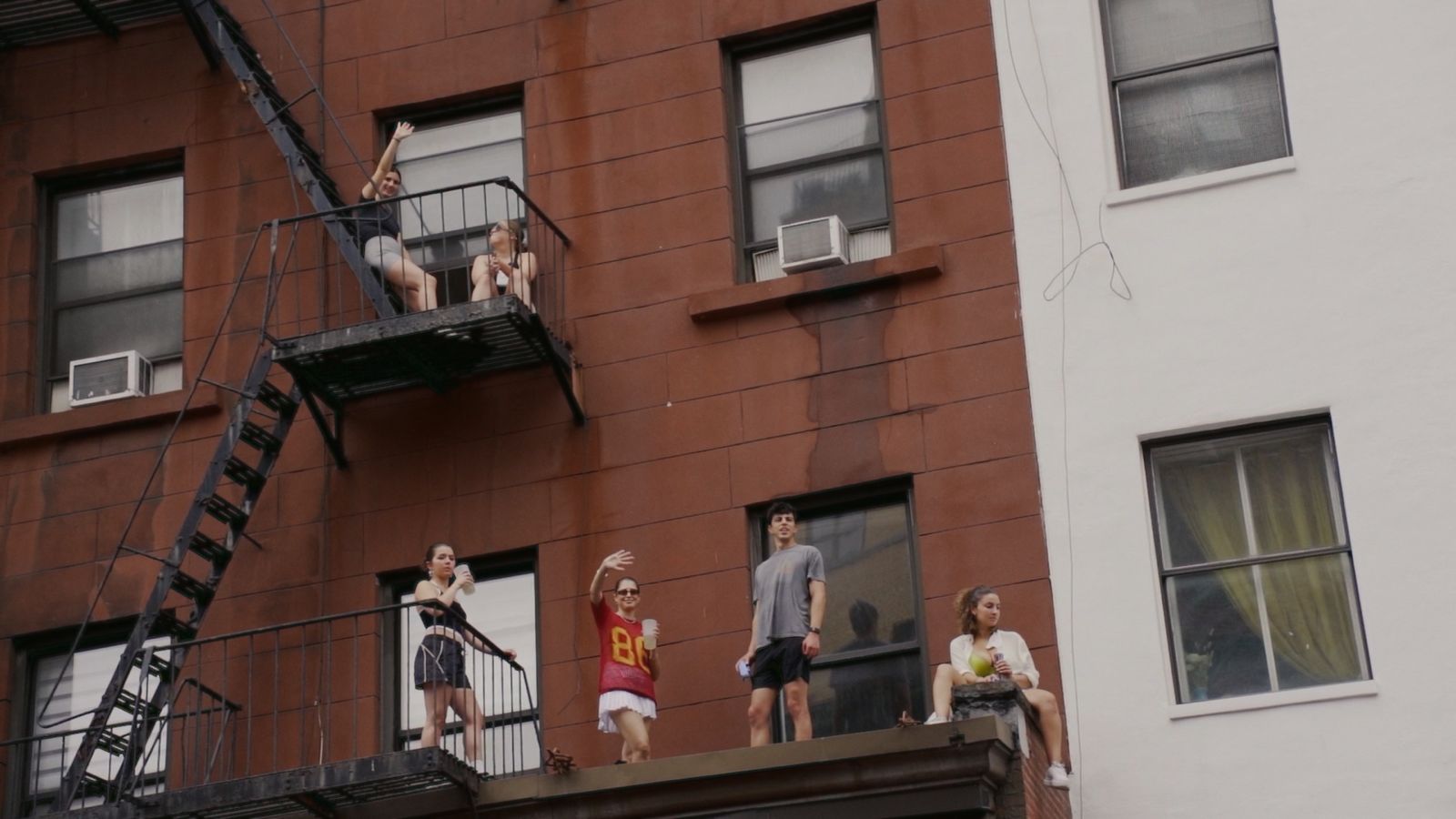
For “Mon Taxi,” she carried her camera through New York, filming the places she had visited with her father and those she wished they could have explored together.
Parks, sidewalks, coffee shops, and familiar corners became part of a visual record through which she could revisit their shared experiences without attempting to recreate them.
She accumulated footage over roughly a year before organizing the material around her recorded messages, choosing images that reflected the emotional character of each conversation.
Sometimes the footage expresses emotional distance, while other sequences carry the weight of overwhelming feelings or the quieter rhythm of an ordinary day.
The documentary draws on eleven voicemails, allowing memories, family updates, humor, and grief to coexist without presenting mourning as a single, unchanging emotional condition.
“Through making the film, New York went from the city that only held the painful memories of losing my dad to the place that I’ve always loved,” she explained.
The city, she added, has gradually become somewhere she can heal and experience a renewed sense of closeness to her father.
This transformation gives the documentary much of its visual character, as movement through familiar places becomes another way of continuing a relationship interrupted by death.
Four languages and one shared understanding
The emotional intimacy of “Mon Taxi” also emerges through its multilingual conversations, which move naturally between Moroccan Arabic, French, Spanish, and Tarifit.
Rather than translating a single relationship into one language, Sakrouhi preserves the linguistic variety through which she and her father understood each other.
Darija and French formed part of everyday conversation, while Spanish became associated with her education and the homework her father helped her complete.
Her parents had enrolled their children in a Spanish school, and her father already knew the language through his upbringing in northern Morocco.
Tarifit, however, occupies a particularly intimate place in the film because it connects Sakrouhi to her father’s Riffian identity and emotional world.
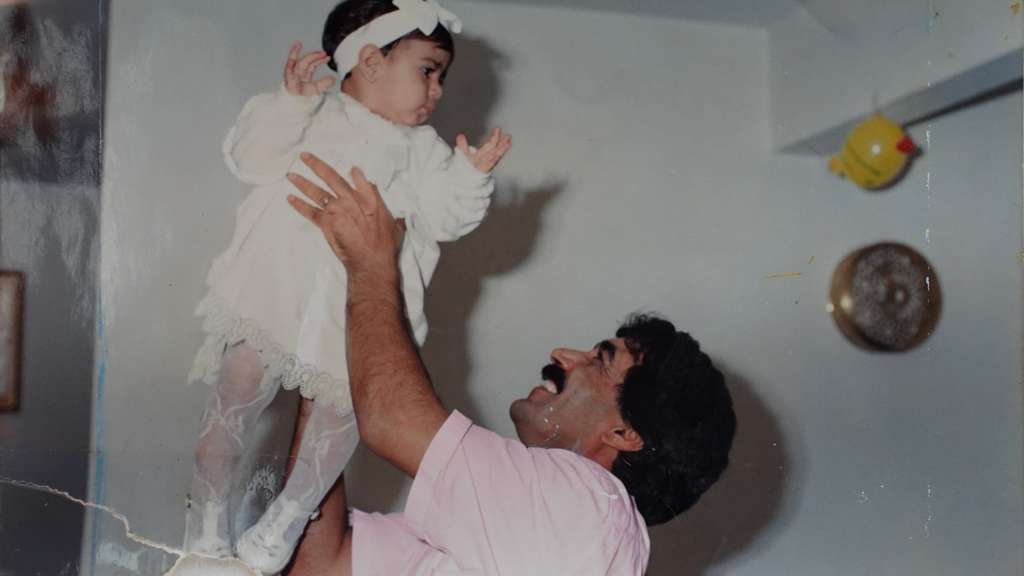
Although she does not speak the language fluently, certain expressions belonged specifically to their relationship, including the affectionate name “Babainou,” meaning “Daddy.”
“Riffian is the language of my dad’s heart,” she explained, describing how speaking to him in Tarifit seemed to reach a deeper part of their connection.
For Sakrouhi, those distinctions reveal how a multilingual family can develop an emotional vocabulary that belongs to its members more intimately than any single language.
Her father was born in Tamerkalt, a village in Morocco’s Rif Mountains, and his influence continues to shape her relationship with her heritage.
Since losing him, she has felt an increasing desire to connect with Moroccan artists, music, cinema, and communities in New York.
He had once been her trusted source of news from Morocco, helping her understand events back home and offering a perspective she knew she could rely on.
Without those daily conversations, the distance from Morocco began to feel different, encouraging her to seek connections that might bring parts of their shared world closer.
A different portrait of Moroccan fatherhood
Beyond its exploration of grief, “Mon Taxi” offers a portrayal of Moroccan and Riffian fatherhood that Sakrouhi believes remains insufficiently represented on screen.
She describes a relationship characterized by tenderness, encouragement, and mutual understanding, particularly during moments when her independent personality challenged expectations within her family.
“My dad knew me. Like, really knew me, on a deep level,” she said, explaining why he remains the person she instinctively wants to speak to.
She remembers being considered the family rebel and credits her father with teaching her to respond to such labels with confidence rather than embarrassment.
His advice was disarmingly simple, encouraging her to answer anyone who called her different or rebellious by saying “thank you.”
“Our relationship was soft, loving, and full of understanding,” she recalled, hoping that audiences would recognize a form of father-daughter intimacy rarely given comparable attention.
In sharing that relationship, Sakrouhi has also created a portrait of a man whose defining qualities remain present through the memories and habits he left behind.
From Tribeca to Rabat and beyond
“Mon Taxi” made its world premiere at New York’s Tribeca Film Festival in June 2026, appearing in the documentary shorts program “Where We Belong.”
Sakrouhi directed, produced, wrote, and edited the documentary, while its cinematography credits also include Ilyas Sakrouhi, with music and sound design by Mel Guérison.
The film subsequently appeared at the HollyShorts Film Festival and the Calgary International Film Festival, before reaching the Hamptons and London’s BFI Film Festival in October.
In London, it screened on October 13 and 17 as part of “Altered States,” a short-film program exploring fractured memories and experiences of loss.
The documentary’s festival journey now continues with several upcoming appearances, bringing its story to new audiences across different continents.
On November 6, “Mon Taxi” is scheduled to screen during the 30th Arab Film Festival’s “Emerging Voices” program at AMC Kabuki in San Francisco, beginning at 5 p.m. local time.
Audiences can explore the festival program for screening information and related films.
The documentary is also competing in the documentary shorts category at the Africa International Film Festival (AFRIFF), taking place in Lagos, Nigeria, from November 1 to 7.
Festival organizers have listed Sakrouhi’s film in the official selection, although its individual screening time has not been publicly confirmed.
Sakrouhi also told Lifestyle Magazine that “Mon Taxi” is expected to screen in Rabat on November 11 during the Festival International du Cinéma d’Auteur de Rabat (Rabat International Auteur Film Festival).
The festival runs from November 7 to 13, and audiences can consult its official website for further program updates and venue information.
Later in November, the documentary is included in Warsaw’s AfryKamera festival, which is spotlighting Moroccan cinema alongside films exploring African identity, history, and contemporary experiences.
Sakrouhi says the documentary has also achieved Oscar-qualifying status, an important milestone in a festival journey that began without any expectation of reaching a public audience.
The achievement brings its own emotional contradiction, because the person with whom she would most naturally celebrate the news is also the person whose absence inspired the film.
The conversation that continues
“Mon Taxi” ultimately returns to a familiar human experience, the impulse to share something ordinary with someone whose presence once made such moments feel complete.
For Sakrouhi, that impulse might arrive during a walk, at the sight of an unfamiliar fig tree, or after receiving news she knows her father would have understood.
Her documentary does not attempt to resolve that longing, instead showing how memory can preserve a conversation even when its original form is no longer possible.
“There’s something magical but also incredibly bittersweet about the journey with Mon Taxi,” she said, reflecting on the film’s growing international recognition.
“The film is now Oscar-qualified, and I feel like my dad is still taking me places.”
For a filmmaker whose relationship with her father was sustained across borders through everyday conversations, each new screening becomes another destination in a journey they began together.
And despite the festivals, audiences, and recognition that have followed, the simplest part of that relationship remains the hardest to replace.
“He’s the one I want to call,” Sakrouhi said. “Because he knew me best.”