

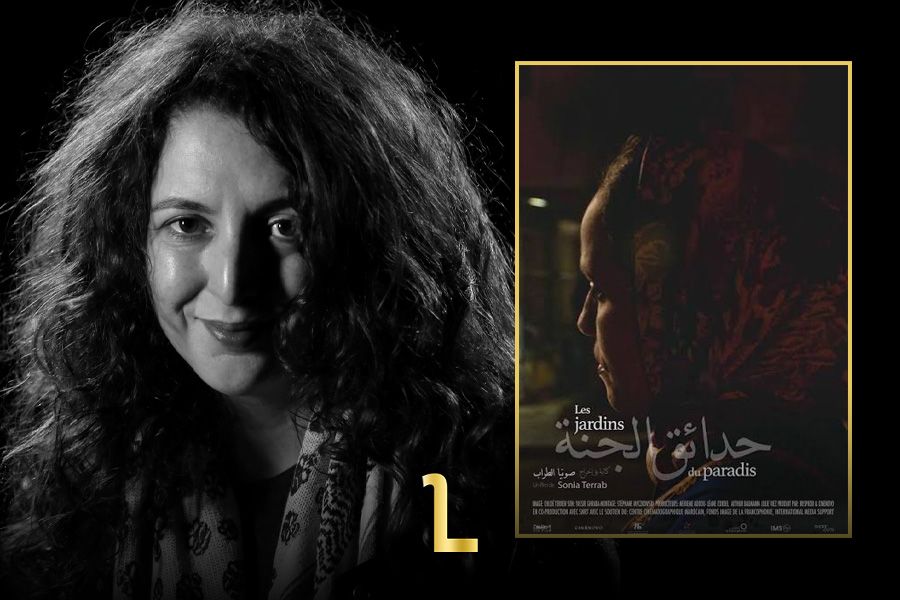
Casablanca – Moroccan short film “Paradise Garden” has added another international award to its growing collection, this time receiving the Methexis Award at the Medfilm Festival in Rome.
The award marks another achievement for director Sonia Terrab, whose film previously won two prizes at the 35th African, Asian, and Latin American Film Festival in Milan: Best African Short Film and the Multimedia San Paolo – Telenova Award.
“Paradise Garden” marks Terrab’s first fictional short film after years of documentary filmmaking. Yet, as she explained in an Instagram video, the film remains closely connected to reality. Although she tells the story through fiction, its characters and the situations they face reflect real experiences.
Terrab also spoke about how deeply Naima’s story touched her, expressing her happiness that it had reached the jury and audiences in the same way.
The story behind ‘Paradise Garden’
But what is the story that has moved viewers?
The film follows Naima and her son Ahmed, who live in a Moroccan bidonville. Their lives take an unexpected turn when they learn that their neighborhood, including Ahmed’s school, will be demolished.
With the father having left the family long ago, Naima faces a difficult situation. She wants to transfer her son to another school, but she cannot complete the process without his father’s approval and signature. Despite being the parent who raises and cares for Ahmed, she cannot make this decision on her own.
A story that goes beyond the screen
Naima’s situation may belong to a fictional film, but it is far from unfamiliar. Across Morocco, women and children continue to face the consequences of legal and social structures that can leave mothers without the authority they need to make important decisions for their children.
Under Morocco’s current Family Code (Moudawana), the father retains legal guardianship (wilaya) over children by default, even when he is absent. This means that a mother can find herself unable to handle certain administrative matters independently without a court order, creating obstacles that affect both her and her children.
And perhaps this is where “Paradise Garden” finds much of its significance. Its story reminds us that the issues we see on screen do not always end when the credits roll. For many families, they remain part of everyday life.
Giving a voice to overlooked stories
Terrab’s move into fiction does not take her far from the subjects that have shaped her documentary work. Her films often focus on people whose experiences rarely receive the attention they deserve, bringing their everyday struggles into view.
Her previous works include “Shakespeare in Casablanca” (2016) and “L7sla – The Dead End” (2019). With “Paradise Garden,” she continues to explore social realities through cinema, this time using a fictional narrative to bring viewers closer to Naima and Ahmed’s experience.
Cinema, after all, can do more than entertain. It can help us recognize situations we might otherwise overlook, question the systems that shape people’s lives, and give visibility to those whose stories deserve to be heard.