
800 Drones Will Light up Chellah This September
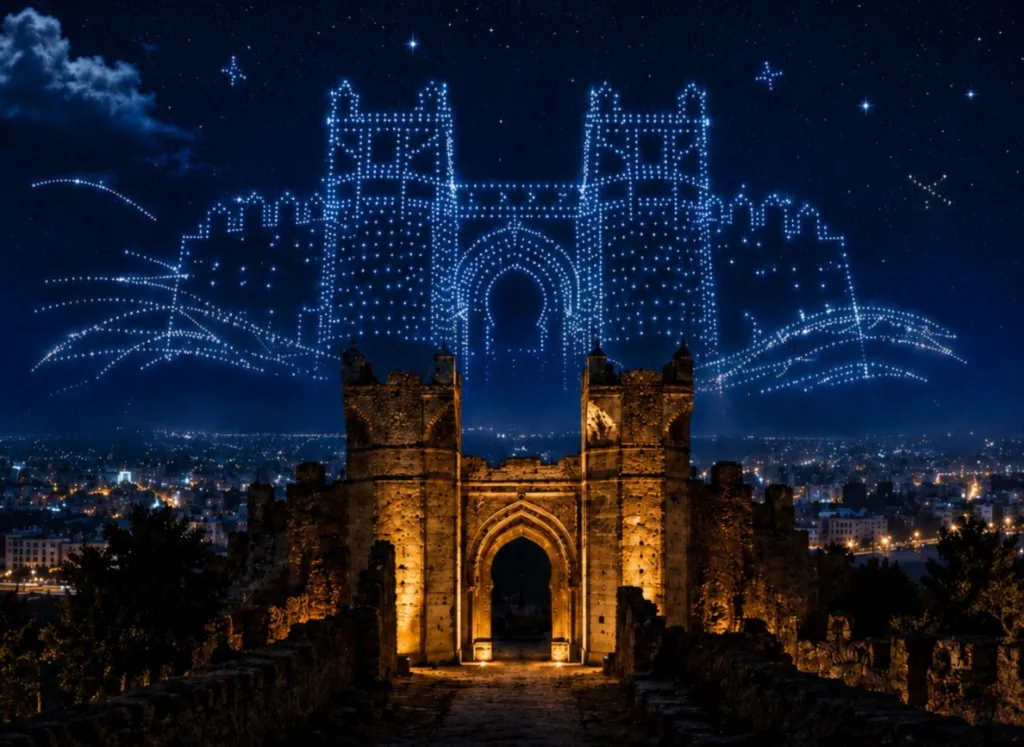
Chellah’s ancient walls are set to come alive as history lights up the Rabat sky.
‘Nostalgia’ Returns to Rabat’s Chellah for Five Nights
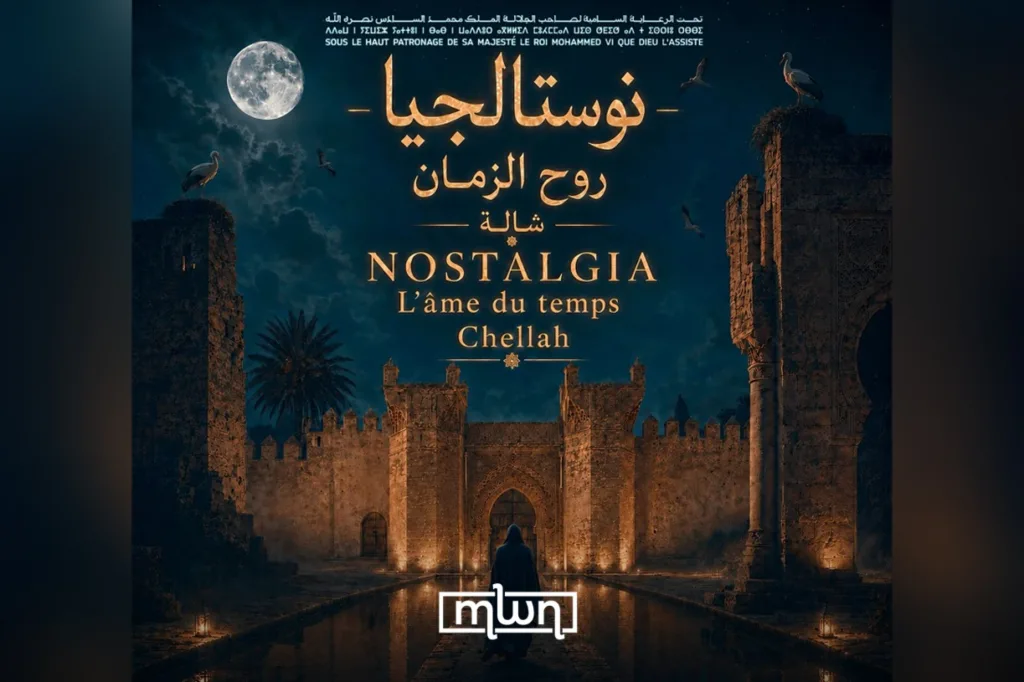
Expectations are naturally high for the upcoming edition, hoping that it will once again introduce an original artistic vision that remains faithful to the innovative spirit that has defined Chellah’s “Nostalgia” since its inception.
Historic “Nostalgia” Show Returns to Iconic Chellah Site in Rabat
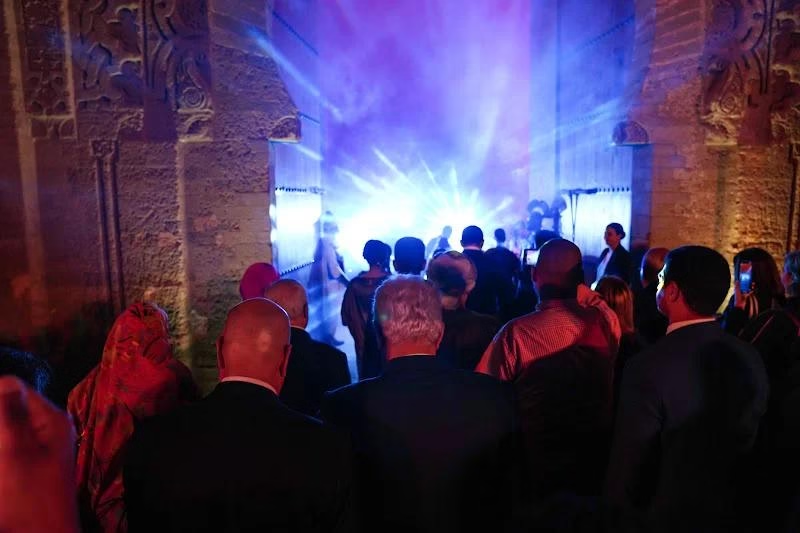
Rabat will come alive this July with the return of “Nostalgia – Emotion of Yesterday,” a historical artistic show set in the ancient Chellah archaeological site. Fez– Rabat is hosting the third edition of the historical art festival “Nostalgia – Emotion of Yesterday,” from July 9 to July 13, 2025, at the historic Chellah archaeological site. The festival is returning by popular demand after conducting successful previous seasons, with the promise of an out-of-this-world cultural experience within one of Morocco’s greatest landmarks. Organized by the Ministry of Youth, Culture, and Communications, in partnership with the Moroccan Global Studios in Ouarzazate, the initiative falls within efforts to restore heritage destinations by transforming them into vibrant settings for artistic and cultural sharing. “Nostalgia” offers nightly shows in three sessions at 9 p.m. and invites Rabat residents and travelers to be a part of key moments in Moroccan history in the enchanted ambiance of the Chellah location. The play production is meant to revive the memory of Chellah in a sumptuous dramatic tableau recounting the history of the succession of civilizations which have shaped the site, from the Romans and Phoenicians to Islamic kingdoms and the Alaouite era. The production engages over 350 art, technical, and related crafts professionals on a yearly basis, testifying to the production’s status as a leading cultural industry employer. Aside from entertainment, “Nostalgia” is one component of a broader cultural and tourism activation strategy that reflects the growing prominence of cultural tourism. Nassour says that cultural industries today are a dynamic sector, with both economic and historical momentum in Morocco. The Chellah site itself is a cornerstone of Rabat’s colorful history, holding relics dating centuries before Christ. It has been a UNESCO World Heritage Site since 2012. Organizers hope the “Nostalgia” show will heighten public awareness of Chellah’s value and increase its artistic and cultural stake in a manner that is consistent with its status in history.
Chellah Transforms into a Living Museum of Mauritanian Heritage
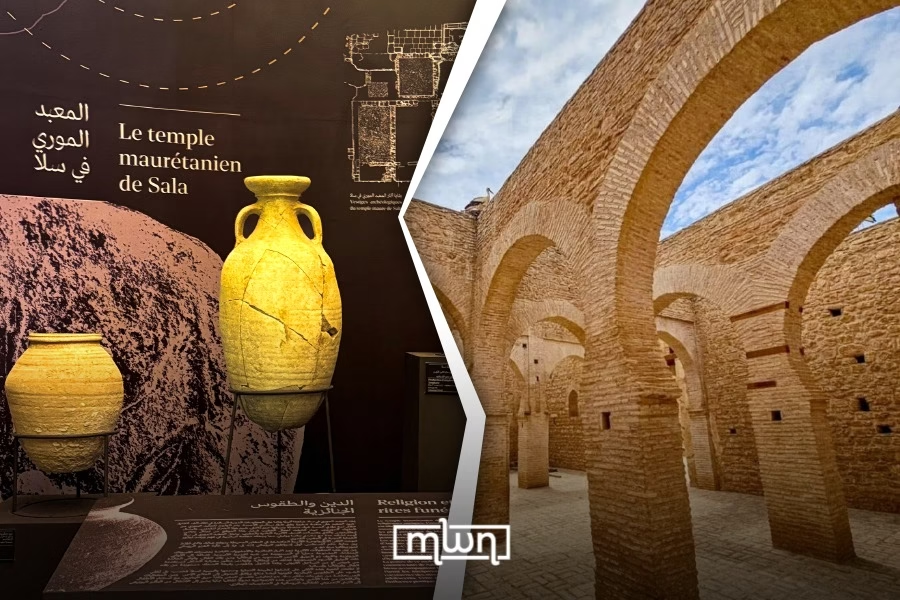
An ancient necropolis is stepping into the present as Morocco turns Chellah into a museum under open skies. Fez– Chellah is no longer just an archaeological site, it’s now a living, open-air museum. With the launch of the new exhibition “Sale, Hidden Treasures: The Mauritanian Legacy” at Bab Ain Ajenna, Rabat’s ancient necropolis is being reimagined as a cultural space where history isn’t just preserved, but actively shared with the public. This exhibition is the latest chapter in Morocco’s growing commitment to heritage accessibility. It builds on the momentum of Bank Al-Maghrib’s earlier initiative, “Sale, Hidden Treasures of an Ancient Moroccan City,” and brings together an impressive list of collaborators: the Rabat Region Historical Heritage Company (RRPH), the Bank Al-Maghrib Museum, the Ministry of Youth, Culture and Communication, the National Museums Foundation, and the National Institute of Archaeology and Heritage Sciences. This coalition signals a clear intent: to make heritage tangible, engaging, and relevant to today’s audiences. The exhibition is part of a wider 2024 revitalization program for the Chellah, spearheaded by RRPH. Recent upgrades include a newly designed visitor path, custom signage, and multilingual audioguides, all created to elevate the experience from a passive walk through ruins to an active encounter with Morocco’s ancient past. Now, with this latest addition, the site is taking on a whole new identity: that of a museum without walls. Displayed for the first time, the exhibition features a remarkable collection of artifacts unearthed from the Chellah itself. These include pottery, coins, sculptural fragments, and religious items; each one a direct link to the site’s Mauritanian period. The result is a visitor experience that is both scientifically rich and deeply immersive. But more than just artifacts under glass, what’s being showcased is a story. A story of a city that once stood at the intersection of civilizations, trade routes, and empires. The objects reflect daily life, spiritual practices, and architectural flourishes of the time, offering a grounded but vivid picture of a long-gone era. Seeing them displayed where they were originally found adds a powerful dimension of context and connection. This approach to cultural mediation, bringing history to life through place-based storytelling, is central to the exhibition’s mission. It’s not about nostalgia or romanticism. It’s about real, evidence-based history made accessible and meaningful to a wide public. With this transformation, the Chellah is no longer just a monument to visit. It’s a museum to explore. One where stones speak, and silence holds centuries of memory. One that invites Moroccans, and visitors from around the world, to see their heritage not as something distant, but as something alive. The exhibition is now open to the public, marking an important step in how Morocco reimagines and reclaims its cultural legacy.