The Hand of Protection: The Khmissa in Moroccan Culture
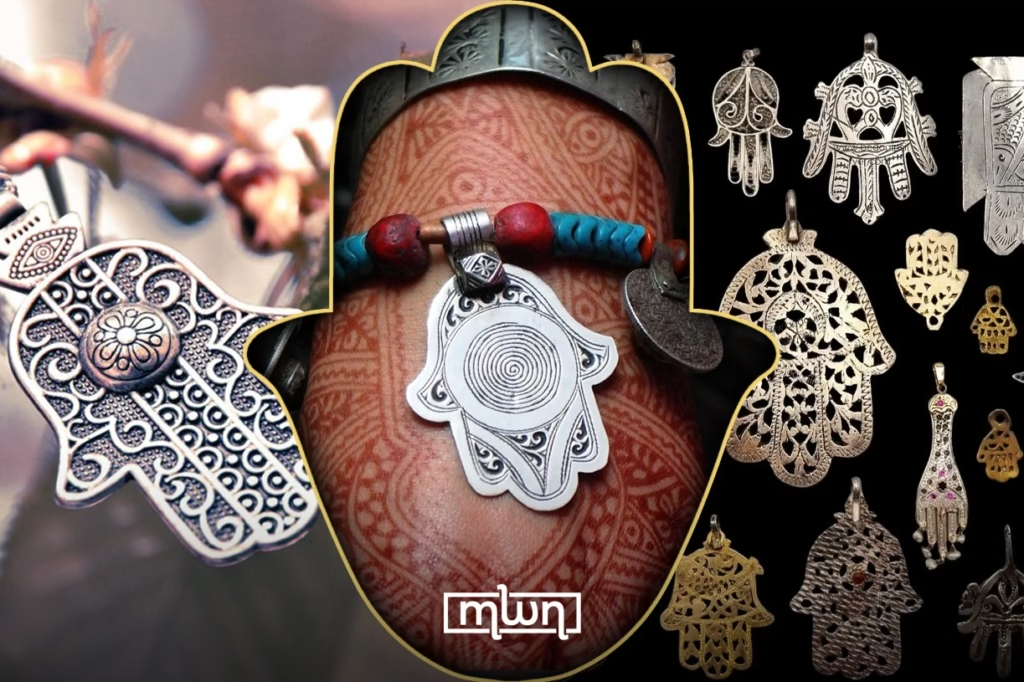
The Khmissa, a symbol with ancient roots, continues to hold a special place in Moroccan culture. Rabat – Shaped like a hand with two thumbs and often an eye in the center, the Khmissa is one of Morocco’s most recognizable symbols. It is deeply rooted in tradition and widely seen as a symbol of protection. Some of the earliest traces of the Khmissa date back to the Carthaginian era. Archaeological evidence links it to the goddess Tanit, worshipped in ancient North Africa. This suggests the symbol’s origins go far beyond its modern cultural use. Some scholars believe the Khmissa originated in ancient Mesopotamia, modern-day Iraq, where it was also used as protection against the evil eye. The Khmisa, also called Tafust in Tamazight, has long held cultural and spiritual significance among Amazigh communities. The emblem was believed to offer protection, fertility, and strength. With the rise of Islam, the amulet became known as the Hand of Fatima, linking it to Fatima Zahra, the daughter of the Prophet Muhammad, who is revered for her purity and protection. Once commonly used across Morocco and North Africa to ward off the evil eye, the Khmissa carries her blessings and symbolizes strength and safety. While many still recognize its meaning, it is not as widely used for protection as it once was. Beyond its spiritual meaning, this symbol remains part of daily life in Morocco. Artisans craft it into jewelry, ceramics, and decorative items. In places like Fez and Tetouan, it’s embroidered onto traditional garments. It’s also found in homes, adding a touch of tradition to modern spaces. Today, the Khmissa is more than a symbol of protection; it has become a powerful sign of Moroccan identity and pride. Many wear it to express their connection to culture and heritage.
The Lost Art of Reading Coffee Grounds
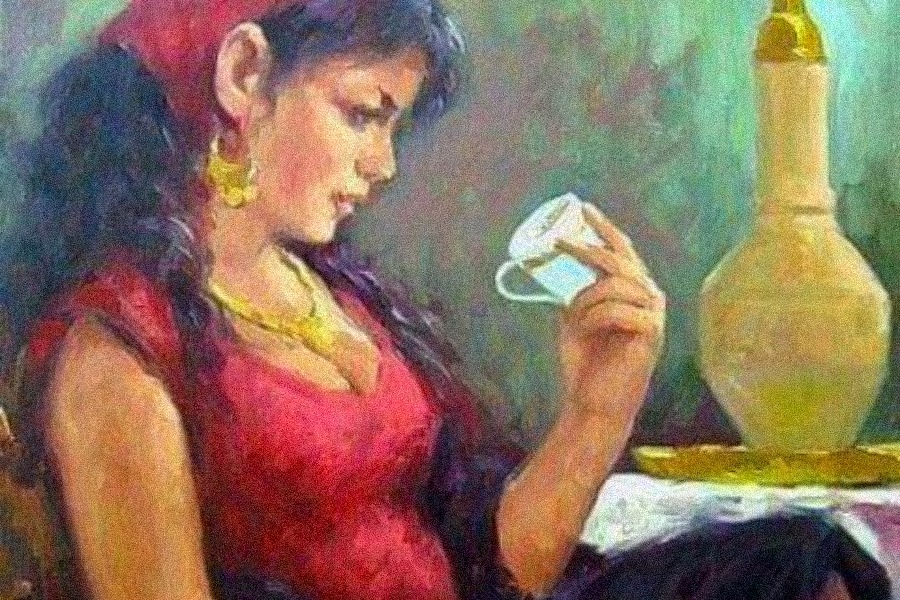
Coffee is more than just a drink. It’s a moment to sit, to talk, to laugh, and just sometimes, to read the future. Fez – Long ago, Arab women used coffee grounds to read secrets hidden in the cup. This old habit is not as common today, but in some homes, it still happens when friends gather. It starts with a small cup of black coffee, usually strong and thick, like Turkish coffee. After drinking, the person turns the cup upside down on a small plate. The cup stays upside down for a few minutes, so the grounds can slide down and leave shapes inside. Then, the real magic begins. One woman, usually the oldest or the one known for her “gift”, picks up the cup. She turns it slowly, looking at the dark shapes inside. Every line, every spot, every curve tells a story. Sometimes, the shapes show clear pictures: a tree, a bird, a road. Each picture has a meaning. A bird can mean news is coming. A tree can mean growth or family success. A road can mean a journey, either in real life or a change in someone’s path. Other times, the pictures are not clear. They look like clouds or strange forms, and the woman must feel their meaning. This is why not everyone can read coffee grounds. It’s not only about seeing shapes, it’s about understanding feelings, energies, and connecting the pictures to the person’s life. This art is not just about knowing the future. It’s also about sharing advice, opening hearts, and sometimes, giving hope. Women used to do it for fun during afternoons together, especially when talking about love, marriage, or family problems. It was a way to talk without asking too many questions, to offer advice without sounding too direct. Even though many young people today don’t believe in it, some still enjoy it. It brings laughter, curiosity, and a small taste of the past. It also reminds them of their mothers and grandmothers, sitting together, laughing and guessing what the future holds. In cities, this tradition is disappearing. Life moves faster now. Coffee comes from machines, and people have less time to sit and watch the grounds dry. But in some villages, and in homes where culture still sits at the heart of daily life, the cups still turn, the grounds still slide, and the secrets of the future still rise from the dark. Because sometimes, the future is only a sip away. Read also: Ancient Moroccan Rituals to Keep the Peace
Superstitions in Morocco: Beliefs That Stand Against Religion
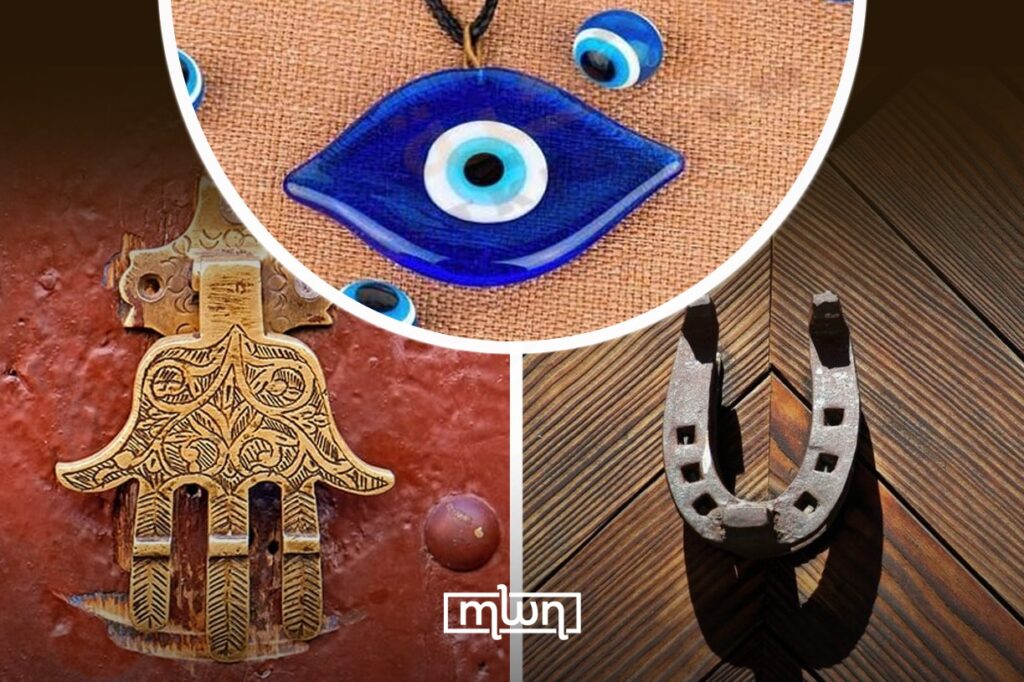
A simple gesture, a small object, can they really change fate? Fez – Morocco is full of traditions, some beautiful and meaningful, others rooted in superstition. Many people believe in symbols that protect against bad luck, such as the hand of Fatima (Khamsa), the blue eye, or the horseshoe above doors. Others knock on wood when they hear bad news, saying, “God forbid.” These habits are part of daily life, passed down for generations. But what many don’t realize is that Islam actually forbids these beliefs. The power of the evil eye One of the strongest superstitions in Morocco is the fear of the evil eye. People believe that envy can cause misfortune, sickness, or failure. To fight it, they wear blue-eye charms, hang Khamsa hands in their homes, or tie blue beads on baby clothes. Some even burn special herbs or use salt to “break” the evil eye’s effect. Islam teaches that the evil eye is real, but protection comes from God, not objects. Reciting verses from the Quran and making prayers (duas) is the right way to seek protection. Relying on charms is not just useless, it is against Islamic teachings. Knocking on wood and saying ‘god forbid’ Another common habit is knocking on wood after saying something bad as if the wood has the power to block evil. People say “God forbid” while touching wood, thinking it will prevent bad things from happening. This idea has no connection to Islam. In fact, it comes from ancient beliefs that spirits live in trees. Islam teaches that only God controls destiny, and knocking on wood is meaningless. The Horseshoe Many Moroccan homes have a horseshoe above the door, which is believed to keep away bad energy. Some say it brings good luck, while others believe it protects against jealousy. This belief comes from ancient times when people thought iron had magical powers. Islam does not support this idea. Protection and blessings come from faith and prayer, not from a piece of metal. People grow up seeing their parents and grandparents follow these customs, so they continue them without question. Many do not know that Islam strictly warns against believing in objects for protection. The Prophet Muhammad (peace be upon him) made it clear: nothing has power except Allah. Superstitions are part of Moroccan culture, but they should not replace faith. It is important to educate people and remind them that real protection comes from prayer, trust in God, and good intentions. The next time someone reaches for a charm or knocks on wood, they should ask themselves: “Do I believe in this, or do I believe in God?” Read also: Why Do Moroccans Love Gossip?