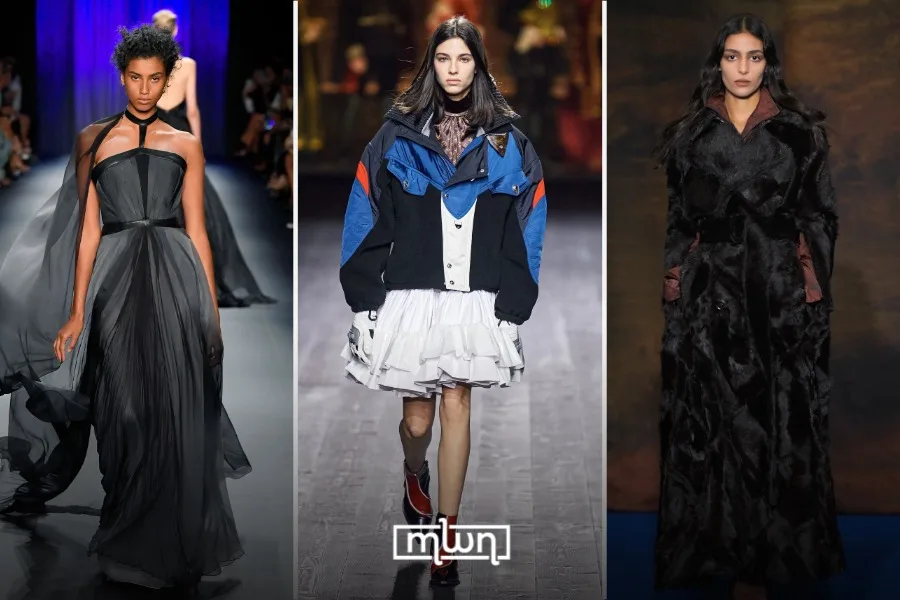
Marrakech – Over recent fashion seasons, names like Loli Bahia, Imaan Hammam, Nora Attal, Bella Hadid, Malika El Maslouhi, Tara Emad, Amira Al Zuhair, and Ameni Esseibi, among others, have increasingly dominated fashion weeks from Paris to Milan, and beyond.
They represent a shift not just in aesthetics, but in representation, voice, and power.
Loli Bahia, the French-Algerian rising star, recently walked for Chanel at Paris Fashion Week under Matthieu Blazy, wearing a sharply tailored charcoal suit.
She also made headlines earlier this year in Vogue Arabia, being recognized as one of fashion’s new Gen Z icons.
Imaan Hammam, of Egyptian–Moroccan–Dutch descent, is one of the industry’s most consistent faces. She’s graced a multitude of Vogue covers, known as an “Industry Icon,” and is among the highest-paid models in her generation.
Nora Attal, a British-Moroccan model, has achieved major editorial success and has been named an icon by models.com. She frequently appears in top designer campaigns and shows.
Malika El Maslouhi, born to a Moroccan father and Italian mother, has become a fixture in luxury houses like Chanel, Dior, and Gucci, and was recently named in Models.com’s “Money List.”
She also fronted the 2026 resort campaign for Anthropologie.
Tara Emad, an Egyptian actress-turned-model, recently joined the BoF 500 list for 2025; an acknowledgment of her influence in fashion globally.
She has also worked as a Chanel ambassador, the first Arab model to do so.
Amira Al Zuhair, French-Saudi, is emerging as a boundary-breaker in the industry. She’s been tapped by Dior Beauty to promote new lip colours, showing that her appeal is both runway and beauty-centric.
Her modeling profile also includes major fashion shows and campaign work.
Bella Hadid, though more well known globally, remains significant here as a high-profile model with Arab heritage (through her Palestinian lineage), often included in “Arab models on the runway” features.
Why it matters
The presence of Arab, North African, and Middle Eastern models on elite runways signals a broader shift toward inclusivity.
These women aren’t just token faces, they’re consistently booked, opening and closing shows, and starring in major campaigns.
Their participation brings visibility to MENA identities in spaces historically dominated by Western ideals. It helps “rewrite” the fashion norms, giving audiences outside Europe and the US figures to identify with and admire.
Beyond beauty, several are vocal about identity, heritage, race, and representation.
Their platforms help raise issues, such as diversity, equity, and cultural pride, within and beyond fashion.