Casablanca – There was a time when color was everywhere, not as a choice or a trend, but as something that naturally belonged to life itself.
Buildings carried personality, homes spoke through shades, and streets felt visually alive. Color was not an exception, it was the norm.
Look at the Moroccan traditional salon. It was “expression” in its most intimate form. A red woven carpet with beige details, Moroccan zellige with its green, blue, and yellow patterns filling the space with depth and character.
Even the cushions carried tones that interacted with each other, creating a sense of visual dialogue within the room.
Outside the home, the same language continued. Streets were not visually restrained or carefully muted. Shops had loud different identities, cafes carried distinct atmospheres, and even simple facades felt like they were communicating something.
Everything existed with intention, each space shaping a distinct experience rather than a uniform image.
A shift in how we express beauty
Over time, a different understanding of beauty started to take shape. It became less about how much a space contains, and more about how clearly it speaks.
Instead of being defined by richness or variety, beauty began to rely on composition, balance, and the way elements relate to one another.
What once expressed itself through abundance now finds meaning in clarity and restraint. Not as a loss of expression, but as a more focused way of expressing it.
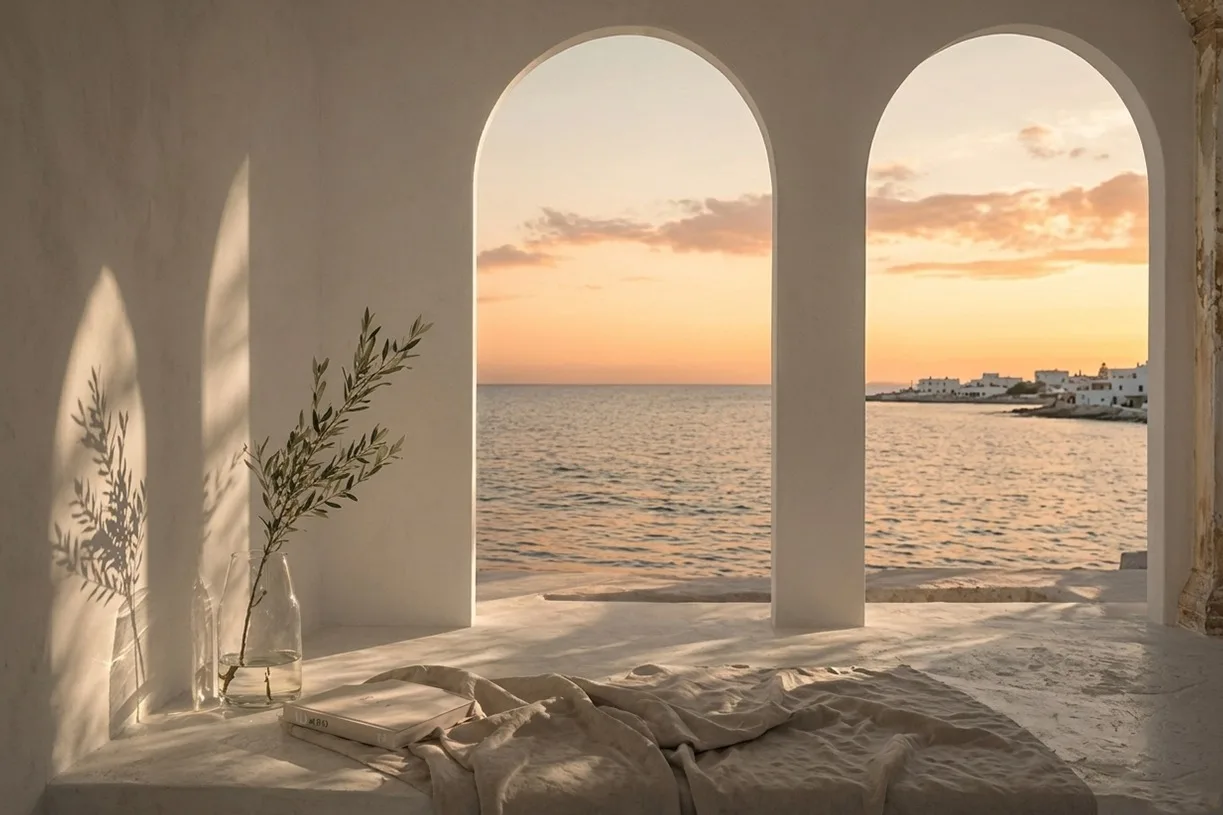
Look around today. Most buildings share a consistent palette: white, off-white, beige, or muted tones that reflect light rather than overwhelm it.
On the roads, cars are mostly grey, black, or understated shades, with brighter colors appearing as rare accents that naturally stand out.
Even home decor followed a similar evolution. Minimalism became a design language of its own.
The idea shifted toward clarity: spaces that are clean, light, and balanced, where simplicity creates comfort and visual ease.
This shift is not limited to spaces. It extends to how we live, dress, and even define elegance today.
In fashion, this appears through quieter choices. Neutral tones, clean silhouettes, and reduced visual noise define the look. It’s no longer about being seen loudly, but about how a piece is designed to be seen through form, texture, and intention.
A similar logic now defines what is often referred to as clean beauty. The focus moves away from excess and toward clarity: skin that looks natural, routines that feel simplified, and products that emphasize transparency and subtle enhancement rather than transformation.
Beauty here becomes less about adding, and more about refining what is already there.
The quiet effect of minimal design
From a psychological perspective, this shift also shapes how we experience daily environments.
Spaces with fewer visual elements reduce cognitive overload, allowing the brain to process surroundings with greater ease.
This creates a sense of mental clarity, where attention is not constantly divided between competing stimuli.
In calmer, more simplified environments, people often experience a stronger sense of focus and presence.
Without excessive visual input, the mind settles more easily into one point of attention, whether that is conversation, work, or rest. The environment becomes less demanding, and more supportive of mental flow.
But above all, minimalism is proof that beauty does not need to be complex to be powerful.
Colorful spaces are vivid and expressive, but minimalist ones create a different kind of presence, one that is quieter, more focused, and more enduring.
At times, beauty lies not in what is added, but in what is left intentionally open.