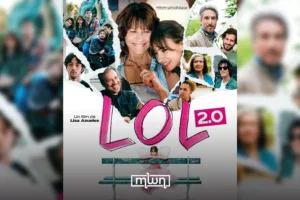
Fez — The year 2026 is shaping up as a moment of cinematic returns, with several cult films making their way back to theaters. Among them is “LOL,” the coming-of-age drama that marked an entire generation when it was released in 2008. Nearly two decades later, director Lisa Azuelos returns to this universe with “LOL 2.0,” a sequel that revisits familiar themes while shifting the focus to a new character.
Upon its original release, “LOL” enjoyed international success, resonating with audiences through its portrayal of adolescence, first loves, digital communication, and the often-complicated relationship between parents and teenagers. The film became a cultural reference, particularly in France, and helped cement the popularity of its cast, including Sophie Marceau, who played the role of a mother navigating the emotional turbulence of family life.
In “LOL 2.0,” Sophie Marceau reprises her role, offering continuity with the first film. However, the sequel notably moves away from the character of Lola, originally portrayed by Christa Theret, who does not appear in this new installment. Instead, the narrative centers on Louise, the younger sister of Lola, played by Thaïs Alessandrin, who is also the daughter of the film’s director.
This generational shift allows the film to explore adolescence through a contemporary lens, reflecting changes in social dynamics, technology, and family structures since the late 2000s. While the digital world has evolved significantly, Azuelos maintains the emotional core that defined the original film: the delicate balance between parental authority and youthful independence.
Nostalgia plays a central role in “LOL 2.0,” but it is not limited to simple callbacks. The film revisits familiar family tensions, misunderstandings, and moments of intimacy, presenting them with renewed sensitivity. The relationship between mother and child remains at the heart of the story, portrayed with warmth and restraint rather than melodrama.
Critics and audiences alike have pointed to the film’s ability to bridge generations. Longtime fans of the original “LOL” are invited to reconnect with characters they once followed, while younger viewers are introduced to a story that speaks to their own experiences. This balance between memory and renewal explains why “LOL 2.0” has emerged as one of the most anticipated French films of 2026.
By returning to a universe that helped define modern French youth cinema, Lisa Azuelos demonstrates that certain stories retain their relevance across time. “LOL 2.0” does not attempt to replicate the past, but instead builds upon it, offering a reflective continuation that acknowledges change while honoring its origins.