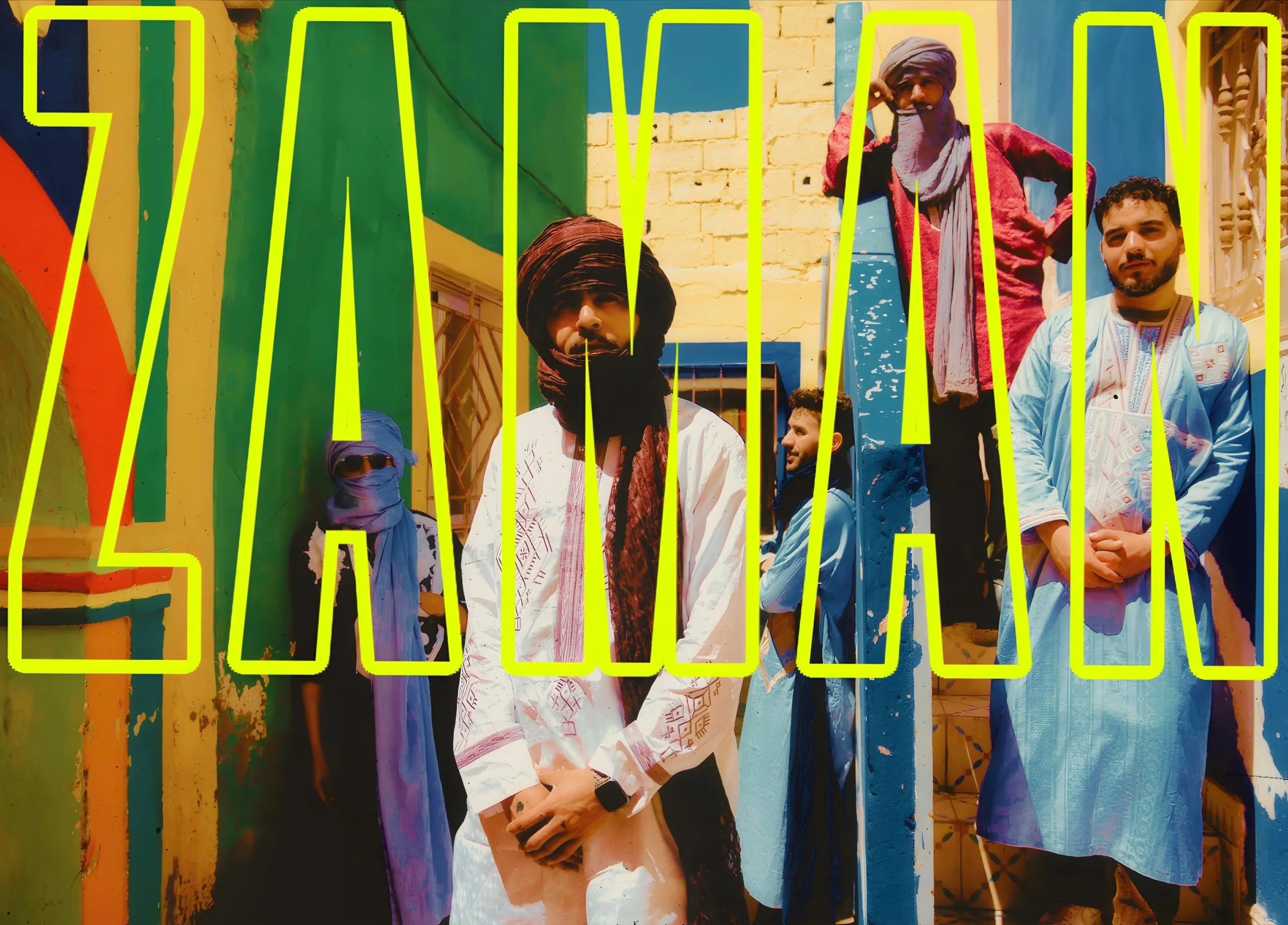
Fez — Tarwa N-Tiniri have officially released “Zaman,” their third studio album, adding a new chapter to one of Morocco’s most internationally visible desert blues projects.
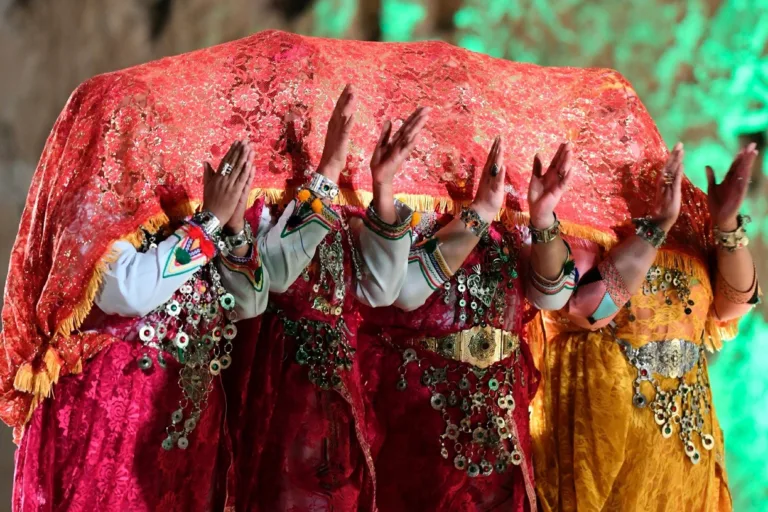
The new record arrived yesterday, with the band presenting it as a cultural journey through the southeast of Morocco, particularly the Draa Valley, where memory, heritage, and communal storytelling remain central to everyday identity.
“Zaman” is available across platforms, according to official press materials from the band.
Formed in Ouarzazate in 2012 by a group of childhood friends, Tarwa N-Tiniri have built their sound by blending traditional Amazigh rhythms with modern desert blues textures.
Their name itself carries that mission. “Tarwa” means “generation,” while “N-Tiniri” means “of the desert,” giving the group an identity anchored in responsibility toward desert culture and the transmission of its voice across generations.
The band are cultural ambassadors carrying the voice of a new Amazigh generation to audiences well beyond Morocco.
A third album rooted in place and memory
“Zaman,” which means time in Arabic, leans directly into that sense of continuity.
The album explores themes of memory, identity, resilience, love, spirituality, and the bond between people and land.
It was recorded in Ouarzazate at the band’s own Sahara Records studio and produced by Atty Records in Canada, with guest contributions from Thijs Borsten of the Netherlands, Simon Walls of Canada, and Moroccan artist Bader Mezouz. The 10-track record includes songs such as “Warru,” “Nbina,” “Zaman,” “Al Aalam,” and “A bab n Lferh.”
The release also arrives with a broader story behind it. The press kit’s discography pages trace the band’s path from their 2017 single “Taryet” to their debut album “Azizdeg” in 2019, the 2021 pandemic-era project “Ifaw Ul Nnegh,” and their second album “Akal” in 2024.
That trajectory shows a group that has remained committed to Amazigh themes while steadily widening its sonic and geographic reach.
A page in the kit dedicated to tours notes that Tarwa N-Tiniri have performed across Europe, Africa, the UK, and the Arab world, underscoring how far their desert-rooted sound has traveled.