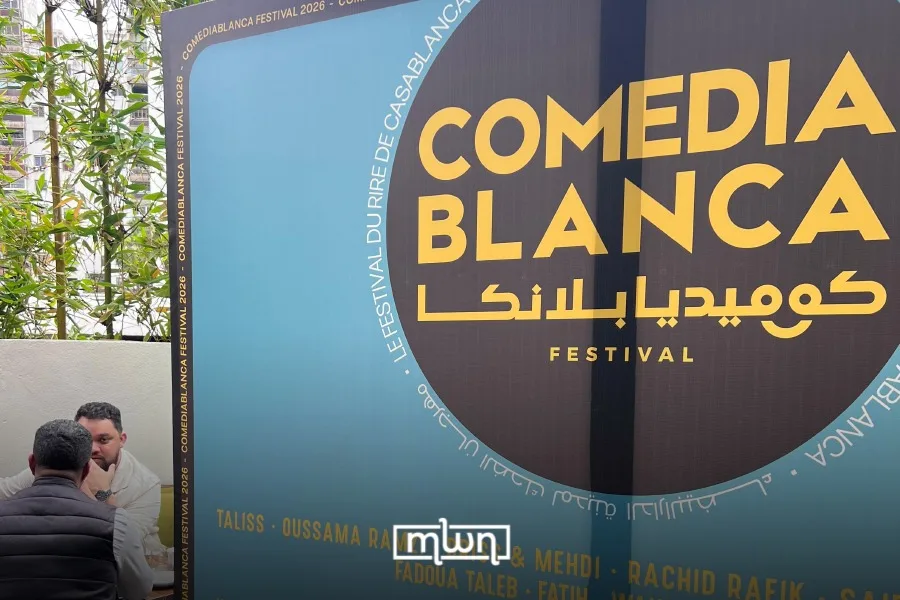
Casablanca – Supported by BMCI, Comediablanca returns from June 2-6, bringing three nights of stand-up and big stage moments, alongside an immersive village.
Alongside the performances, an immersive village adds a whole new layer to the experience, turning the festival into more of a full-day hangout than just a series of shows.
In a new move, the festival introduces two days dedicated entirely to learning and exchange, turning comedy into something to be experienced as much as it is to be understood.
This year comes with a twist. Before the main shows, two days of free masterclasses will open the experience on June 2-3, with Taliss, Amir Rouani, Jalil Tijani, and Mouna Fettou sharing their world behind the scenes.
Scheduled ahead of the main events, these sessions bring a different rhythm to the festival, opening space for conversation, insight, and creative exploration.
It’s about business & pleasure
At the heart of this new format are a series of free masterclasses led by three prominent figures.
Comedian and performer Taliss brings his on-stage experience into focus, while artistic director Amir Rouani offers a look into the creative process behind building immersive shows.
The sessions are rounded off by actress Mouna Fettou, whose perspective bridges cinema and theatre, adding another layer to the exchange.
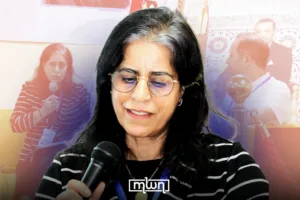
During the conference, co-founders Myriam Bouayad Amine and Saad Lahjouji Idrissi emphasized that this new chapter is designed as a space for young talents to explore their craft and turn passion into practice.
It opens a rare opportunity for exchange with artists who have built their own paths in the industry.
Speaking to MWN Lifestyle, Saad Lahjouji Idrissi gave a glimpse into the bigger picture behind it all, where the masterclasses feel less like a side note and more like the foundation for what the festival is becoming, nurturing the next wave of talent that will shape its future.
But beyond the festival itself, it’s also about what this unlocks for those in the room.
“The goal of this masterclass is to offer an opportunity to share knowledge with those who have come here. People who have already overcome barriers in their careers, and to make access to this expertise easier,” Lahjouji highlighted.
The masterclasses are free and open to emerging artists, though seating remains limited.
Three nights, different energy
From June 4-6, the festival shifts into full gear at the Complexe Mohammed V, with each night bringing its own atmosphere.
On June 4, the opening gala sets the tone with a 100% Moroccan lineup led by Taliss, featuring Oussama Ramzi, Saïd & Wadie, Ayoub Idri, Rachid Rafik, Driss & Mehdi, Fadwa Taleb, Fatih, Zouhair Zair, and Wahiba Bouya in a night fully rooted in the local scene.
The next day, Jalil Tijani will take over with a refreshed version of his cult show “Jeux de Société,” reimagined with surprise guests and new moments.
The closing night on June 6 wraps the festival on a francophone note, with Kheiron as master of ceremonies, joined by Laurie Peret, Mimo Lazrak, Mehdi Boussaidan, Doully, John Sulo, and Hamaka.
“Comediablanca is a purely Moroccan festival. People come to enjoy a big show with international standards in a space that holds 6000 people,” said Moroccan comedian Oussama Ramzi to MWN Lifestyle, giving his take on what makes this one worth attending.
A strong vision beyond comedy
“We don’t just put on events, we create references,” said Myriam Bouayad during the conference, a line that reflects the long-term ambition behind Comediablanca.
The festival brings a clear mix between Moroccan comedy and French influences, creating a blend that feels both natural and intentional.
This fusion carries a simple but powerful message: comedy travels, adapts, and speaks beyond borders.
Beyond its local stage, Comediablanca is also looking outward, with ambitions that stretch toward international expansion, including cities like Paris and Brussels, and future stops that continue to grow its footprint.
At the core of this vision is a simple idea: Moroccan humour deserves to be seen and heard beyond its borders, carried by artists who have always had it within them.
“Since we were young, we’ve noticed that it’s mostly foreign artists who came to Morocco to make us laugh,” Bouayad told MWN Lifestyle.
“Today, Moroccans have grown into that role, humor, laughter, and storytelling are part of our DNA.”
Even the festival’s visual identity reflects that grounding in culture, with the presence of “Tebssil Taouss,” as a reference drawn from everyday Moroccan symbols.
A familiar object in local memory becomes a subtle nod to shared identity, turning something ordinary into a cultural signature that travels.
Designed as an open space for transmission and discovery, this initiative positions Comediablanca as more than a series of performances.
It becomes a place where audiences don’t just watch, but engage, learn, and connect with the craft behind the laughter.