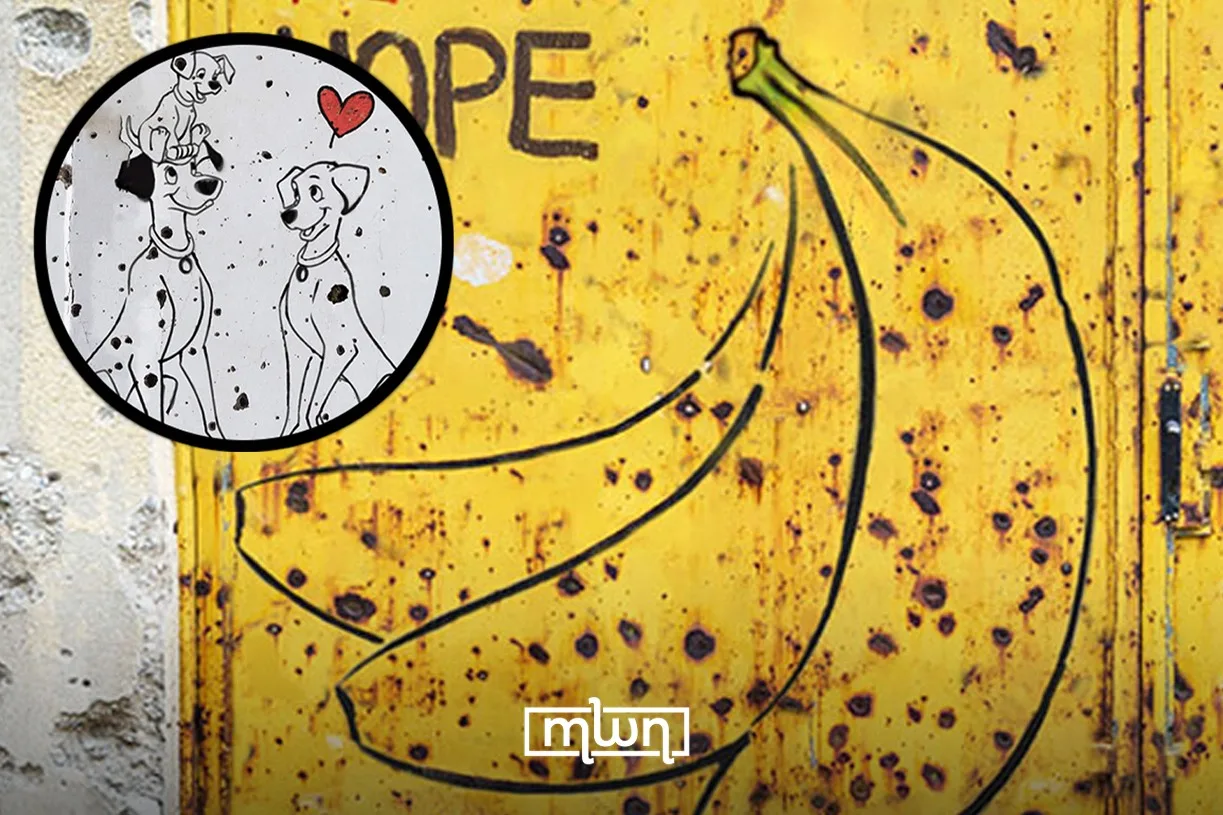
Rabat – Artist Mokhallad Habib turns bullet holes into art, reimagining signs of violence in an unexpected way.
He doesn’t cover the damage but integrates each bullet hole into his artwork, turning every mark into part of the design and shifting how people perceive what remains.
In Habib’s work, each mark tells a story. What was once a symbol of conflict, fear, or loss is reframed as a visual element within a larger artistic narrative.
The bullet holes are not erased or repaired; they are highlighted, traced, and reimagined, becoming intentional design features that shift the viewer’s attention from destruction to interpretation.
This approach challenges traditional ideas of restoration and memory.
Rather than attempting to return damaged spaces to their original state, Habib embraces imperfection as a record of lived experience.
His work suggests that scars, whether on buildings or communities, are not just evidence of what has been lost, but also of survival.
By reframing violence in this way, the artist invites audiences to reconsider their relationship with trauma and its physical remnants.
The result is a body of work that sits between documentation and transformation, where art does not deny history but reshapes how it is seen.
Beyond its visual impact, Habib’s practice speaks to a broader role of art in society.
Art can act as a bridge between pain and understanding, offering a way to process difficult realities without erasing them.
It allows viewers to engage with conflict indirectly, through reflection rather than confrontation.
In this context, creativity becomes repair. Not in the sense of hiding damage, but in giving it new meaning.