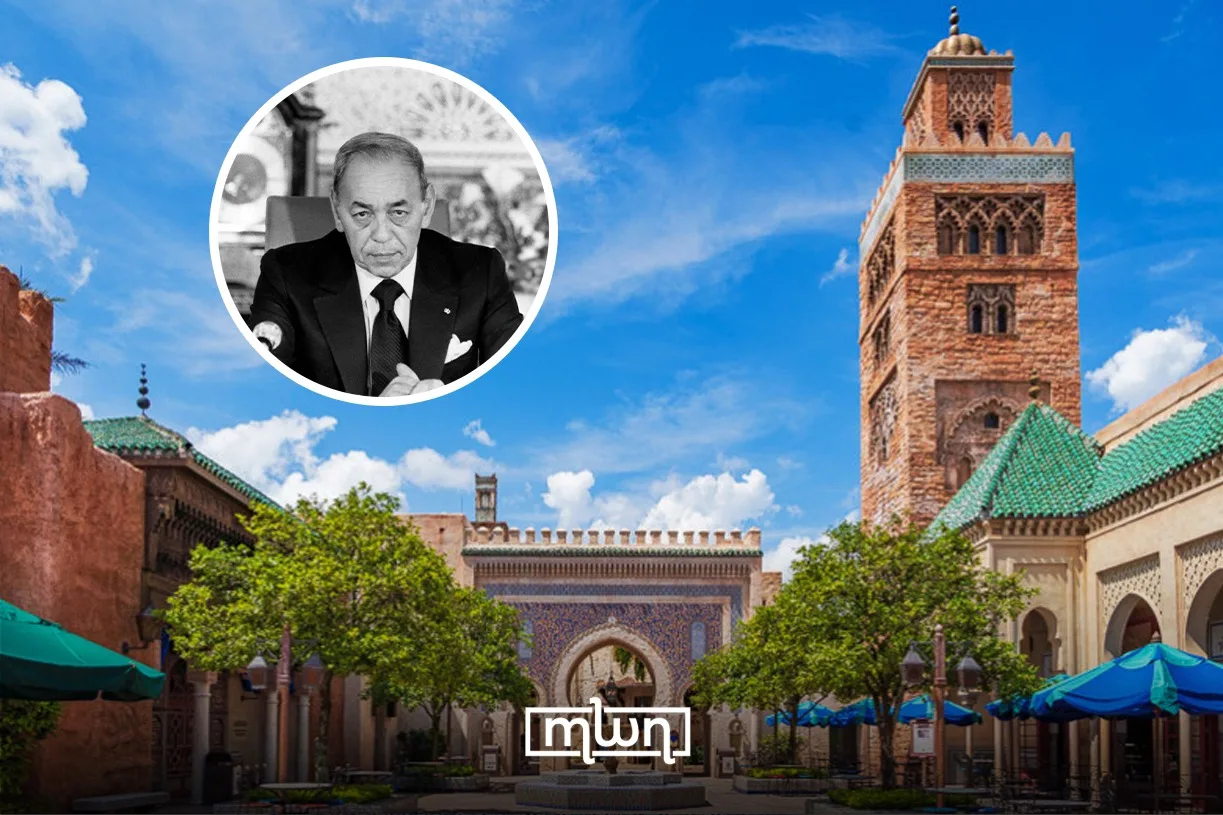
Fez — Morocco has a special place inside Walt Disney World’s EPCOT in Florida. The Morocco Pavilion opened on September 7, 1984, in the park’s World Showcase. It was the first new country pavilion added after EPCOT opened in 1982.
The pavilion is not just a Disney version of Morocco. It was built with direct Moroccan involvement. King Hassan II supported the project and sent Moroccan craftsmen to Florida. Their job was to make sure the pavilion looked and felt Moroccan, not like a cheap imitation.
Disney’s own D23 archive says native craftsmen created the tilework, mosaics, and carved plaster throughout the pavilion. The same archive says the pavilion includes a Koutoubia-style minaret, a “Ville Nouvelle,” a “Medina,” the Gallery of Arts and History, and the Fez House.
King Hassan II’s role
King Hassan II treated the EPCOT pavilion as a cultural project. Morocco was not only being displayed for tourists. It was being introduced to millions of Americans through architecture, food, craft, and design.
The Moroccan government helped with the pavilion’s design and sponsored it for decades. This made Morocco different from the other World Showcase countries, which were usually linked to corporate sponsors. The Morocco Pavilion became the only pavilion where the country’s government directly helped shape the space.
King Hassan II sent Moroccan artisans to create the mosaics and other decorative work. These artisans brought real Moroccan techniques to Florida. They worked on zellige-style patterns, carved plaster, wood details, brass pieces, and traditional interiors.
This is why the pavilion still feels different. It was not built only by Disney designers studying photos. It was built with people who knew the craft.
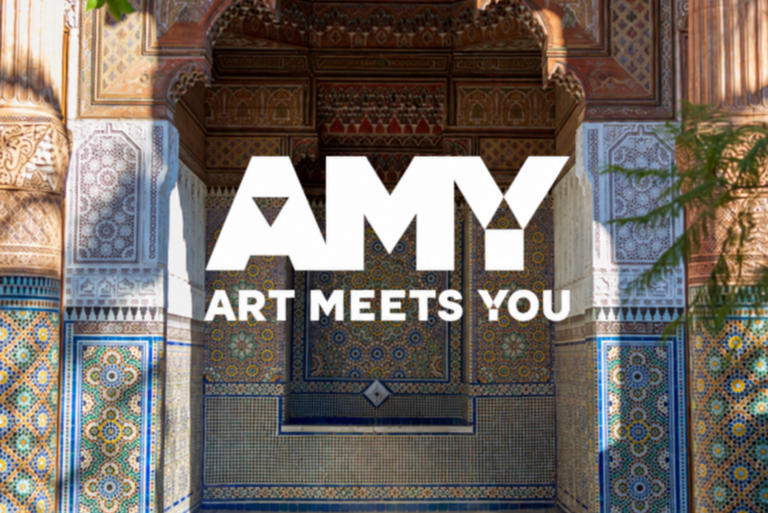
The mosaics also follow the Islamic artistic tradition. They do not show human figures, and instead, use geometry, color, repetition, and floral forms. That detail matters because it reflects the same visual language seen in Moroccan mosques, madrasas, palaces, and old homes.
What the pavilion includes
The pavilion takes inspiration from several Moroccan cities. Its minaret is based on the Koutoubia Mosque in Marrakech. Other parts include references to Fez, Rabat, and traditional Moroccan medinas.
Visitors see arches, tiled fountains, carved doors, courtyards, shops, restaurants, and small exhibit spaces. The goal is to show Morocco as a living culture, not just a tourist postcard.
One of the most important spaces is the Fez House. It shows the layout of a traditional Moroccan home. It includes an interior courtyard, detailed tilework, carved surfaces, and domestic objects. It gives visitors a brief glimpse of how Moroccan homes incorporate privacy, shade, water, and decoration.
Another key space is the Gallery of Arts and History. Disney currently lists the exhibit “Race Against the Sun: Ancient Technique to Modern Competition,” which explores life in the Sahara, Morocco’s Indigenous communities, and modern endurance races.
The building process
The building process is what makes Morocco’s pavilion special. Disney did not simply copy Moroccan buildings with fake decoration. Moroccan craftsmen helped make the details by hand.
The tilework, plaster, and architectural surfaces were made with attention to Moroccan design rules. The result is more serious than most theme-park sets. It shows actual craft traditions in a place built for entertainment.
The pavilion also has two main sections. Disney describes them as the “Ville Nouvelle,” or new city, and the “Medina,” or old city. This structure reflects the split seen in many Moroccan cities, where modern districts stand beside historic quarters.
That design choice helps explain Morocco to visitors in a simple way. Morocco is not only about old walls and souks. It is also modern streets, restaurants, shops, and public life.
Why it still matters
The Morocco Pavilion remains one of EPCOT’s most distinctive spaces because it was built as a form of cultural diplomacy. King Hassan II used Disney World as a stage for Moroccan identity. The pavilion showcased Moroccan architecture to American and international visitors before many of them had ever visited Morocco.
In 2020, Disney took over operations of the pavilion’s businesses after the older Moroccan-linked operating structure ended. But the original design remains. The tilework, minaret, Fez House, fountains, and medina-style spaces still carry the mark of Moroccan craftsmanship.
The pavilion has no major ride. It does not need one. Its value is in the details. It shows Morocco through craft, architecture, food, and atmosphere.