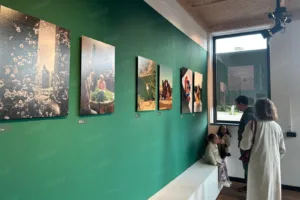
Fez — Fondation Nationale des Musées and Institut Français, in collaboration with FRAC Occitanie, will present Mohamed Lekleti’s solo exhibition “Ne tenir qu’à un fil” at the Kasbah Museum in Tangier on June 19, at 6 p.m.
=Organized as part of “Saison Méditerranée 2026,” the exhibition introduces audiences to one of the major figures of contemporary drawing between Morocco and France.
It will open with a guided visit in the presence of Lekleti, curator Abdelaziz El Idrissi, and FRAC Occitanie Director Eric Mangion.
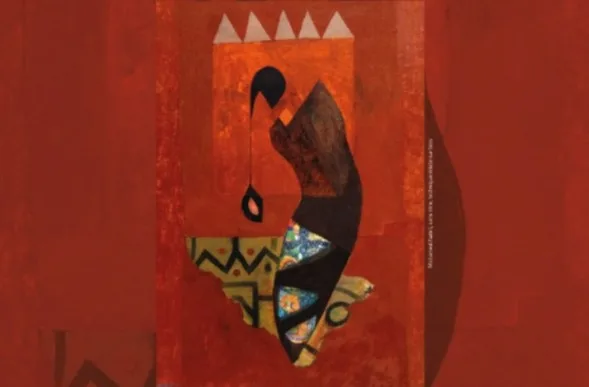
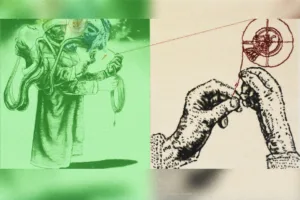
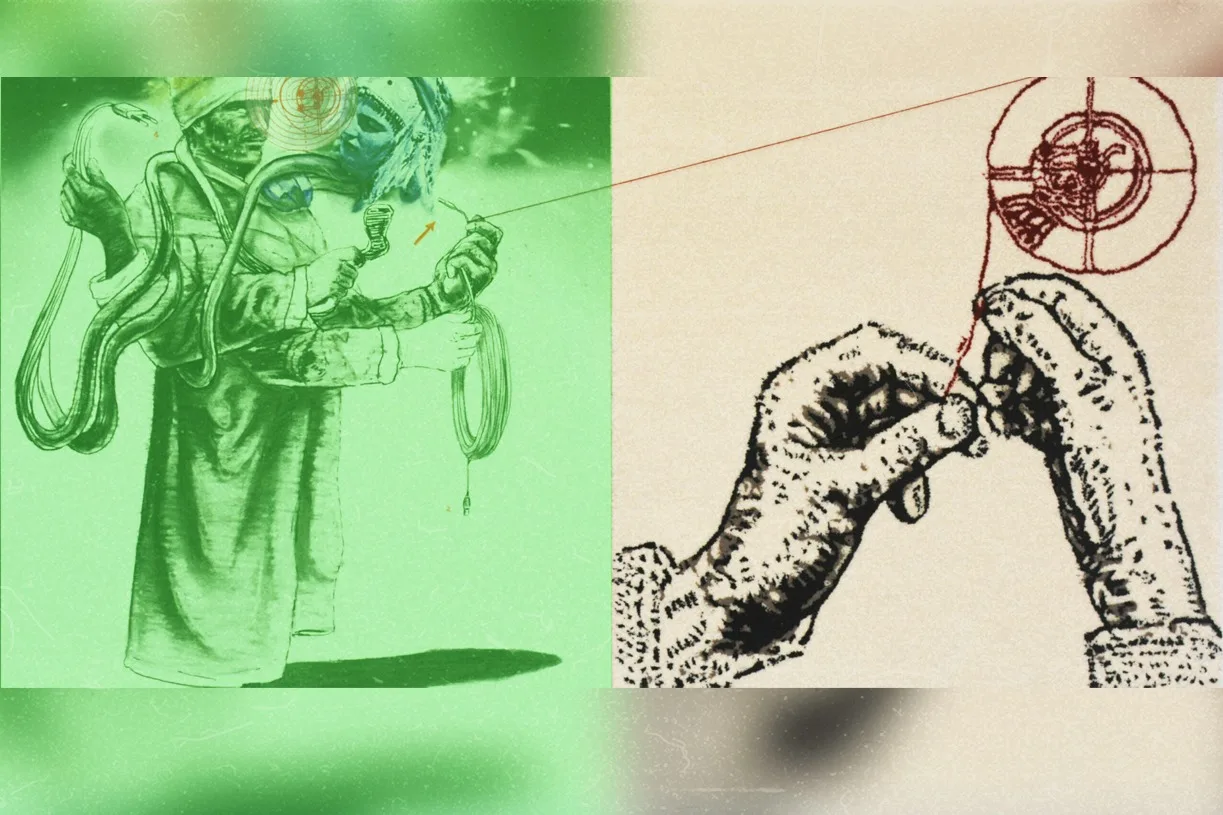
Titled “Ne tenir qu’à un fil” (Hanging by a thread), the exhibition offers a sensitive and enigmatic journey into a visual world where the human body, the machine, and the gesture appear to respond to one another.
The show is supported by La Galerie 38 and Es Saadi Marrakech Resort.
The gallery describes the show as an immersive encounter with Lekleti’s work, bringing together drawings, canvases, sculptures, and in situ works that appear diverse while often evoking mechanisms of control or influence.
A Moroccan artist between Taza and Montpellier
Born in Taza, Morocco, Lekleti lives and works in Montpellier, France. His practice is rooted in drawing, but it also extends into collage, textile, and dense narrative compositions.
His artistic language often explores identity, displacement, and the complexities of the human condition.
These themes give his work a layered quality, moving between personal memory, social tension, and symbolic imagery.
La Galerie 38 describes Lekleti as an emblematic figure of contemporary drawing in France and Morocco, noting his participation in major exhibitions across Europe and North Africa.
His works are held in several public and private collections, including the Arab World Institute Museum in Paris, MAC Lyon, FRAC Picardie, the Mohammed VI Museum of Modern and Contemporary Art in Rabat, and MACAAL in Marrakech.
Drawing as an open narrative
In “Ne tenir qu’à un fil,” the title itself suggests fragility, tension, and suspension. It points to situations that seem close to rupture, but also to the invisible threads connecting bodies, systems, and memories.
The exhibition’s central idea rests on ambiguity. Rather than offering a fixed reading, Lekleti’s work invites viewers to enter a narrative space that remains open to interpretation.
This openness is central to his visual language. His drawings often combine precision with instability, creating scenes where human figures, mechanical forms, and symbolic gestures seem to exist in a liminal state of negotiation.
Tangier as a Mediterranean stage
The Tangier presentation also carries wider cultural weight. As a port city long shaped by movement, exchange, and Mediterranean crossings, Tangier offers a fitting setting for an exhibition built around tension, passage, and layered identity.
The project is part of a broader “Saison Méditerranée 2026” program, which also includes another Lekleti exhibition at FRAC Occitanie Montpellier later in the year.