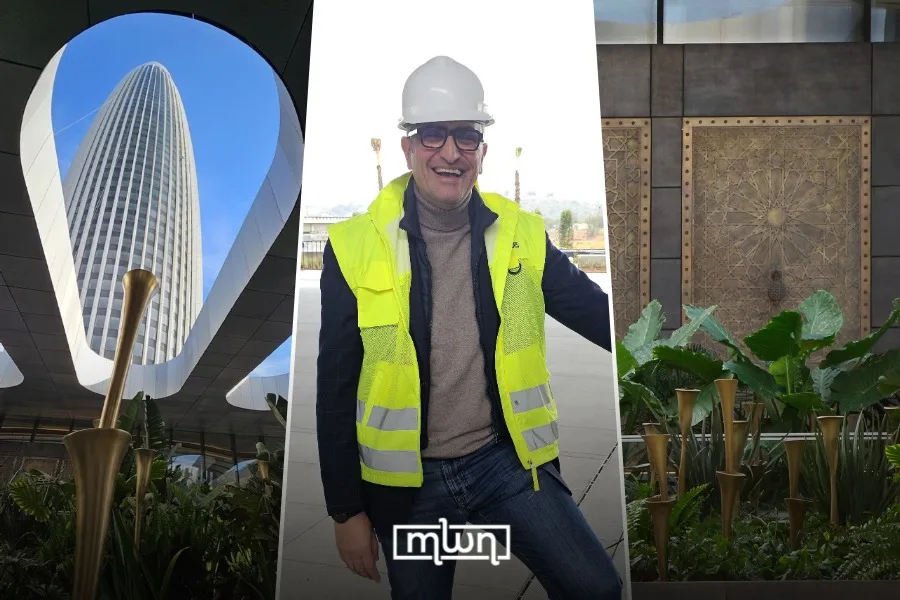
Fez — Moroccan designer, artist, and interior architect Hicham Lahlou has created a monumental installation of 396 luminous sculptures at the entrance of the Mohammed VI Tower, adding a new artistic layer to one of Morocco’s most visible architectural landmarks.
The installation has been described as a “symphony of lights;” it was developed in close collaboration with the artistic direction of the project owner. And it stands at the foot of the tower, near the drop-off area leading toward the entrance of the Waldorf Astoria Rabat Sale.
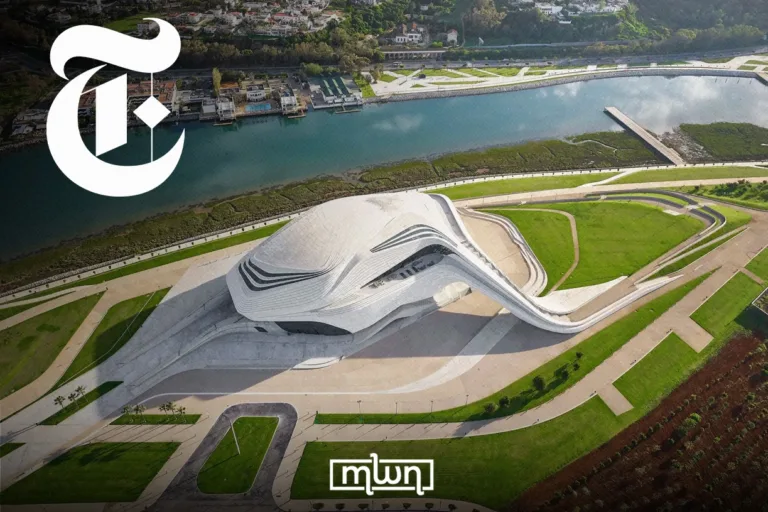
The Mohammed VI Tower, located in the Bouregreg Valley between Rabat and Sale, has meanwhile emerged as one of Morocco’s major urban and architectural projects. The tower includes a Waldorf Astoria hotel, offices, apartments, restaurants, and retail spaces.
A work that changes after dark
By day, the sculptures sit quietly within the tower’s surrounding landscape. Cast in aluminum and finished with a bronze patina, they echo the monumental doors of the tower as well as visual references found in Moroccan palaces and riads.
At night, the work takes on a different role. Each sculpture is lit from its base through upward parametric lighting, bringing out the depth of the metal texture and directing light toward the tower’s large vault.
The result is designed to create an immersive atmosphere from the arrival area to the Waldorf Astoria entrance. Hilton describes the hotel as Morocco’s first Waldorf Astoria, located in the upper floors of the Mohammed VI Tower.
A Moroccan symbol reimagined
Lahlou drew inspiration from the silhouette of the neffar, the traditional Moroccan trumpet historically associated with ceremonial sound and public announcement.
The sculptures translate that reference into an organic, almost vegetal language. Rather than functioning only as lighting objects, they are presented as visual instruments, linking music, form, and movement.
“My intention, shared with the project owner, was to create a work that accompanies the architectural gesture with deference by day, and then sublimates the majesty of the tower by night,” Lahlou said in the press release.
He described the 396 sculptures as “the notes of a parametric luminous symphony” rising toward the vault, adding that their self-illumination gives the base of the tower a “vibrant soul.”
A designer with international weight
The installation also arrives at a significant moment in Lahlou’s career. Born in Rabat in 1973, he graduated from the Charpentier Academy in Paris in 1995 and has spent nearly three decades working across industrial design, interior architecture, contemporary art, and craft-based creation.
His career has helped position Moroccan, African, and Arab design within international design conversations. Salone del Mobile described him as a standard-bearer of Moroccan creativity and one of the major voices in African and Arab design, noting his institutional roles with the “World Design Organization” and his work building African design platforms.
Lahlou was named Knight of the Order of Arts and Letters of the French Republic in 2016. In 2026, he was also elevated to Knight of the Order of Merit of the Italian Republic, a distinction awarded by the President of Italy and presented during Italian Design Day in Tangier.
His work has moved between public infrastructure, luxury collaborations, collectible objects, and design diplomacy. Wallpaper noted last year that his “Disco” hookah pipe is in the permanent collection of the Victoria and Albert Museum in London, and highlighted his role in shaping Morocco’s first high-speed train line stations through furniture and interior design.
At the Mohammed VI Tower, his new installation places that career inside a highly visible national space, where architecture, heritage, light, and contemporary design meet at the threshold of a new urban landmark.