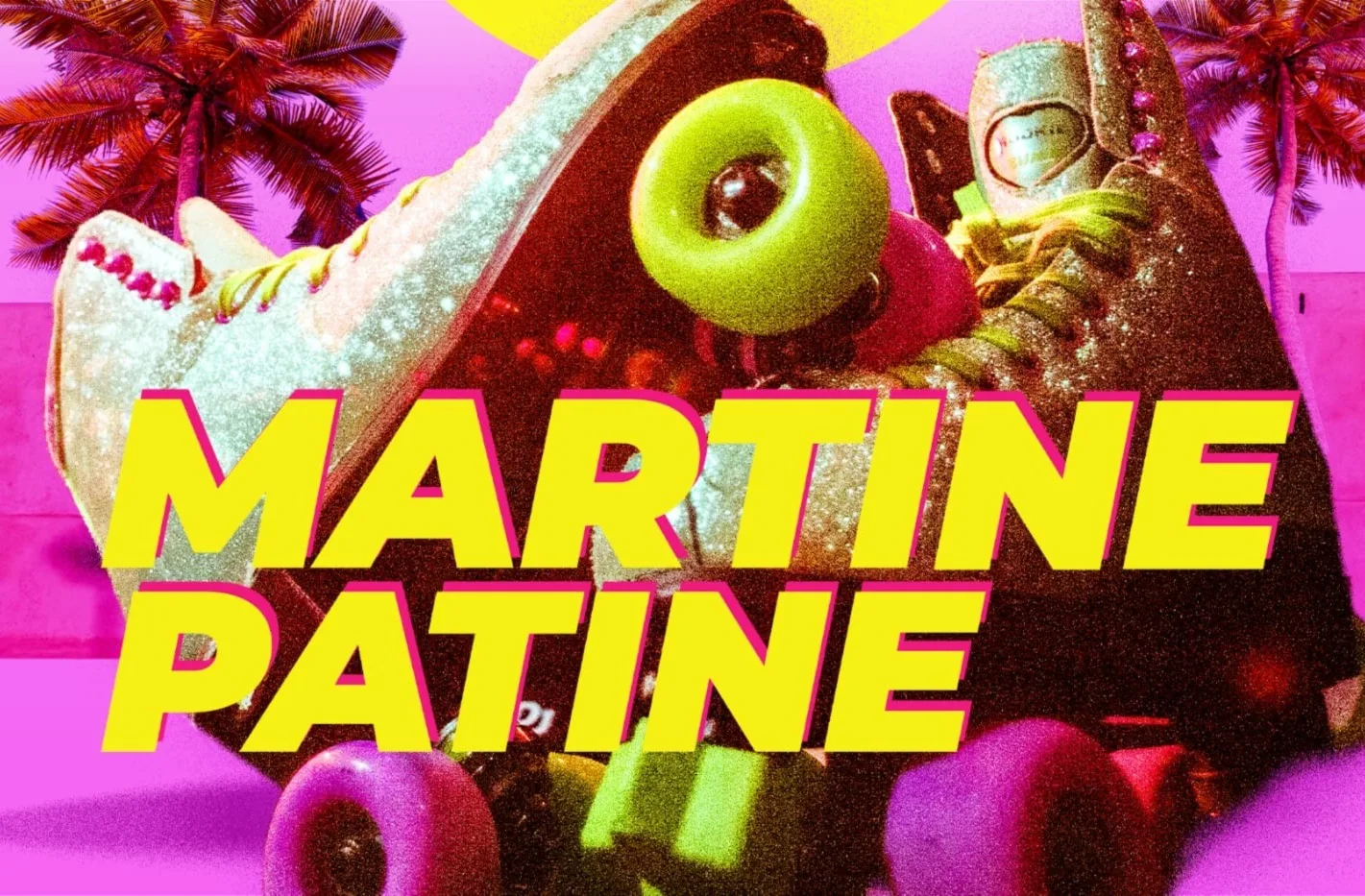
Fez — French roller disco collective “Martine Patine” is bringing its wheels to Morocco from June 20 to 27, with a five-city tour that will blend dance, music, sport, and public-space celebration.
The tour is part of the 2025-2026 cultural season of the Institut Français du Maroc, titled “J-Lioum, ici et maintenant” (Youth Today, Here and Now), a program dedicated to youth and access to culture. The institute’s official agenda lists the roller disco event as taking place in Tangier, Kénitra, Sale, Casablanca, and Agadir.
A retro culture returns outdoors
Born in the 1970s and popularized in the 1980s, roller disco is returning through a new generation of artists and skaters who see it as more than nostalgia. The format turns skating into a collective dance experience, with DJs, performers, and beginners sharing the same space.
“Martine Patine” is built around that spirit. The collective brings together DJs, dancers, and performers who transform squares, parks, and promenades into temporary roller dance floors. The public is not only invited to watch, but to take part.
Each session is designed as four hours of roller skating, dance, and music. The program includes introductions to roller dance for participants aged seven and above, artistic demonstrations, DJ sets, and festive open sessions.
In Casablanca, the event is scheduled for June 25 at Anfa Park, with the “Institut Français du Maroc” listing it as a free outdoor event beginning at 4 p.m.
More than a party on wheels
The Moroccan tour also carries a message about urban life. Beyond the disco lights and groovy soundtracks, “Martine Patine” presents roller skating as a form of “mobilité douce” (soft mobility), alongside cycling and other low-impact ways of moving through the city.
The idea is that while skating can be playful, it can also change how people experience urban space. It encourages balance, coordination, confidence, and a more physical relationship with streets, parks, and public areas.
That message fits the season’s youth-centered programming, which seeks to make cultural events more open, participatory, and rooted in everyday city life.