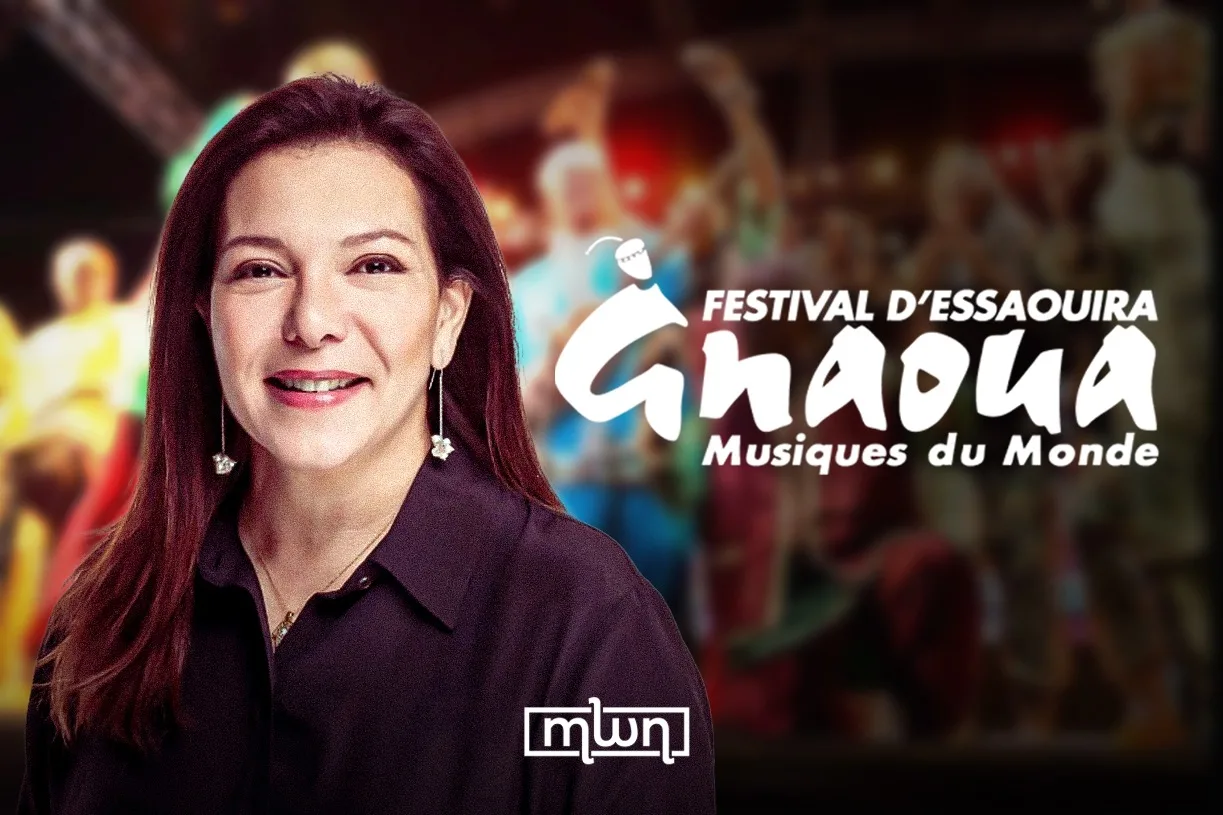
Rabat – As the Gnaoua and World Music Festival prepares to return to Essaouira from June 25-27 for its 27th edition, festival founder and producer Neila Tazi says the event has grown into far more than a musical celebration.
Speaking to MAP, Tazi described the festival as an international platform where heritage, artistic creation, and cultural dialogue converge.
Tazi said the festival’s global reach is rooted in Morocco’s own identity as a crossroads between Africa, the Arab world, Europe, and the Atlantic.
She explained that the Gnaoua tradition itself reflects centuries of human movement and cultural exchange, carrying echoes of jazz, blues, gospel, and Afro-diasporic spiritual traditions.
“The festival transforms Essaouira into a unique space where a national and international community comes together in search of a rare cultural and human experience,” she told MAP.
Beyond music, Tazi said the festival has become a form of Moroccan cultural soft power, helping project the country’s heritage and openness onto the global stage.
She pointed to the recognition of Gnaoua culture by UNESCO as intangible cultural heritage as part of this wider narrative of resilience, transmission, and dialogue.
For Tazi, preserving Gnaoua culture means allowing it to evolve. “A tradition that stops evolving loses its ability to speak to new generations,” she said, stressing that innovation is essential to keeping heritage alive.
Over nearly three decades, she said the festival has helped create space for Maâlems to pass on their knowledge while exploring new artistic territories.
She also highlighted the festival’s intellectual dimension, including the Human Rights Forum and the Chair of Transitions developed in partnership with Mohammed VI Polytechnic University.
Tazi said these initiatives reflect the festival’s belief that culture is not only entertainment, but also a way to understand social change and imagine the future.
On the economic level, Tazi said the festival continues to play a major role in shaping Essaouira’s development, generating activity across tourism, hospitality, crafts, and transport.
“The festival and the city have grown side by side,” she said, adding that their shared strength lies in balancing deep local roots with constant openness to the world.