Fez — Achoura in Morocco begins before the day itself.
It starts in shop windows and market stalls, where small drums, toy plucking instruments, plastic trumpets, toy guns, dolls, sweets, and bags of dried fruit begin to appear. Children notice first; they always do.
For them, Achoura has long carried the feeling of a second small Eid. It is the season of new toys, noisy streets, and the kind of childhood freedom that survives in memory long after the drums are gone.
The day marks the 10th of Muharram, a significant date in the Islamic calendar.
The sound before the day
In the days leading up to Achoura, Moroccan neighborhoods change rhythm.
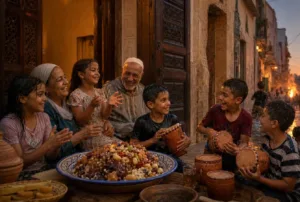
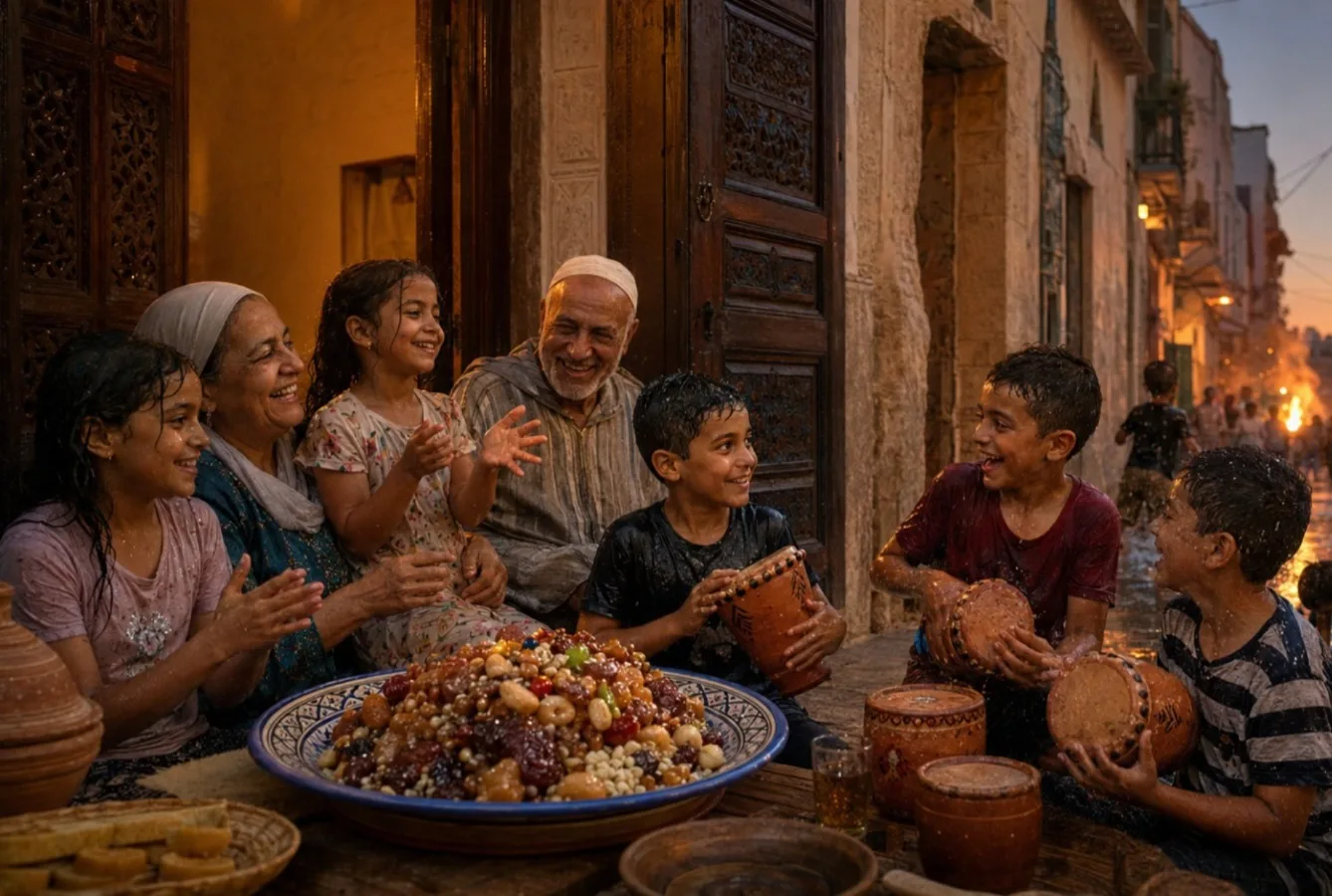
The taareja, the small clay drum children carry under their arms, becomes the season’s unofficial soundtrack. Boys and girls gather in alleys, courtyards, and apartment entrances, beating out uneven rhythms with full seriousness.
Nobody plays perfectly. That is part of the charm.
The sound is not performance. It is the announcement that Achoura is soon to take place.
Families prepare fakia, a mixture of dried fruits and nuts often shared during the occasion. In some areas, children still go from door to door asking for sweets, dried fruit, or coins in a tradition known as Baba Achour. “Give us Baba Achour’s due,” they say.
The night of fire
Then comes the fire.
Firecrackers were the real star of Achoura. Pockets full. Whoever had more was the hero of their crew.
Eyes always looking for the next place to light one and run. Years ago, it was not unusual to hear them inside a classroom, set off by the boldest of rascals when the teacher turned away. It is always the usual suspects who do not seem to care much for the notion of consequences.
On the eve of Achoura, some neighborhoods light bonfires, known locally as shaala, while children gather around with drums, songs, and the thrill of being outside after dark.
For older generations, this is often the image that stays: sparks rising, faces glowing orange, someone drumming too fast, someone else laughing, mothers watching from balconies, at times with worry for their pyromaniac children.
The bonfires are also the part many cities now watch more carefully because of safety concerns.
Yet the memory remains powerful. Achoura without fire feels incomplete, like a story missing its middle.
The morning of water
After fire comes water.
The morning after Achoura is often linked to Zemzem, when children throw water at one another in the streets, from balconies, or with small plastic bottles and buckets. The ritual is playful, chaotic, and deeply familiar in many Moroccan cities.
For children, it is a game. For adults, it becomes a flashback.
Zamzam could get messy, especially years ago when it fell on school days.
Water was just the beginning. Eggs were thrown. Small baking powder bags exploded on clothes, hair, and schoolbags.
Many still remember walking into school clean and leaving wrecked. Many ran away back home as soon as school was over. Annoying then, funny now, and part of the experience.
A tradition that keeps changing
Behind the games, Achoura also carries religious meaning. Muslims mark the date through fasting, charity, and remembrance.
Those spiritual elements coexist with older popular customs that make the occasion especially social and child-centered.
That mix is what gives Achoura its emotional force.
Every generation says the old Achoura was better. The drums were louder. The fakia tasted richer. The fires were bigger. The water fights lasted longer.
Maybe that is true.