Rabat – Ouarzazate is set to strengthen its reputation as Morocco’s cinematic capital with the launch of a new International Film Production City, backed by an investment of MAD 240 million ($24 million).
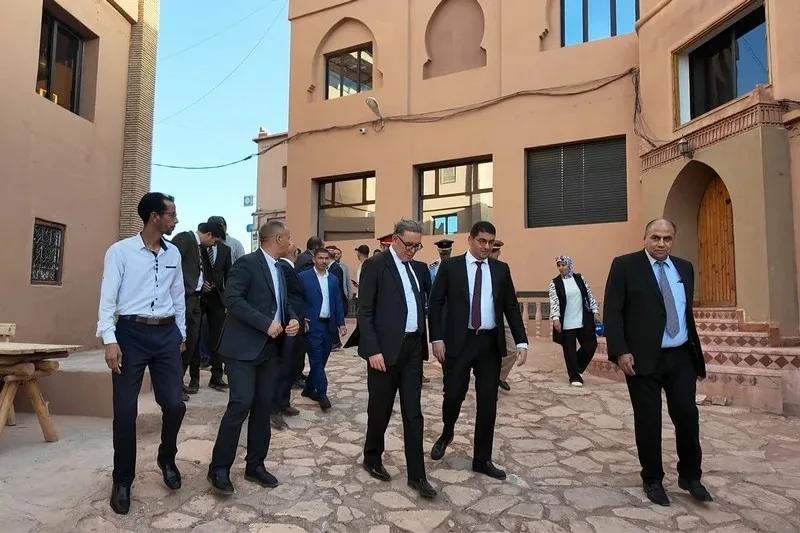
The project, officially launched on Friday by Mohamed Mehdi Bensaid, marks a major step in Morocco’s strategy to expand its audiovisual industry and attract more global productions.
Speaking at the launch ceremony, Bensaid described the initiative as the result of years of planning aimed at completing the cinematic ecosystem that has made Ouarzazate, often dubbed the “Hollywood of Africa,” a key filming destination for decades.
A central feature of the new development will be a dedicated post-production hub, long seen as the missing piece in the city’s film infrastructure.
The minister said the facility will allow international productions to carry out the full production cycle locally, from filming to editing, reducing the need to outsource key technical operations abroad.
This, he noted, is expected to extend production stays in the region and generate economic benefits across hospitality, transport, catering, and service sectors.
The announcement comes as Morocco’s film sector continues to gain momentum. In 2024, foreign investment in the national cinema industry reached nearly MAD 1.24 billion, underlining the country’s growing appeal to major international studios.
Designed as an integrated production platform, the future film city will feature eight complementary hubs, including state-of-the-art sound stages, digital post-production laboratories, editing suites, training and screening spaces, and a hotel complex ranging from three to five stars to accommodate local and foreign production crews.
For industry professionals, the project answers a long-standing need. Moroccan producer Khadija Alami said the new infrastructure would help address several challenges that have limited Ouarzazate’s growth as a filming destination, particularly in terms of studio capacity and production logistics.
However, Alami stressed that improving air connectivity to Ouarzazate remains essential to facilitate travel for investors, filmmakers, and technical teams, further strengthening the city’s international appeal.
The project is being financed through a public partnership involving several institutions.
The Drâa-Tafilalet Regional Council will contribute MAD 80 million, while the Ministry of Youth, Culture and Communication and the Ministry of Industry and Trade will each provide 60 million dirhams as part of a 2025–2026 funding program.
Beyond infrastructure, the new International Film Production City carries broader economic ambitions, including the creation of thousands of direct and indirect jobs, the establishment of a one-stop administrative office for producers, and the expansion of film tourism by showcasing Ouarzazate’s landscapes and historic heritage.