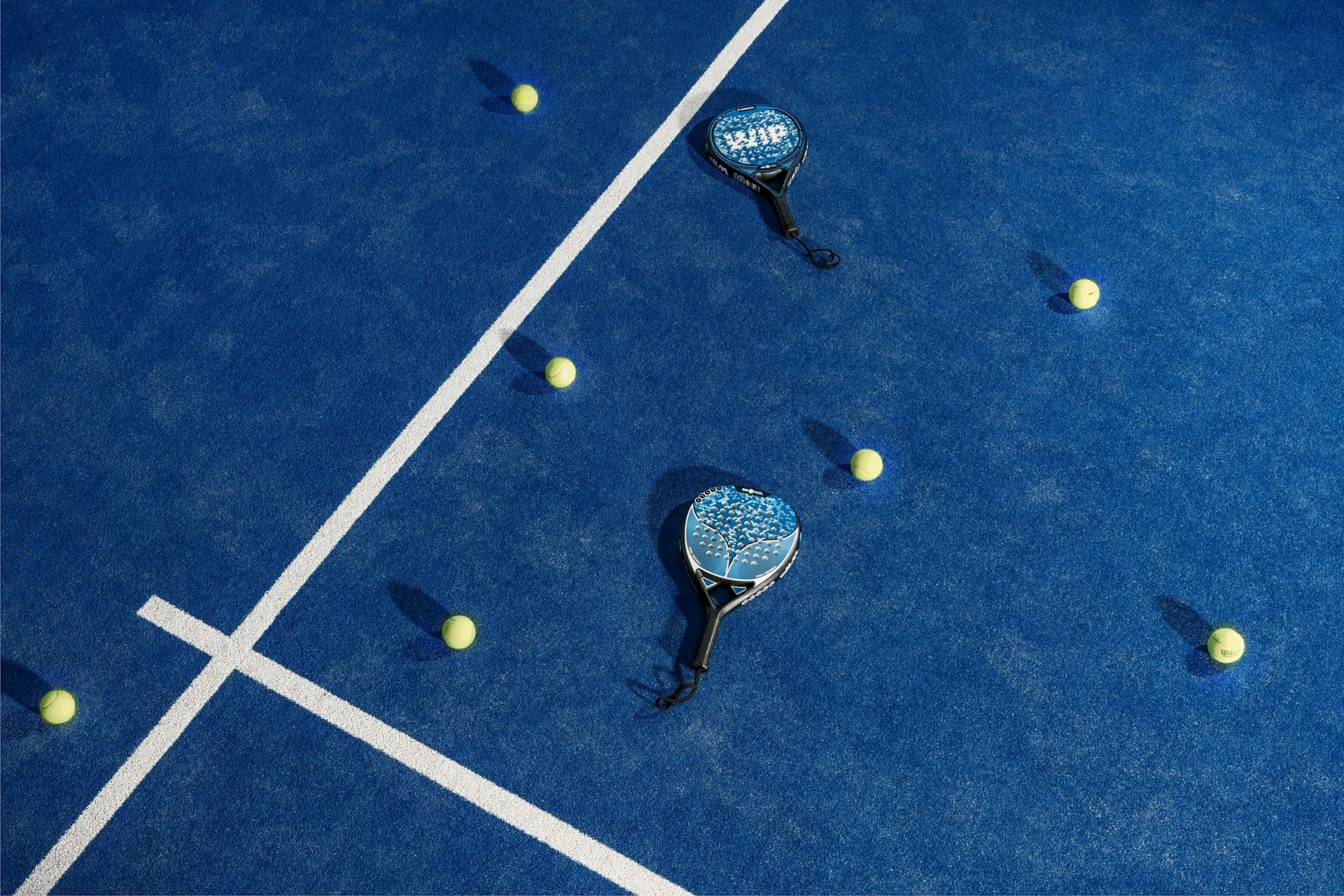
Fez — Padel courts are popping up across Morocco, but the sport’s appeal is no longer limited to rackets, glass walls, and keeping score.
In big cities like Casablanca, Marrakech, Rabat, and Agadir, Padel is increasingly becoming a social experience.
New clubs combine courts with restaurants, terraces, fitness facilities, shops, and spaces designed for people to stay long after a match ends.
That shift reflects a much bigger global boom. The International Padel Federation reported that padel surpassed 35 million active players in 2025. The number of clubs increased by 16.1% in one year, while the number of courts rose 15.2% to around 77,300 worldwide.
Morocco is now firmly entering that expansion. The Royal Moroccan Tennis Federation formally joined the International Padel Federation in 2025, while the country has increasingly appeared on the international competition calendar.
More club than court
The clearest sign of Padel’s changing identity can be found in the clubs themselves.
Padel Square Marrakech markets itself not simply as somewhere to play, but as a premium sporting and social destination.
Its six courts sit alongside a clubhouse, panoramic Atlas-facing terrace, outdoor gym, modern changing rooms, healthy dining, and a pro shop.
The club charges MAD 320 ($34) for an hour of court time and MAD 400 ($43) for 90 minutes. It also offers private corporate tournaments and customized team-building packages for companies.
That combination matters. Padel fits easily into an after-work evening or weekend gathering because it is normally played in doubles. Four people arrive together, play for an hour, then have somewhere to eat, talk, or stay afterward.
The result increasingly resembles a social club that happens to have courts.
Luxury hospitality has noticed the same appeal. Marrakech’s La Mamounia added a Padel court to its gardens in September 2025 after citing growing guest demand for the sport. Access is reserved for hotel residents. Unsupervised play costs MAD 200 ($21) per person per hour, while individual private coaching costs MAD 800 ($86).
When one of Morocco’s best-known luxury hotels considers a Padel court part of its guest experience, the sport has clearly moved beyond niche recreation.
Morocco is getting serious about competition
The lifestyle boom is developing alongside a more formal competitive structure.
Morocco hosted International Padel Federation Bronze events in Agadir, Marrakech, and Kenitra during the first half of 2026.
Casablanca is next, with the federation listing a men’s and women’s FIP Bronze tournament from September 7 to 13 at Arena Ville Verte.
That gives the sport two identities at once.
On one side, Morocco is building rankings, tournaments, academies, and competitive pathways.
On the other, businesses are selling Padel as a premium leisure product built around wellness, networking, dining, and social visibility.
Calling it a status sport does not mean everyone holding a racket belongs to an elite circle.
Court costs can also be divided between four players, making an ordinary game considerably more accessible than the headline booking price suggests.
But the spaces developing around Padel reveal who businesses believe the sport can attract.
Corporate groups, professionals, tourists, hotel guests, and consumers willing to spend on leisure are increasingly central to the pitch.
Padel’s Moroccan rise may therefore be about more than discovering a new sport. It is also part of a changing urban lifestyle in which exercise, socializing, and networking increasingly happen in the same place.