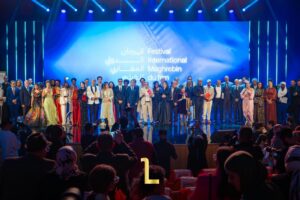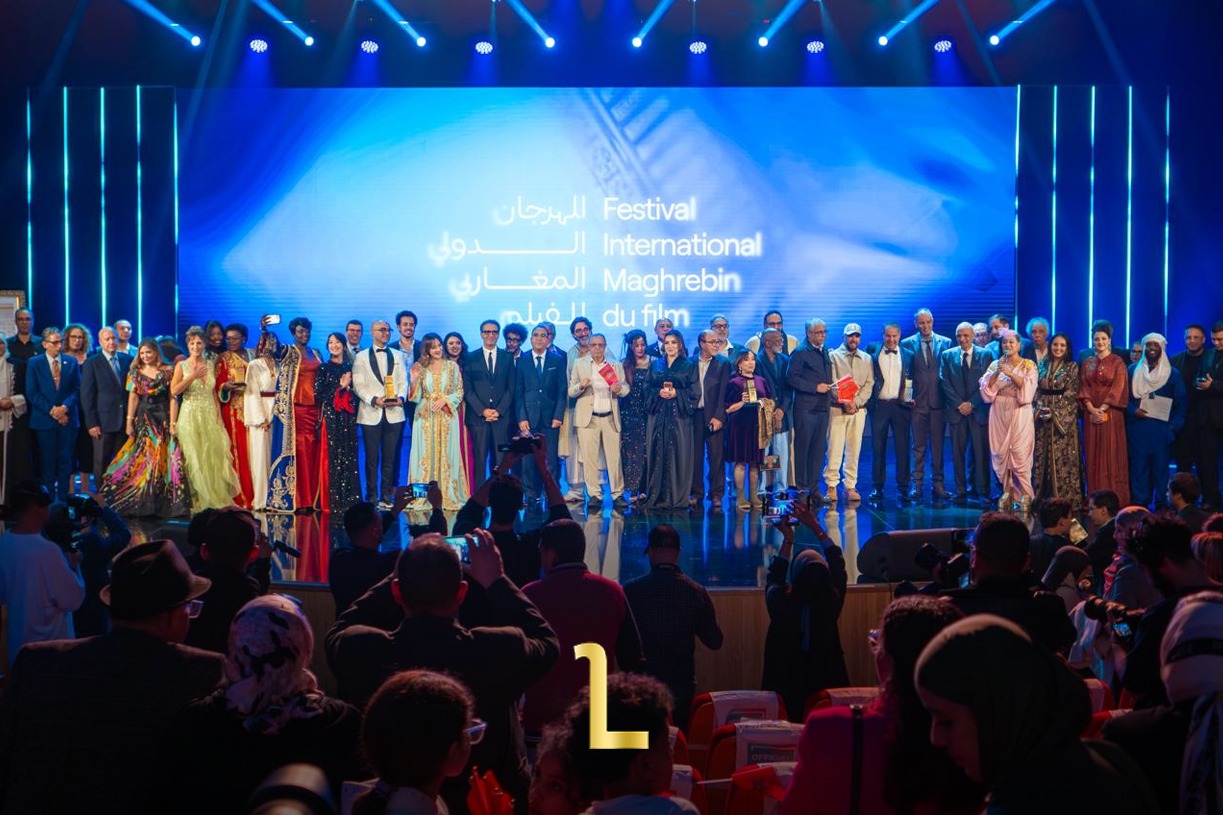
Casablanca – The 15th edition of the Maghreb International Film Festival closed in Oujda on Wednesday, bringing together filmmakers, actors, musicians, and cultural figures for an evening celebrating cinema and artistic exchange.
Sudanese filmmaker Suzannah Mirghani’s “Cotton Queen” took home the festival’s Grand Prix in the feature-film competition, while Egyptian director Abu Bakr Shawky’s “Al Qisas” (The Stories) won Best Screenplay.
Saudi filmmaker Shahad Ameen received Best Director for “Hijra.”
The jury also awarded its Special Prize to Moroccan director Ali Benjelloun’s “Goundafa,” which earned another distinction when Moroccan actor Farouk Aznabet won Best Actor for his performance in the film.
The ceremony also honored Côte d’Ivoire’s Deborah Lobe Naney, who received Best Actress for her role in “Promised Sky.”
Short films also take center stage
The short-film competition brought its own set of winners. Jordanian filmmaker Hassan Khamaysa’s “Number 42” claimed both the Grand Prix and Best Screenplay.
Palestinian director Tamer Shawamreh’s “Security Ban” received the jury’s Special Prize, while French filmmaker Romain Epstein won Best Director for “A Time to Pray.”
The acting awards went to Palestinian actress Raheeq Shouli for “Security Ban” and French-Tunisian actor Walid Ben Mabrouk for “A Time to Pray.”
A night of cinema, music, and familiar faces
The closing ceremony brought together artists from different generations, giving the evening a lively atmosphere. Moroccan singer Douzi and actresses Sahar Seddiki, Fatima Ezzahra Lahrech, and Zhour Slimani were among the familiar faces in attendance.
Douzi took to the stage with a musical performance that brought the audience together. Speaking to Lifestyle Magazine, he thanked the organizers and praised the festival’s role in promoting the region’s cultural identity.
“It has already boosted the Oriental region’s image and showcased its culture,” he told Lifestyle Magazine.
For Sahar Seddiki, the festival also offered a personal connection to the city. In an interview with Lifestyle magazine, the Moroccan actress shared her affection for Oujda and her appreciation for the festival.
“I’m half Oujdi myself, and I absolutely adore Oujda,” Seddiki said, adding that her connection to the city comes through her mother, who is from Oujda.
Her words echoed one of the festival’s broader roles: creating space for artists to reconnect with their roots while meeting audiences and fellow creatives through cinema.
Keeping cultural exchange alive through film
Since its launch in 2012, the Maghreb International Film Festival has aimed to bring Moroccan and international cinema closer to audiences in the Oriental region. Its 15th edition continued that effort through feature and short-film competitions, artistic tributes, and encounters between filmmakers and the public.
As the festival closes another edition, the awards recognize the filmmakers behind the selected works, while the gathering itself reinforces Oujda’s place as a meeting point for cinema, culture, and creative exchange.