Fez — Moroccan electronic collective SODFA is pushing further into the club with “Party Room,” a new track built around the spontaneous exchanges that have defined the project since its beginnings.
Released on August 14, the 5-minute track is currently listed as SODFA’s latest release on streaming platforms.
SODFA brings together Qaboo, Kiki, and CANDLE, three artists whose individual identities continue to exist inside the collective rather than disappearing behind a single name.
Speaking to Morocco World News, CANDLE explained that this structure is also behind the somewhat unusual “SODFA x Candle x Qaboo” billing attached to “Party Room.”
“The billing ‘SODFA x Candle x Qaboo’ highlights the individual contributors involved in ‘Party Room’, while the track remains rooted in the SODFA universe,” he said.
“For us, there is no strict separation between SODFA and our individual identities,” he added. “The collective is a space where our different backgrounds, tastes and approaches can collide and create something new.”
That idea of collision is central to SODFA itself. The collective has long described its formation as the product of unexpected encounters and coincidence, with spontaneity becoming part of both its name and creative philosophy.
Finding the moment a track becomes physical
“Party Room” did not begin with a rigid concept or a predetermined genre.
CANDLE described its creation as a process of exchanging references, rhythms, textures, and production ideas until individual contributions became difficult to separate.
“We were not trying to force a specific sound,” he said. “We were looking for the moment when the track stopped feeling like a production exercise and started feeling like something people could physically experience in a room.”
That distinction shaped the finished record.
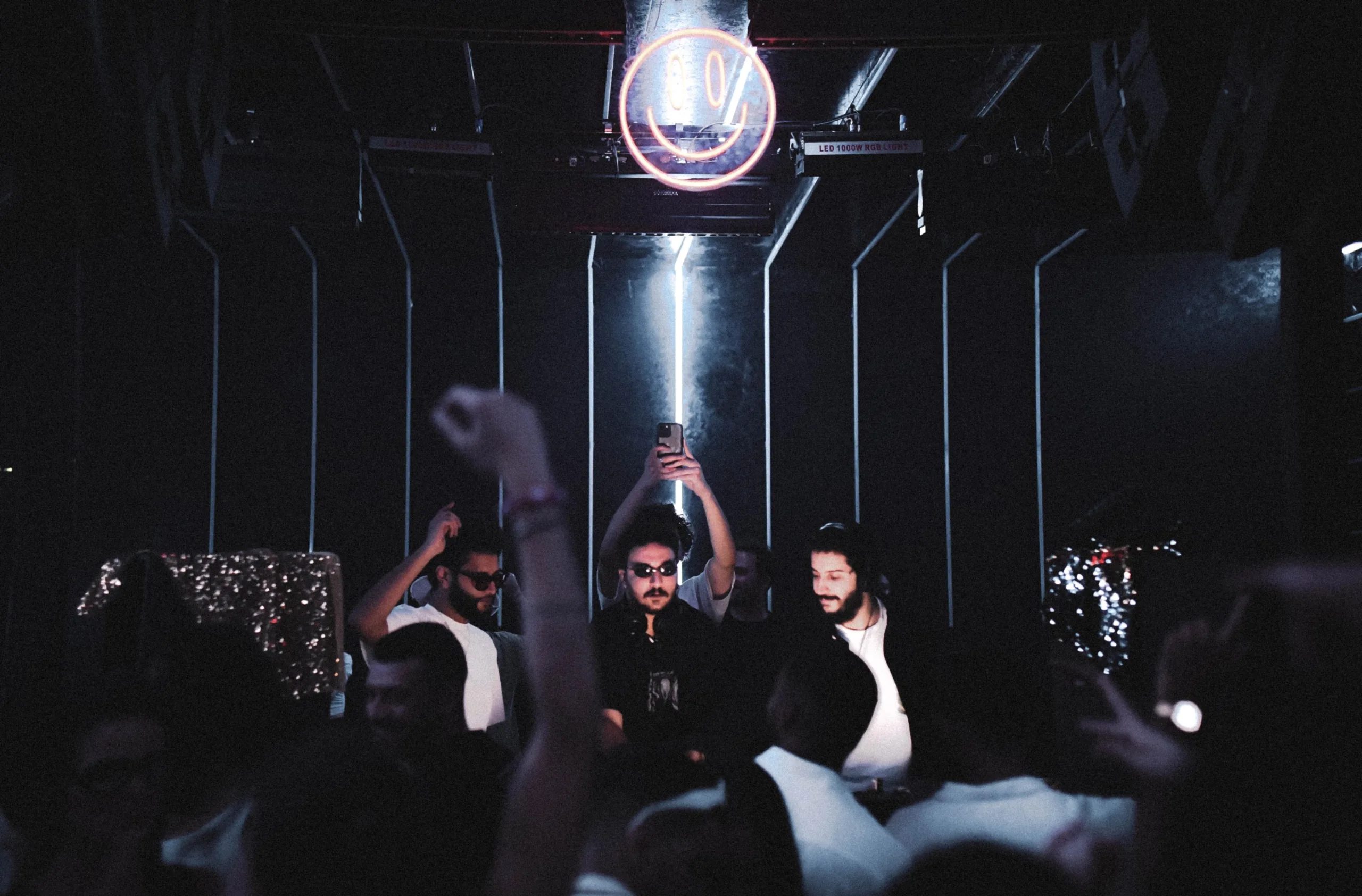
The goal was not simply to create something technically polished, but something whose energy could translate through a club sound system and onto a dance floor.
Once its elements began working together, CANDLE said, the group recognized the feeling it had been searching for.
“The track is direct and club-driven, but it still carries the experimentation and character we associate with SODFA,” he explained.
Moroccan without obvious Moroccan markers
For SODFA, describing “Party Room” as rooted in Morocco does not mean placing immediately recognizable traditional sounds over an electronic production.
CANDLE instead locates its Moroccan identity in the environment where the track developed.
“For us, being rooted in Morocco’s underground scene is not necessarily about adding obvious or traditional Moroccan sounds,” he said. “It is more about the environment, experiences and community that shape the music.”
That environment, he argued, exists at an intersection.
African influences, electronic music, local sounds, and international club culture continually meet within Morocco’s underground spaces. Those exchanges shape not only what DJs play, but how audiences move, how producers work, and how new music develops between sessions and performances.
“Party Room” grew through that ecosystem, CANDLE said, including local sessions and exchanges with DJs, producers, and audiences.
“It carries the meeting point between African roots and a contemporary club language,” he said.
More importantly, he associates the underground with permission to ignore categories.
“The underground also represents freedom for us: the freedom to experiment, cross genres and create without having to fit into a predefined category,” he added. “That freedom is central to SODFA.”
From chance encounters to bigger rooms
The release also reflects how SODFA has changed since the members first began working together.
Their early sessions eventually led to festival appearances and larger stages, while the collective released its self-titled “Sodfa” EP in 2024 and continued releasing music through 2025.

For CANDLE, however, growth creates its own challenge: reaching bigger audiences without polishing away the spontaneity that made the project interesting.
“What started with local sessions has gradually taken us to festivals, larger stages and new audiences, but we never want to lose the energy that created the collective in the first place,” he said.
He sees “Party Room” as an important stage in that progression.
“It shows that our sound can become more confident, focused and powerful on bigger sound systems without losing its original DNA,” CANDLE said.
The ambition now is straightforward: larger rooms, wider audiences, and continued experimentation.