Fez — Long before bank vaults and storage units, Amazigh communities in Morocco had another way to protect what mattered.
Known as an agadir in the singular and igoudar in the plural, these fortified communal granaries remain scattered across the Anti-Atlas, High Atlas foothills, Souss, and pre-Saharan regions.
They were built to store much more than food.
Morocco’s Ministry of Youth, Culture and Communication records that families kept harvests alongside money, jewelry, weapons, and legal documents inside the structures. Each household generally controlled its own small storage chamber, while the building itself was collectively maintained.
The country’s Cultural Heritage Directorate has inventoried 554 such structures nationwide.
That makes the igoudar something more complicated than an ancient warehouse.
A vault, meeting place and refuge
Many igoudar resemble small fortresses. Some were constructed on difficult-to-reach peaks. Others were incorporated into villages or built near oases, with their architecture changing according to available materials.

In the Anti-Atlas, stone dominates. In oasis areas, builders relied more heavily on earth and palm trunks. Tourism authorities explain that the same basic institution adapted to dramatically different landscapes.
Protection was central to their purpose.
During periods of conflict, some granaries could shelter people and livestock. They also served political and social functions, providing places where community representatives gathered to discuss collective affairs.
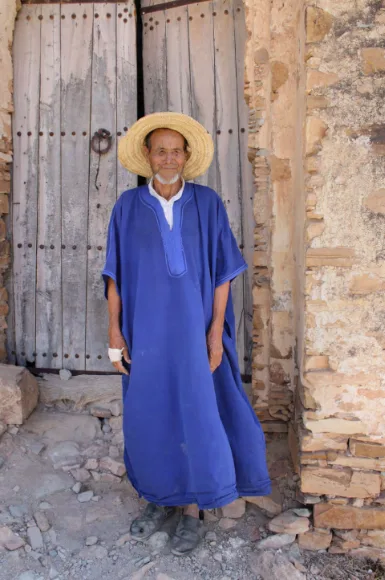
Customary rules determined how these shared spaces operated. A guardian, often known as the amin, controlled access and oversaw the granary on behalf of the community.
This is why describing igoudar simply as an early “bank” can miss much of the story.
They certainly protected valuables, much like a communal vault. But they also supported food security, local governance, conflict protection, and social organization.
One is still doing its old job
The tradition has not completely disappeared. Near Tata, “Agadir Aït Kine” remains one of Morocco’s functioning communal granaries.
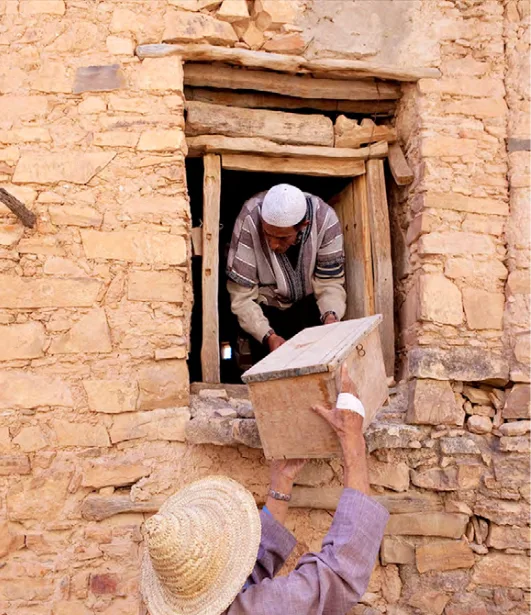
A 2026 account on Morocco’s official government portal documents that families still use it to store barley, dried fruits, valuable possessions, and important documents.
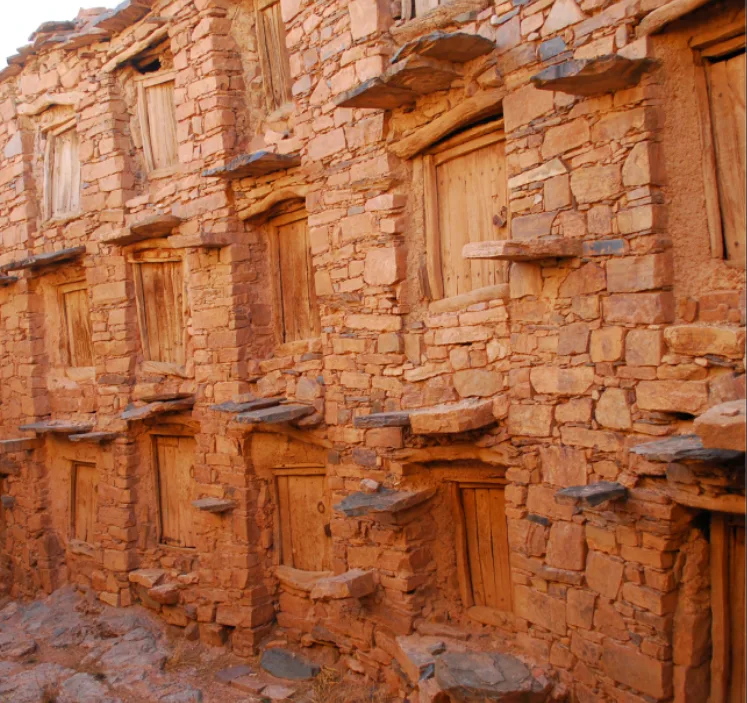
The structure contains 76 rooms, including individual family spaces and a collective room reserved for the tribe.
Its guardian continues a remarkably old routine: opening the granary at dawn and closing it at sunset.
Elsewhere, survival has been more difficult. Changing lifestyles, migration, modern construction, and reduced dependence on communal storage have left many structures vulnerable.
Morocco has consequently pursued efforts to preserve and promote the igoudar. The Culture Ministry launched a project aimed at seeking UNESCO World Heritage recognition for the collective granaries.
Their value, however, goes beyond unusual architecture.
Igoudar preserve evidence of communities solving difficult problems collectively: how to protect a harvest, secure family possessions, manage scarce resources, and build trust without modern infrastructure.
Centuries later, the thick walls still tell that story. Morocco’s igoudar are not simply places where people once stored grain. They are surviving records of how Amazigh communities organized, protected, and sustained themselves together.