Rabat — Waiting for the tram in Rabat can now come with a book.
Three free-access reading spaces have been installed at Place Al Joulane, Nations Unies, and Al Irfane stations, transforming part of the capital’s tram network into small public libraries.
The initiative forms part of “Rabat World Book Capital 2026,” the year-long cultural program built around expanding access to books beyond conventional libraries.
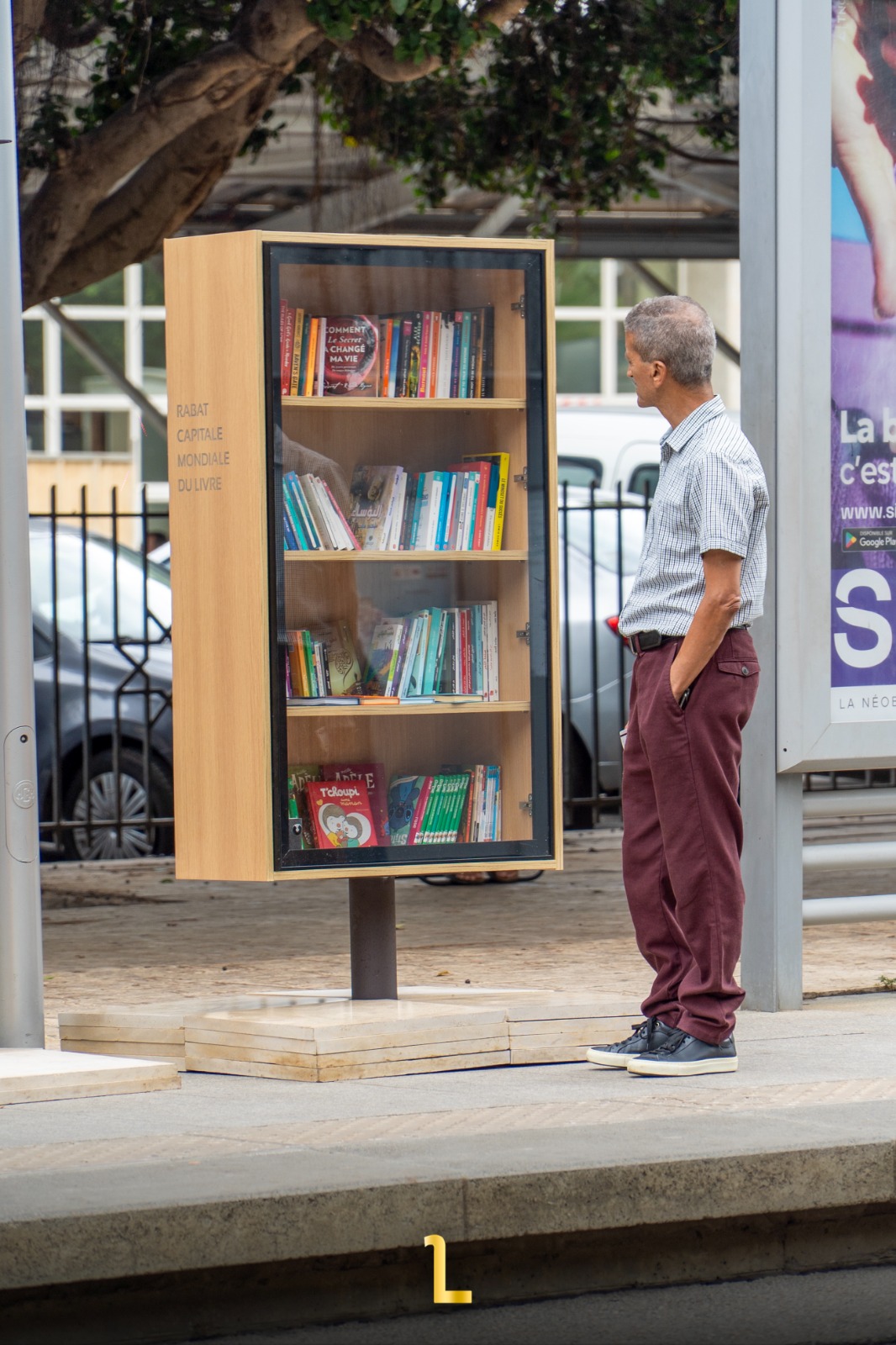
Morocco’s Ministry of Youth, Culture and Communication first announced the three locations as neighborhood libraries designed to make reading part of everyday travel. The stations have since opened to passengers.
Books between two tram rides
The installations are deliberately simple.
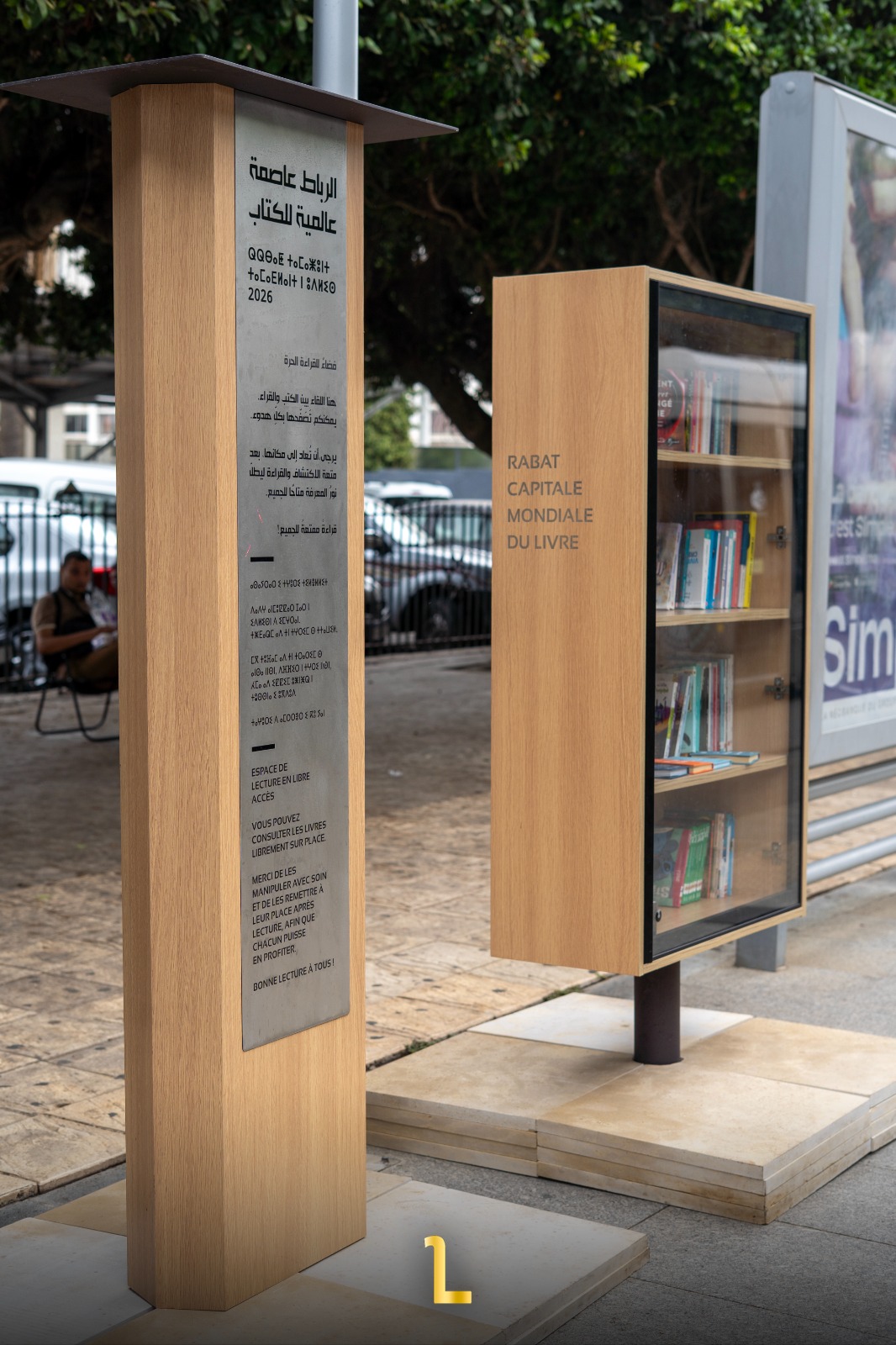
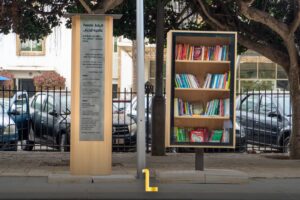
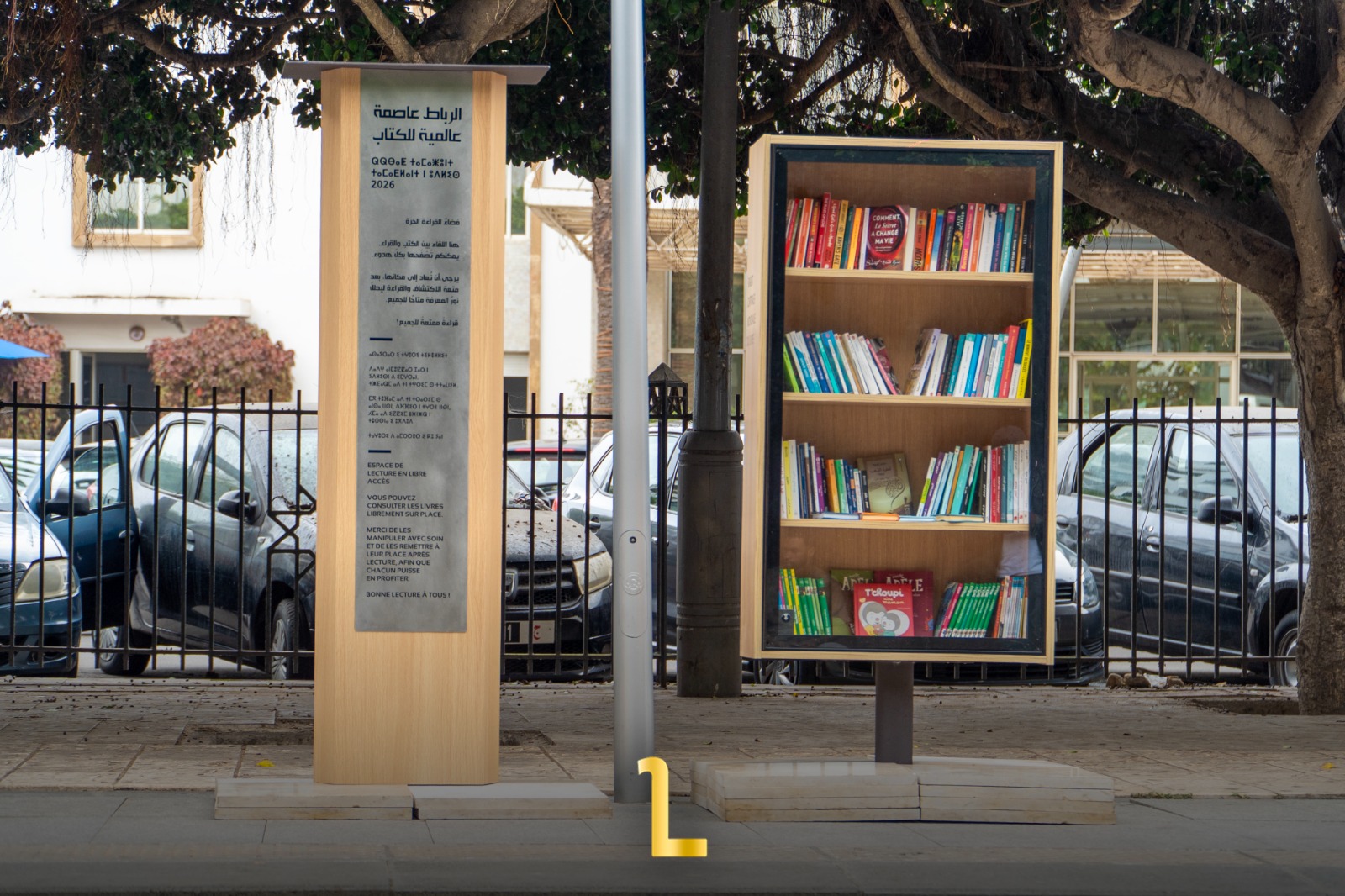
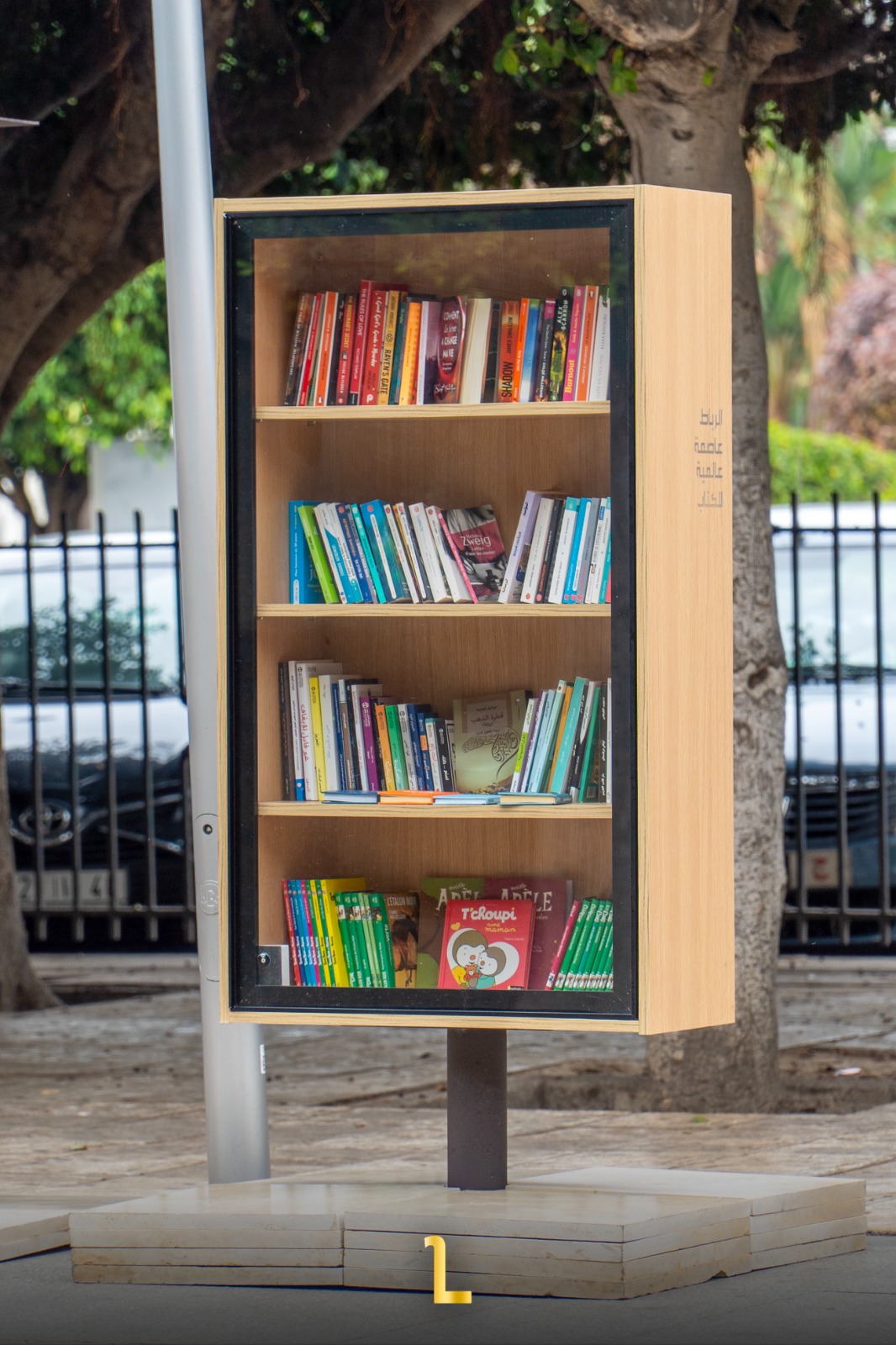
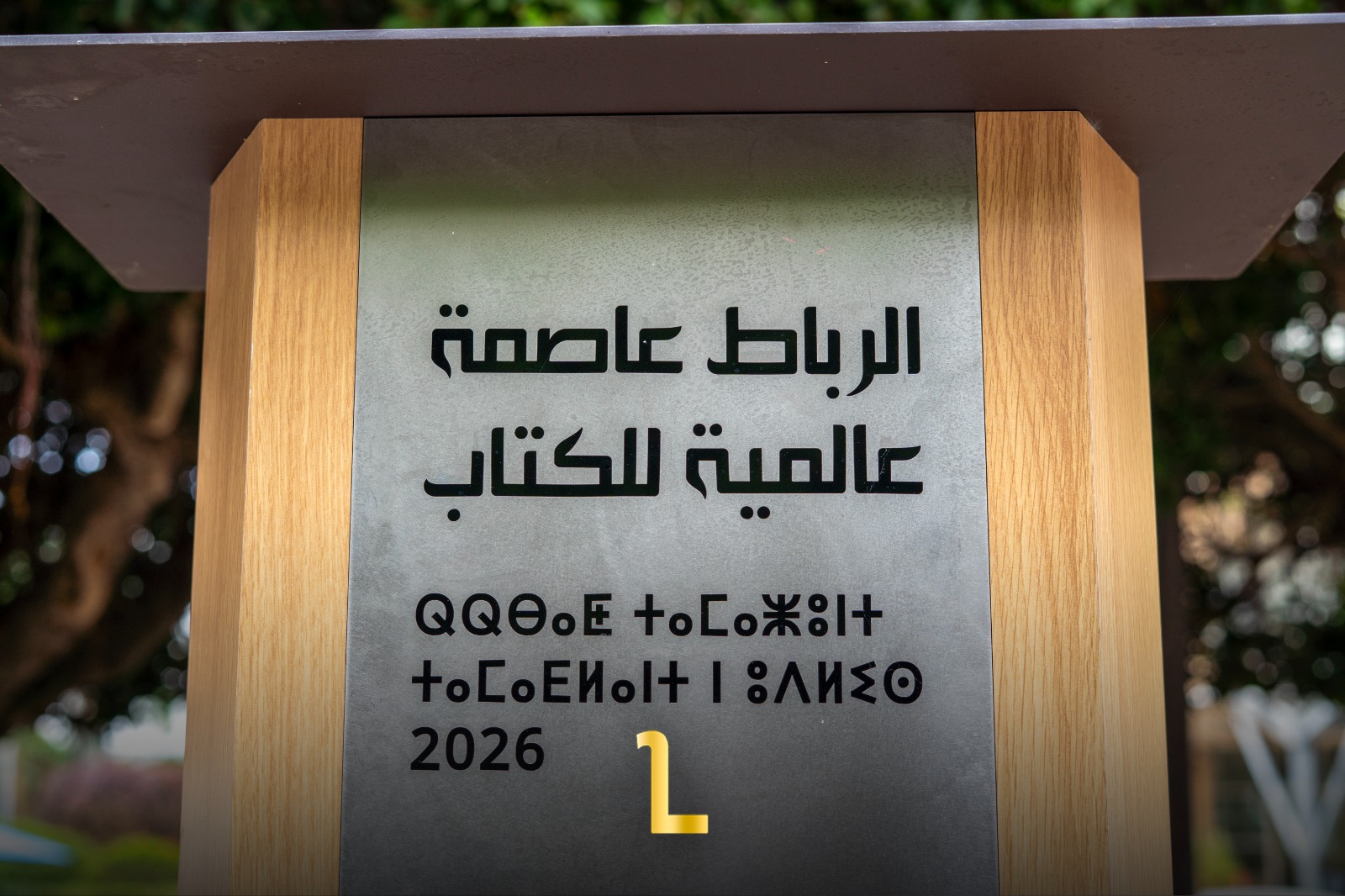
Each station features a wooden cabinet filled with books behind glass, accompanied by a tall information panel identifying Rabat as World Book Capital 2026.
The signage appears in Arabic, Tamazight, and French, describing the installation as a free-access reading space.
Passengers are invited to browse books on site, handle them carefully, and return them after reading so others can use them.
The photographs also show a mix of titles aimed at different readers, including books for children alongside general reading material.
Instead of asking people to make a separate trip to a library, the project places books in spaces they already pass through every day.
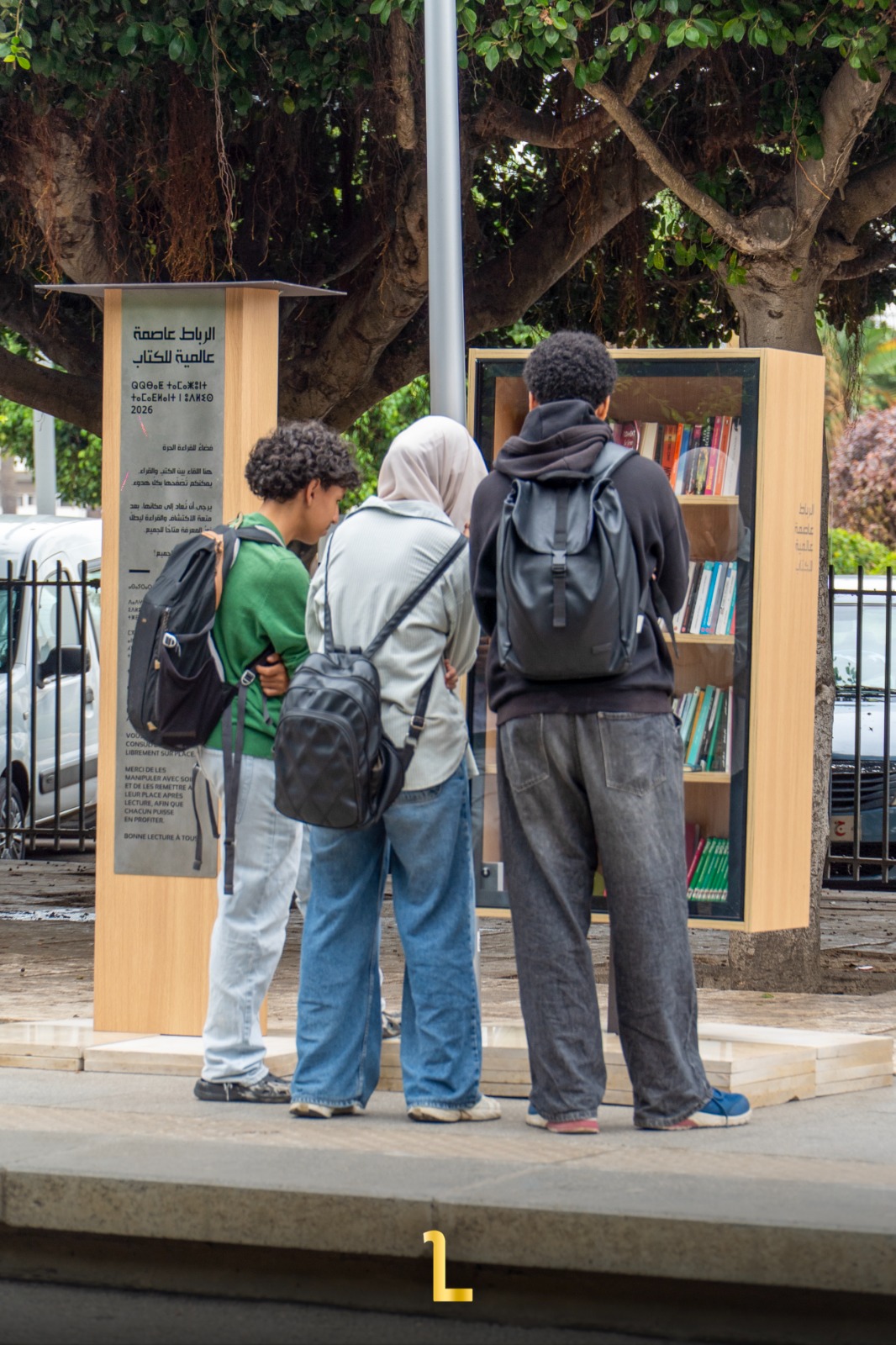
That idea sits at the center of Rabat’s wider World Book Capital program, which aims to move reading into parks, hospitals, youth spaces, public transport, and other parts of daily urban life. The official program emphasizes access to books beyond traditional cultural institutions.
Part of a larger reading network
The tram libraries are not the first public reading spaces introduced under the 2026 program.
Earlier this year, neighborhood libraries also opened in places including Hassan II Park, Nouzhat Hassan, Chellah, and the Botanical Test Garden, gradually creating a wider network of small-scale reading spaces across Rabat. The Chellah library, opened in August, became the third urban library introduced within that phase of the program.
The tram stations take the concept into a different setting, one defined by movement rather than leisure.
Place Al Joulane, Nations Unies, and Al Irfane all sit along Line 1 of the Rabat-Sale tram network, connecting central Rabat with neighborhoods, universities, and major public facilities.
Rabat’s reading push follows its designation by UNESCO as World Book Capital 2026. UNESCO designated the Moroccan capital for its literary infrastructure, publishing sector, and plans to broaden access to reading, particularly among younger and underserved communities.
The year of programming began on April 23, World Book and Copyright Day, and continues into 2027.