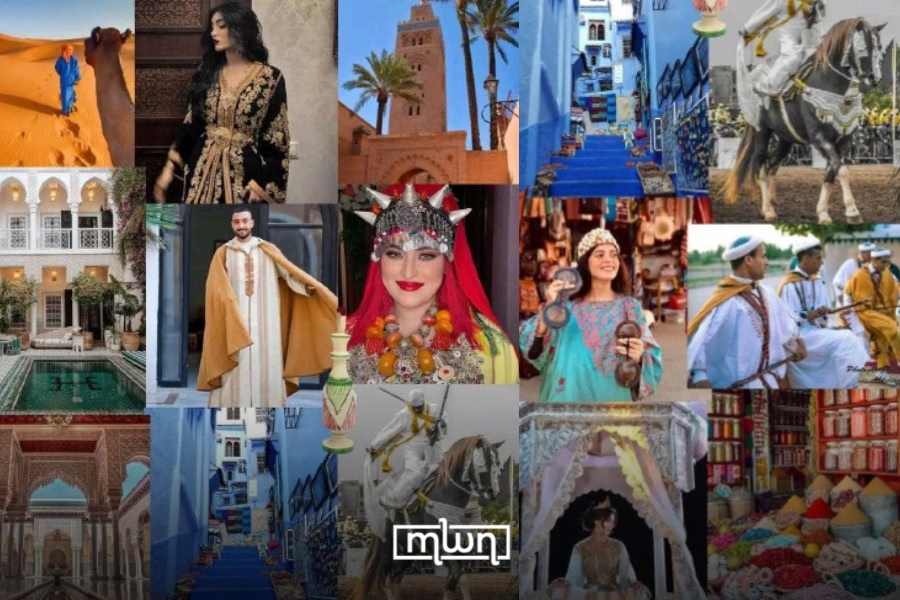
The open-air theatre near Bab El Khemis in Meknes turned into a living stage of Moroccan cultural pride on Friday evening.
Fez– The 10th edition of the National Festival of Traditional Arts kicked off in spectacular style, where families filled the arena, children danced, elders swayed, and passersby stopped in awe, as rhythms from every corner of Morocco echoed through the city.
It was a celebration of shared identity, performed under the stars in one of the country’s most historic cities.
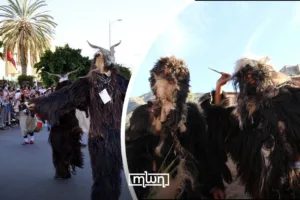
The opening night unfolded like a musical map of Morocco: fiery “rekka” rhythms fired up the crowd, while the earthy energy of “Ahidous” and “Ahwach” reminded everyone that this is a country where heritage lives not in museums, but in movement, music, and memory.
At the heart of it all is a vision to bring Morocco’s intangible heritage to life. “This year’s edition offers a rich and well-balanced program that reflects the diversity and vibrancy of our traditional arts,” said Hassan Bougaddour, president of the organizing association “Maghrib Al Turath” (Morocco of Heritage).
Speaking to the national press, he noted that 16 performing groups, nearly 350 artists, have come from all regions of the Kingdom to present an authentic panorama of Moroccan folk arts.
Choosing the open-air theatre near Bab El Khemis wasn’t incidental. As one of Meknes’ oldest gateways, this symbolic location adds a layer of meaning to the event. “This historic site, marking the city’s western entrance, provides a unique backdrop and enhances the architectural and cultural heritage of Meknes,” Bougaddour explained.
And the symbolism doesn’t stop at the gate.
For Nassima Chehboun, cultural project coordinator at UNESCO’s Maghreb office, the festival is a living example of how civil society can play a leading role in preserving and revitalizing cultural heritage.
“Beyond its artistic value, this event is a powerful tool for sustainable development,” she said. “It strengthens identity, fosters intergenerational transmission of values, and builds a sense of belonging.”
Chehboun also mentioned the broader impact: “festivals like this one generate income, support local artisans and artists, and contribute to the city’s economic and social vitality.”
That’s what makes Meknes the perfect host. A UNESCO World Heritage Site, the city embodies the intersection of material and immaterial heritage. From stone to song, from gate to gathering, each place in Meknes carries history.