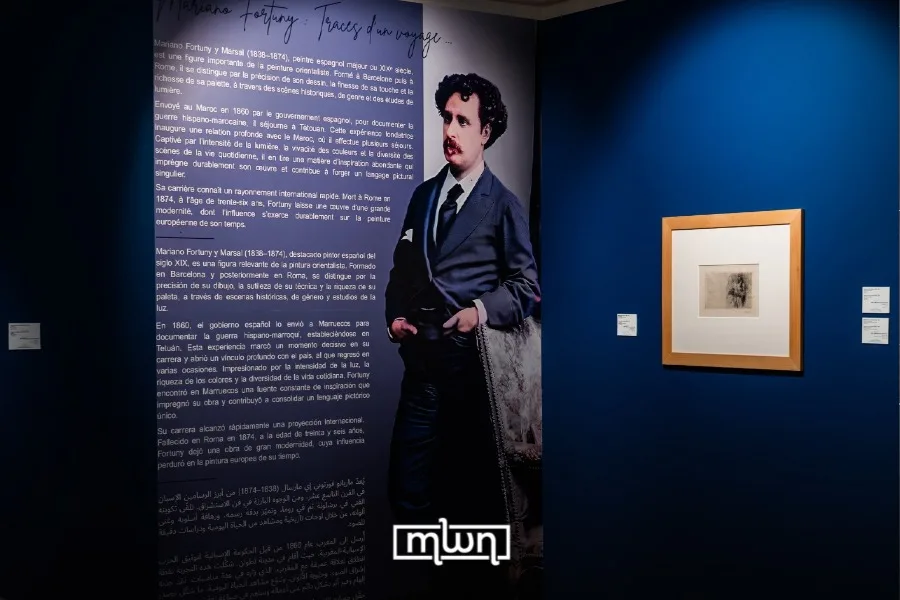
Rabat – At Dar Niaba, one of Tangier’s most emblematic cultural venues, a new exhibition is placing Mariano Fortuny y Marsal firmly in the spotlight, revisiting the legacy of a leading figure in 19th-century Spanish art.
Open since April 21, the exhibition brings together around fifty works that map out the artist’s refined visual language and remarkable technical precision, offering visitors a rare and immersive glimpse into his universe.
Running through August 21, the exhibition is the result of a collaboration between Fondation Nationale des Musées, 6A Taller i Galeria, Fondation Euroafrica and the Mairie de Palma, a cross-border initiative that mirrors the very exchanges that shaped Fortuny’s legacy.
Rather than adopting a conventional retrospective format, the show narrows its focus to Fortuny’s expertise in printmaking. A curated selection of engravings, drawn from the collection of Enrique Juncosa Darder, highlights his meticulous command of techniques such as etching and aquatint.
The curatorial direction emphasizes both process and result, with each work revealing a rigorous engagement with material and form, reinforcing Fortuny’s enduring reputation as a master engraver.
The curatorial approach places as much emphasis on process as on outcome, with each work revealing a disciplined exploration of material and form that reinforces Mariano Fortuny y Marsal’s reputation as a master engraver.
Fine lines, controlled textures, and carefully calibrated tonal variations reflect a practice rooted in observation and precision, yet capable of yielding deeply expressive compositions.
The exhibition also revisits the artist’s enduring connection to Morocco.
His travels to Tetouan and Tangier in the 1860s left a lasting imprint on his work, introducing new chromatic intensities and subject matter that would come to define his orientalist phase.
Moroccan landscapes, architectural details, and scenes of daily life appear not as exoticized settings, but as essential components of his artistic evolution.
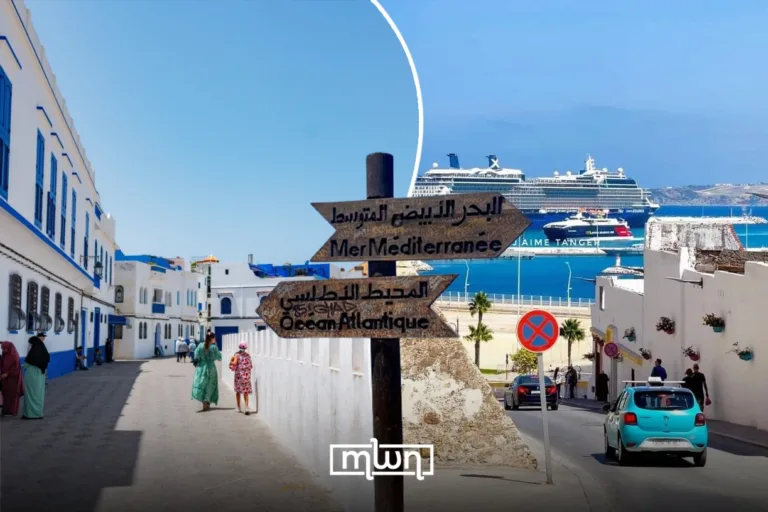
Hosted in a site historically shaped by cross-cultural exchange, Dar Niaba functions as a symbolic bridge between Spain and Morocco, echoing the artist’s own trans-Mediterranean journey.
The dialogue between place and artwork feels particularly resonant here, where Fortuny’s fascination with light and atmosphere finds a natural echo in Tangier itself.