Fez — Kalaat M’Gouna closed the 61st edition of the International Perfume Rose Festival yesterday after four days of exhibitions, conferences, cultural events, and celebrations around one of Morocco’s most famous local products.
The festival ran from May 7 to 10 under the theme “The Perfume Rose Sector at the Heart of Integrated Development in Oasis Areas.” It brought together farmers, cooperatives, exhibitors, officials, researchers, and visitors from Morocco and abroad.
This year’s edition recorded strong figures. Perfume rose production passed 5,000 tonnes in 2026, while the producing area exceeded 1,000 hectares. More than 150,000 visitors attended the event, confirming the festival’s role as one of the main cultural and agricultural gatherings in southeastern Morocco.
A record year for Morocco’s rose sector
The 2026 harvest gave the festival a stronger economic message. Production reached more than 5,000 tonnes, up from the 2025 harvest of about 4,800 tonnes reported by the Regional Office for Agricultural Development in Ouarzazate. The 2025 figure was already described as a strong recovery after weaker years between 2020 and 2023.
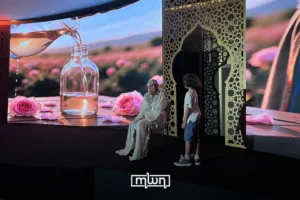
The perfume rose, especially the Damask rose, is central to the economy of Kalaat M’Gouna and surrounding valleys. Farmers, cooperatives, distilleries, and artisans use it to produce rosewater, essential oils, soaps, creams, perfumes, and other cosmetic products.
The Associated Press reported last year that the region’s climate helps rose cultivation because of its mild temperatures, sunlight, and low humidity. It also noted that women play a major role in the harvest, picking roses before they are sorted and sent to distilleries.
The sector remains important for small farmers and rural women. It also supports local cooperatives that sell rose-based products to Moroccan consumers and international buyers.
A platform for oasis development
The official opening ceremony included Minister of Agriculture, Maritime Fisheries, Rural Development, Water and Forests Ahmed El Bouari and Tinghir Governor Ismail Heikal, along with local officials and institutional partners.
The delegation visited the festival stands and reviewed several initiatives linked to the perfume rose value chain. The event also highlighted the goals of Morocco’s “Green Generation 2020-2030” strategy, especially production modernization, product development, entrepreneurship, and climate adaptation.
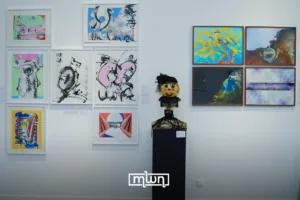
The festival included more than 100 stands. They featured public institutions, private companies, cooperatives, local products, traditional crafts, and livestock from the Draa-Tafilalet region.
The event also included international participation from four French non-governmental organizations and Swiss institutions. Their presence added a wider development angle to the festival, especially around sustainable oasis economies and local value chains.
Culture, research, and the rose carnival
The program included roundtables, scientific conferences, training workshops, and public meetings. Experts, academics, and researchers from Morocco and abroad discussed ways to develop the perfume rose sector and strengthen the social economy in oasis areas.
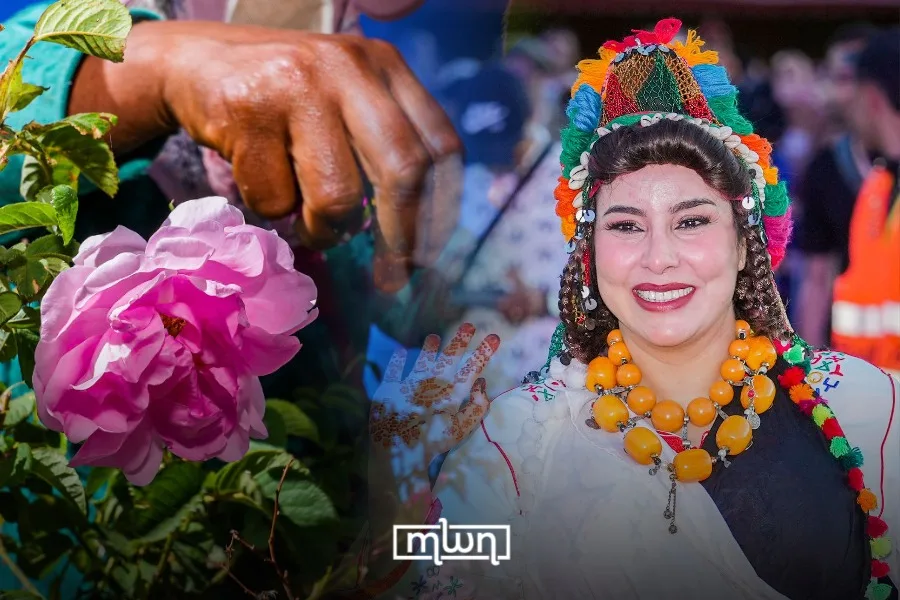
One of the strongest parts of the festival was the annual carnival. It moved through the streets of Kalaat M’Gouna with the 2026 Rose Queen and her two runners-up, along with local musical groups, folklore troupes, sports shows, and traditional crafts.
The festival also honored farmers and producers through awards for the best farms and rose-processing units in oasis areas producing Damask roses. The prizes aimed to encourage quality, innovation, and stronger local production.
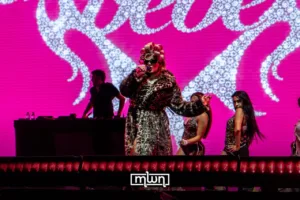
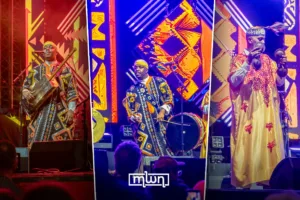
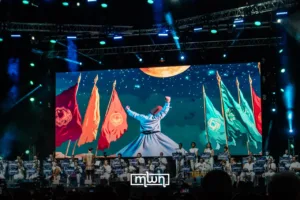
Kalaat M’Gouna also hosted artistic and cultural evenings with local and regional performers. These events gave the city a festive mood beyond the exhibition halls and brought residents and visitors into the same public celebration.
The 61st edition strengthened Kalaat M’Gouna’s image as Morocco’s rose capital. It also showed how one agricultural product can connect farming, women’s work, tourism, scientific research, local crafts, and cultural identity. For Draa-Tafilalet, the rose is more than a seasonal flower. It is a source of income, memory, and regional pride.