Rabat – Casablanca International Biennale returns for its 6th edition from December 10, 2026, to January 10, 2027, with an exceptional relocation to Essaouira.
In a moment marked by global uncertainty and shifting geopolitical tensions, and with a special focus this year on artists from the Middle East, the Biennale adjusts both its timing and format. This edition leans into instability not as disruption, but as part of the context in which artistic work is created.
Held under the theme “Birthing the Impossible,” it frames artistic practice as a response to a world that is constantly being reconfigured.
The decision to move the Biennale outside Casablanca is temporary, yet deeply intentional. While the city remains central to its identity, Essaouira becomes the space where this edition unfolds, opening a different rhythm and geography for the encounter.
The shift also reflects a closer connection with the IFITRY artists’ residency, where several participating artists developed parts of their projects.
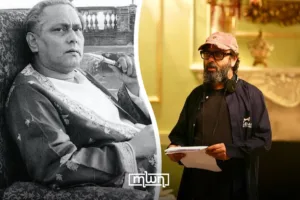
It also aligns with a broader cultural and architectural momentum currently shaping Essaouira, including the anticipated opening of the City of Arts and Culture designed by Oscar Niemeyer.
Across the city, the Biennale will activate a series of sites that move between the familiar and the less accessible, including spaces rarely opened to the public, as well as the IFITRY residency itself.
More than 80 artists from Morocco and abroad take part in this edition, bringing together practices that intersect across memory, ecology, resilience, and renewal.
Art, uncertainty and the idea of the new
At the core of this edition lies a philosophical reading of artistic practice, inspired by the German-American political philosopher Hannah Arendt’s reflection on beginnings and human action, where ‘the new’ is understood as something that cannot be fully predicted from what came before, yet still emerges through human capacity to act and create.
In this light, the Biennale looks at how artists work within conditions of instability, not as observers from the outside but as participants in the same shifting reality. It asks how artistic practice can still generate new forms of meaning when the present is marked by repeated crises and constant reconfiguration.
From there, “birth” is approached as the moment something new takes form within limits and uncertainty, not as escape from them. It becomes a way of thinking about artistic creation as an ongoing process that continues even under pressure, where what emerges is not predetermined but still made possible.
“Birthing the Impossible” is not only a theme but a curatorial gesture, framing the Biennale as a space where artistic practice is tested against reality, and where new ways of seeing and thinking can still emerge.
Ultimately, the Biennale positions itself as a meeting point for artists, ideas, and places, where creation and reflection unfold together, and where uncertainty becomes a starting point rather than an endpoint.
Read also: Moroccan Cinema Takes Spotlight in Strasbourg’s ‘Fragments of Morocco’