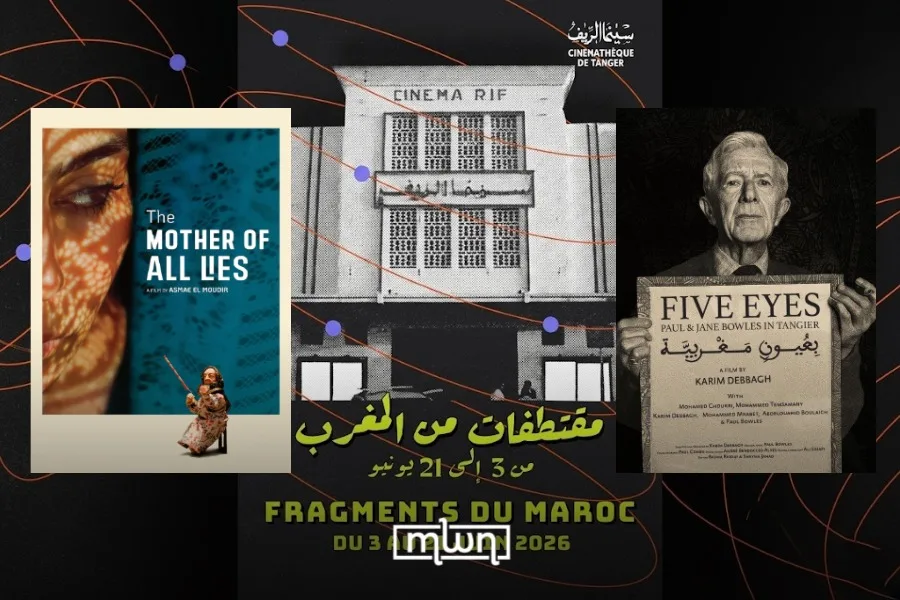
Fez — Moroccan cinema will take center stage in Strasbourg this month through “Fragments of Morocco,” a special program featuring six major films at Cinéma Le Cosmos from June 3 to 21.
The program is presented as a carte blanche to the Cinémathèque de Tanger, at the invitation of Mémoire des images réanimées d’Alsace (Memory of Reanimated Images of Alsace), known as MIRA.
The selection brings together films that helped define Moroccan cinema across generations, from experimental storytelling and urban realism to documentary work rooted in memory, identity, and social history.
Six films, one Moroccan cinematic map
The lineup includes “Mirage” by Ahmed Bouanani, “The Mother of All Lies” by Asmae El Moudir, “Five Eyes” by Karim Debbagh, “Casanegra” by Nour-Eddine Lakhmari, “Headbang Lullaby” by Hicham Lasri, and “El Batalett” by Dalila Ennadre.
“Mirage,” released in 1979, carries particular weight in the program. The film is the only feature-length work by Bouanani, a central figure in Moroccan cinema, literature, poetry, and visual art.
The Strasbourg screening also gives French audiences rare access to a work that has long held symbolic value in Morocco while remaining difficult to find on international screens.
The program’s strength lies in its range. “Casanegra” captures Casablanca’s restless urban energy. “Headbang Lullaby” brings Lasri’s sharp, offbeat political imagination. “The Mother of All Lies” extends Morocco’s recent documentary momentum after gaining major international recognition.
Films known at home, less seen abroad
“Fragments of Morocco” focuses on a paradox in Moroccan cinema: several films considered essential by Moroccan audiences have remained nearly invisible in foreign distribution networks.
Many of these works traveled through memory, conversation, festivals, and word of mouth rather than commercial release abroad. Their presence in Strasbourg gives them a new viewing context and places Moroccan film history in direct conversation with European audiences.
The program also highlights the role of archives in keeping cinema alive. The Cinémathèque de Tanger has become an important cultural institution for preserving film culture, screening neglected works, and reconnecting audiences with Morocco’s visual memory.
Archives linking Morocco and Alsace
Beyond the screenings, “Fragments of Morocco” introduces “Que sont devenus les tirailleurs? Alsace-Maroc: Images, mémoires et récits” (What Became of the Riflemen? Alsace-Morocco: Images, Memories and Narratives).
The project focuses on collecting, digitizing, and promoting private archives in Strasbourg and Tangier. It aims to deepen understanding of the historical ties between Alsace and Morocco through images, family memories, and personal narratives.
That archival layer gives the event a wider purpose. It turns the film program into a space for memory work, connecting cinema with migration, military history, family archives, and the traces Morocco left in French regional history.