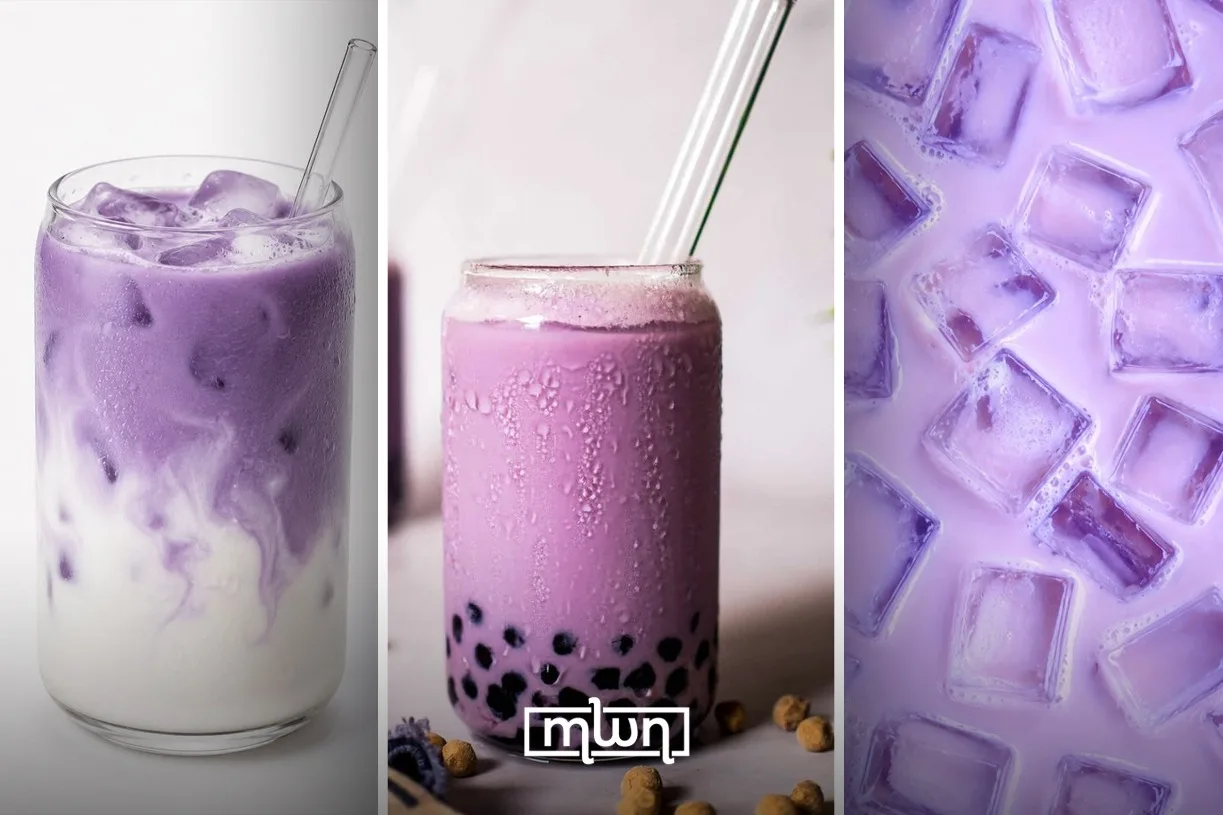
Safi – If a bright purple latte has started showing up on your coffee shop’s menu and all over your feed this year, you have already met “ube.”
The violet drink is doing for cafes what matcha did a few seasons ago, swapping one photogenic color for another.
Ube (say “OO-beh”) is not a syrup or a dye, at least not when it is done right. It is a real root vegetable, and that deep purple is its own.
Where it comes from
Ube is a purple yam, a starchy root that grows across Southeast Asia. In the Philippines it is a kitchen staple, folded into cakes, ice cream, jam, and pastries long before it ever reached a coffee cup.
From there it traveled, and today it is grown and sold around the world.
It is easy to mix up with taro, which looks similar from the outside. Peel them, though, and the difference shows. Taro flesh is pale and flecked, while ube is deep, even violet.
That color is not added. It comes from natural pigments, the same ones that make blueberries and red cabbage so deeply colored.
What it tastes like
Cooked ube turns soft and creamy, closer to a potato than to anything sharp. The taste is mild and sweet, with notes of vanilla and a nuttiness that people often compare to hazelnut or almond.
That gentle, dessert-like flavor is why it works in a glass. Whisked into milk, it drinks like a lightly sweet vanilla cream, only purple.
In the Philippines, ube turns up all across the sweet table. It crowns halo-halo, the shaved-ice dessert whose name means “mix-mix,” a tall glass layered with milk, sweet beans, jellies and fruit.
It also thickens ube halaya, a rich jam of mashed yam, condensed milk and butter, and it tints the soft milk breads and rolls found in almost every Filipino bakery.
What it does for you
That purple color is where a lot of the health talk starts. The pigment that turns violet is also an antioxidant, one of the natural substances that help protect the body’s cells from everyday wear.
A cooked purple yam brings fiber, potassium and a good dose of vitamin C, all for around 140 calories per 100 grams. Its natural sugars are released slowly, so it is gentler on your blood sugar than most sweet foods.
Studies have tied the yam to a few real effects. Its plant compounds have helped lower blood sugar in people with type 2 diabetes, and its antioxidants may help keep blood pressure in a healthy range.
In lab tests, some of the compounds behind its color even slowed the growth of certain cancer cells, though only at doses far higher than any drink could give you.
Ube is good for digestion, too. It carries a kind of starch your body does not fully break down, and that leftover starch feeds the friendly bacteria in your gut. None of this turns a latte into medicine, but the root behind it is a genuinely nourishing food.
Who should go easy on it
Most of those benefits belong to the yam, not automatically to the cup in your hand.
Many cafe versions lean on ube flavoring and purple coloring rather than real yam, and even the honest ones are often sweetened hard with sugar or condensed milk. A 100-calorie idea can quietly become a 400-calorie one.
So if you are watching your sugar, ask what is actually in the cup and treat an ube latte as the dessert it usually is.
Anyone on blood-sugar medication may want a word with their doctor first, since the plant itself can lower blood sugar too.
Like many vegetables, ube contains natural compounds called oxalates, which can build into kidney stones in people already prone to them, so that group should not overdo it.
And because it usually arrives blended into dairy, a milk allergy or lactose intolerance is the obvious reason to skip it or swap the milk. If you are pregnant, breastfeeding or managing a health condition, treat it like any new addition and check with a professional.
For everyone else, the purple latte is what it looks like: a pretty, gently sweet drink built on a real and surprisingly good-for-you root. Just know whether you are drinking the yam or only its color.