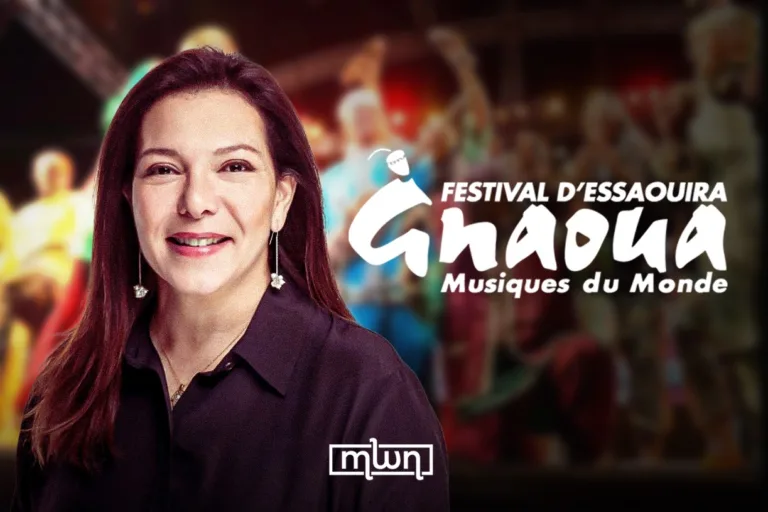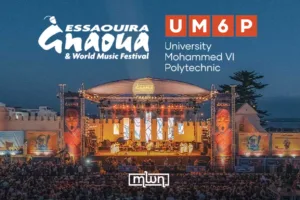
Rabat – Gnaoua and World Music Festival is expanding its role beyond music and performance, positioning itself as a platform for critical reflection on major cultural, social, and human transformations shaping the modern world.
As part of this broader vision, the festival has strengthened its collaboration with Mohammed VI Polytechnic University through the Chair of Transitions (UM6P/IAS).
Alongside the festival’s Human Rights Forum, the Berklee at Gnaoua program, and its ongoing transmission and creative initiatives, the Chair of Transitions continues its exploration of Gnaoua culture and its contemporary significance.
On June 27, two roundtable discussions will bring together researchers, anthropologists, historians, musicians, and artists under the theme “Gnaoua Between Singularity and Universality.”
Through this initiative, the festival and UM6P aim to highlight a shared belief that cultural traditions are not simply heritage to be preserved, but living intellectual resources that can help interpret the changing realities of today’s world.
With its rich history of movement, exchange, and reinvention, Gnaoua culture offers a unique lens through which to examine questions of identity, transmission, and creativity across societies.
Rooted in complex historical links between sub-Saharan Africa, the Maghreb, and the Arab world, Gnaoua traditions reflect how cultures are shaped through migration, encounters, and hybridization.
This year’s discussions will center on how a deeply rooted cultural tradition can achieve universal resonance while maintaining its unique identity.
The first roundtable, “Gnaoua in Diaspora: Origins, Inventions, Dispersions?”, will explore how Gnaoua culture has traveled across diasporas, examining its forms of transmission and reinvention in different cultural contexts.
The second, “Trance, Ritual and Healing: Gnaoua and Ritualized States of Consciousness in Contemporary Societies,” will focus on the spiritual, symbolic, and therapeutic dimensions of the tradition, particularly the place of trance and healing practices in modern life.
The discussions will feature a diverse lineup of scholars and thinkers, including Raphaël Liogier, Marouane Jaouat, Wendell H. Marsh, Hisham Aidi, Nathan Chapman Lean, R. A. Judy, Kai Mora, Manoël Pénicaud, and Mohamed Tozy.