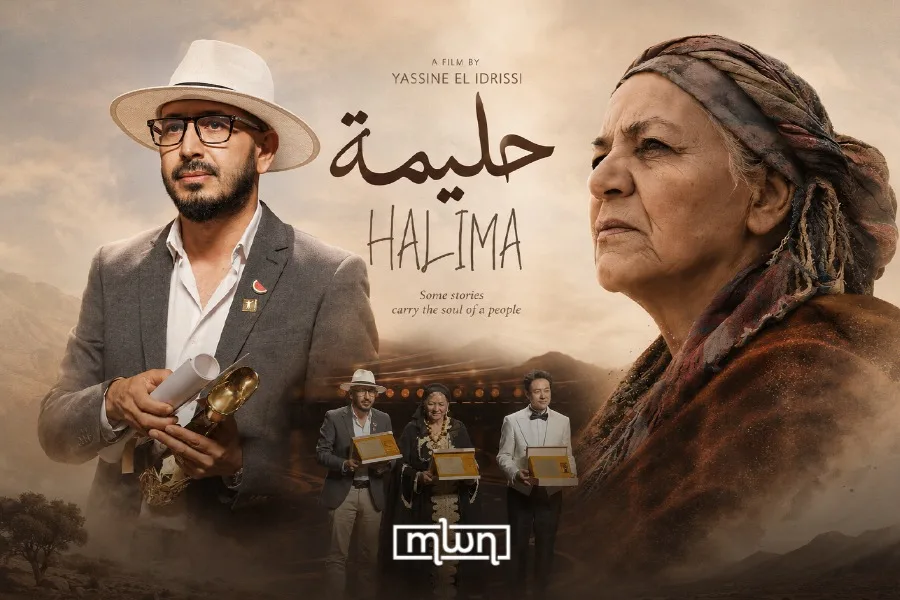
Fez — Moroccan film “Halima” has won two major prizes on June 20 at the 28th Shanghai International Film Festival, with Yassine El Idrissi taking Best Director and Khadija Amari winning Best Actress in the Golden Goblet Awards Main Competition.
The awards turn the film’s Shanghai run into one of the most notable recent moments for Moroccan cinema. “Halima” was already carrying symbolic weight after entering SIFF’s top competition, ending a 27-year absence for Morocco in the festival’s main category.
For El Idrissi, however, the win is not only a personal milestone. It is also an opening for a harder conversation about Moroccan cinema, who receives support, which films travel, and why the country remains absent from many major international platforms.
A win that changes the conversation
“Winning Best Director and Best Actress means, for me, that the film succeeded,” El Idrissi told MWN Lifestyle magazine. “What is a film, if not directing and acting?”
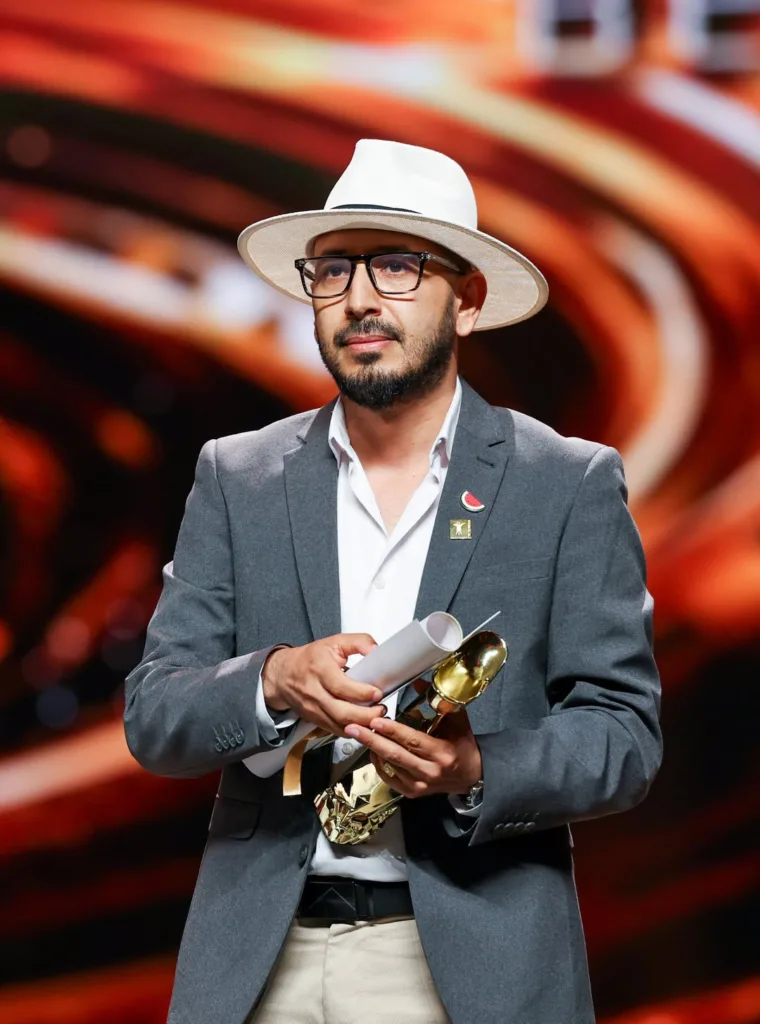
He said the two prizes show that the jury saw “something distinctive” in “Halima,” a modestly produced drama about an elderly woman forced to confront a past tied to the illegal cannabis trade.
The film was selected among 12 titles in the Golden Goblet Main Competition, all of which held world premieres in Shanghai. SIFF said this year’s festival received about 4,100 submissions from 125 countries and regions, a record for the event.
El Idrissi stressed the scale of that achievement, saying “Halima” was the only Arab and African film in the main competition.
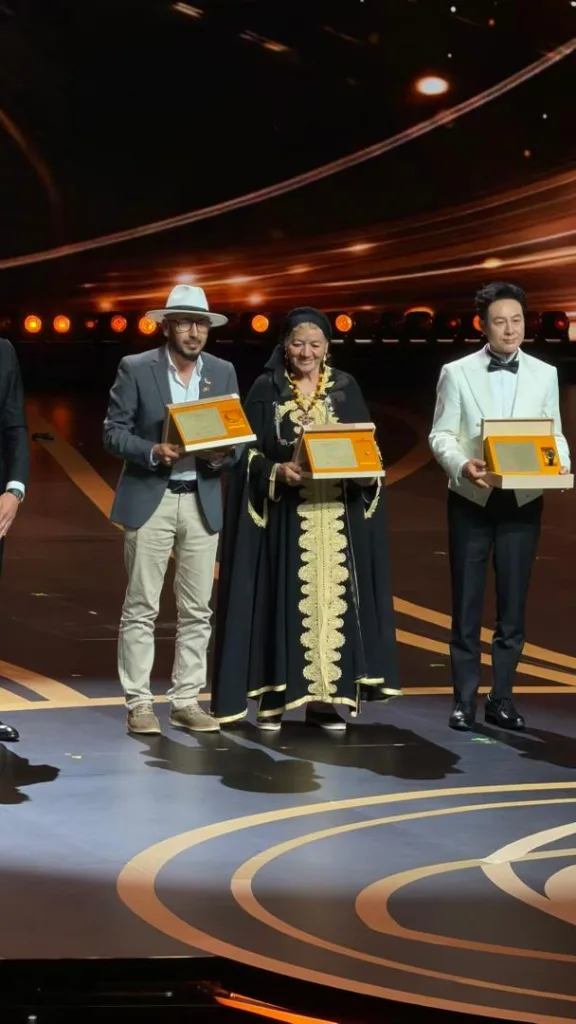
He also described Shanghai as “one of the biggest festivals in the world,” noting that screenings were full and tickets were difficult to secure. The film screened four times for the public, in addition to jury and press screenings.
“There was no space,” he said. “Even I could not find a seat after the premiere.”
‘There is something unhealthy’ at the heart of A call to question Moroccan cinema
El Idrissi believes the success of “Halima” should encourage Moroccan filmmakers and institutions to ask uncomfortable questions.
“The debate has to open,” he said. “We have to talk about these topics, look at statistics, and understand mathematically where we are and what our level is.”
He argued that Moroccan cinema often avoids asking whether its films are reaching the needed standard. “There is something unhealthy in the fact that we do not discuss whether we are good or not,” he said.
For him, the issue is not only whether one Moroccan film reaches an international festival, but how many do not.
“We applaud whoever goes somewhere, and that is good,” he said. “But who did not go? How many festivals did we not reach?”
He said Morocco needs to measure its presence against the scale of the global festival circuit, including top-tier festivals and hundreds of smaller but still meaningful platforms.
Funding and accountability
El Idrissi was especially direct about film funding. He argued that public support must be tied to results, renewal, and a broader opening for younger filmmakers.
“It is not possible to receive half a million dollars and do nothing, then receive it again and still take Morocco nowhere,” he said.
He rejected the idea that promotion alone explains why some Moroccan films fail to travel internationally.
“The problem is not only promotion,” he said. “The problem is that some films are weak, and some people receiving support are weak.”
El Idrissi said the same filmmakers can receive funding several times despite poor results, while younger directors remain locked out.
“There are thousands of students graduating,” he said. “If the same people keep receiving support without limits, when will these young people get their chance?”
He described the support system as “deeply flawed” and said it needs structural reform.
At the same time, he warned emerging filmmakers not to wait indefinitely for institutions.
“Young people who want to make cinema should make films,” he said. “They should not keep waiting for support from anyone.”
El Idrissi said he applied for support from the Moroccan Cinematographic Center six times and did not receive it for this film. His message to younger directors, he said, is to “fight, believe in themselves, and gain the experience needed to reach their goals.”
“I want to be hope for them,” he added. “Look where I arrived. You can go further than me.”
Low budgets, global competition
The director also rejected the belief that Moroccan films need major budgets to compete internationally.
He said some films competing alongside “Halima” in Shanghai were backed by budgets of several million dollars and made by directors with six or seven previous features.
But for El Idrissi, ideas and invention can narrow that gap.
“It is not necessary to have millions,” he said. “If you have ideas and find ways to work, you can compete.”
That belief shaped the making of “Halima.” El Idrissi wrote, directed, produced, edited, designed the sets, and handled costumes because of limited resources.
He described that choice as both necessary and dangerous.
“It is risky for a director to do many jobs on his own film,” he said. “You can fail in many things because there is no feedback.”
He said professional producers and editors help directors see mistakes and solve problems faster, especially during editing. “Halima,” he added, survived because a small but professional team believed in the project.
El Idrissi’s critique also comes from a career shaped by both formal training and international festival experience.
He holds a master’s degree in film from the Netherlands Film Academy, and says his previous works have screened at around 300 festivals, including Rotterdam, Cairo Critics’ Week, Gothenburg, and Clermont-Ferrand. T
hat background gives him enough distance from Morocco’s film system to question it from experience, not bitterness.
A story built over years
The film’s journey was long and fragmented. El Idrissi said he spent nearly two years gathering the budget while writing the script, then another two years shooting and editing.
The team did not shoot the film all at once. Instead, they filmed in parts, raised more money, and returned to shoot again.
“When you watch it, it feels like one story,” he said.
The film later received post-production support. El Idrissi said “Halima” won awards at the El Gouna platform and at the MedFilm Festival through post-production competitions, where it competed against other unfinished films.
Being selected and awarded in those platforms, he said, convinced him the film had “strength, uniqueness, and distinction.”
He gave special credit to the crew and to Khadija Amari, saying the actress “lifted the film” and gave it force through her performance.
Why Halima had to be old
“Halima” centers on an elderly woman living quietly by the sea. A phone call disturbs her life and forces her to face memories from five years earlier, including her ties to cannabis trafficking.
El Idrissi said making Halima an elderly woman came from the needs of the story.
“She looks ordinary, like our grandmothers,” he said. “A simple woman. But the surprise is that this character is complex and has experiences different from what people expect.”
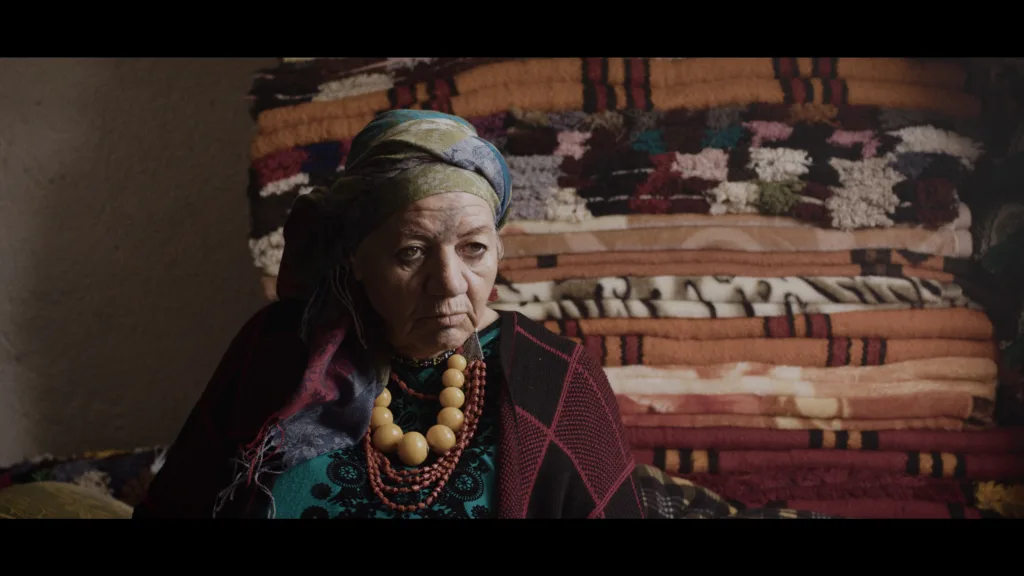
He said cinema must create new characters, otherwise it only repeats familiar stories.
“If cinema does not bring something new in characters and stories, it becomes repetition,” he said.
For him, Halima’s apparent simplicity is the gateway to the film’s deeper tension. She is familiar, then gradually revealed as someone carrying secrets, survival strategies, and moral complexity.
Cannabis, stigma, and law
The film’s cannabis theme also reflects a wider Moroccan debate. El Idrissi said people who work in cannabis cultivation remain part of society and deserve to be represented without automatic criminalization.
“This is a subject we must talk about,” he said. “My role as an artist and filmmaker is to move the topic and make people discuss it.”
Morocco has introduced a legal framework for cannabis used for medical, pharmaceutical, and industrial purposes under Law 13-21, while recreational use remains prohibited. The legal shift is designed in part to offer alternatives to farmers in traditional growing areas and reduce their dependence on illegal networks.
El Idrissi said the new legal framework has created “alternatives” for people working with cannabis, allowing some to seek a dignified life without legal trouble.
For him, films about such communities are necessary because cinema is “the face of society.”
“When you do not have cinema, you look as if you have no culture, no history, and no functioning system,” he said.
A southern festival recognizing the South
El Idrissi also framed Shanghai’s recognition as meaningful because it came from outside the traditional Western gatekeeping structure.
He said Western institutions often decide which festivals matter, which filmmakers pass, and which voices from the Global South become visible.
“What is good about this festival is that it is from the East,” he said. “The East can value the East.”
The 28th SIFF Main Competition jury was headed by Hong Kong actor Tony Leung Chiu-wai and included filmmakers and industry figures from Tunisia, China, Kyrgyzstan, Georgia, Mexico, and China.
For Moroccan cinema, the awards place “Halima” beyond a single festival success. They also turn the film into a challenge: to fund more courageously, judge results more seriously, and make room for stories that reveal Morocco’s hidden social realities with honesty and artistic force.