Rabat – When people think of Moroccan cinema, a number of internationally recognized titles come up in the discussion. However, Moroccan filmmaking extends far beyond just a few well-known names.
These eight films offer a journey through Morocco in the 21st century. From filming the streets of Casablanca to remote villages and from covering complex family dynamics to surreal comedies, these films tackle it all.
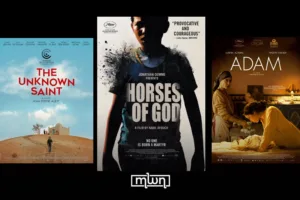
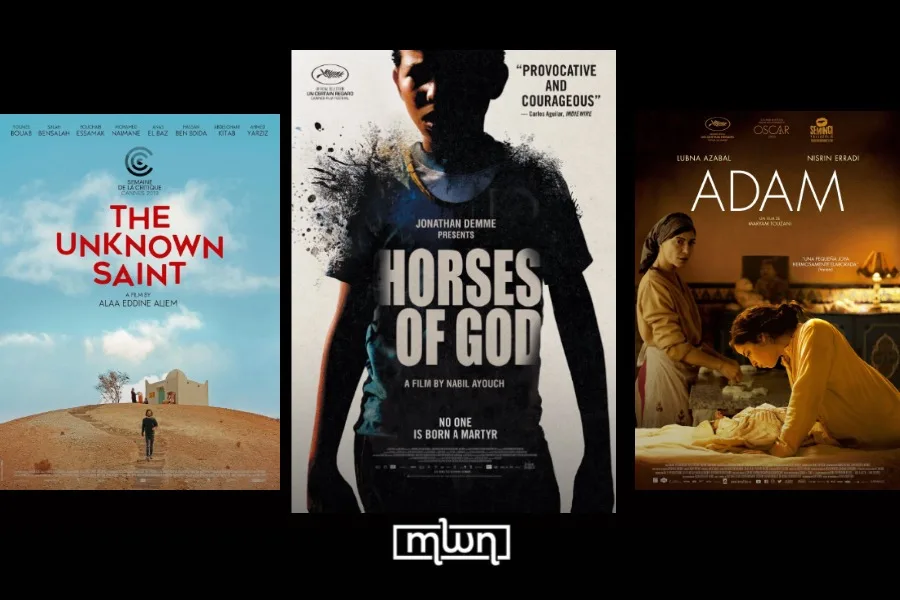
Horses of God (2012)
Directed by Nabil Ayouch, “Horses of God” is one of the most powerful films in contemporary Moroccan cinema.
Set in Casablanca’s Sidi Moumen neighbourhood, the story of “Horses of God” follows a young man growing up in an environment shaped by poverty, frustration, and limited opportunities.
Alongside his friends, he joins a radical movement and prepares his suicide attack in Casablanca.
The film does not only tell a story about radicalization, it sparks a discussion about social inequality and the subaltern of Moroccan society.
“Horses of God” became popular thanks to its human approach. Its characters are ordinary young people with dreams, lives, and fears before being headlines.
The Unknown Saint (2019)
A different version of Morocco is presented in Alaa Edddine Aljem’s “The Unknown Saint.” Full of social satire and comedy, the film follows an ex-convict who returns to a deserted village looking to recover stolen money he had hidden there.
To his surprise, the place where his treasure is hidden has transformed into a saint’s shrine.
The film uses absurd humor to explore society’s hypocrisies. It explores concepts of faith, superstition, and community.
Headbang Lullaby (2017)
Hicham Lasri’s “Headbang Lullaby” is one of the most unconventional Moroccan films. Set in the 1980s, one of Morocco’s most politically tense periods, it mixes comedy, surrealism, and historical reflection.
Set in Casablanca, June 11, 1986, World Cup day. After yet another mistake, an embittered cop, Daoud, is sent by his displeased superiors to spend a day on a bridge between two warring neighborhoods, to protect the passage of the royal motorcade.
The film does not follow traditional storytelling rules. Instead, it creates a strange and chaotic world that reflects the fear and confusion of an era marked by censorship.
Adam (2019)
“Adam” is a film that represents the quieter side of Moroccans’ everyday life. Directed by Maryam Touzani, the movie revolves around two women whose lives intersect.
It is a film made by women for women. Adam explores themes of motherhood, loneliness, solidarity and social expectations.
The film stands out because of its sensitivity; while it does not focus on large political issues, it pays attention to women’s lived experiences and private emotions which are often overlooked.
Casanegra (2008)
“Casanegra” is a staple in Moroccan cinema. Nour-Eddine Lakhmari captures the hopes and frustration of the youth of Casablanca.
Following two friends trying to escape poverty and build a better life for different reasons. The film includes Casablanca as a character not only a city; it plays a huge role in the survival of the two young men.
“Casanegra” is a raw depiction of urban life among poor and middle classes that is why it became one of the most defining Moroccan films of this generation.
The Blind Orchestra (2015)
“The Blind Orchestra” follows a folk band that pretends to be blind to perform at gender-segregated events. The leader’s son Mimou falls in love with a maid, struggles at school, and hides his failure by faking his grades.
His lie reflects the wider political deception and repression of 1970s Morocco.
Mohamed Mouftakir’s “The Blind Orchestra” shows how ordinary people were affected by politics in their day-to-day life.
My Father’s Coat (2005)
“My Father’s Coat” is a movie that every Moroccan has watched at least once in their lives. Directed by Aziz Salmy, the film focuses on personal relationships, greed, and to what end can money change a person.
The story follows a middle-class family suffering from the father’s stinginess, who does not leave his old coat, which brought suspicion to his wife and children about the mystery of this coat, which will be revealed at the end.
Razzia (2017)
Another film directed by Nabil Ayouch, “Razzia” follows many storylines across backgrounds, generations, and locations.
It manages to explore questions of identity, tradition, language, love, and much more. The film encapsulates the issues that shape Moroccan society today.
It is a portrait of all the different sides of Morocco that are constantly negotiating with each other.
These films are more than stories on a screen; they are windows into Morocco’s past, present, and future, showing a cinema that continues to question, remember, and reinvent itself.