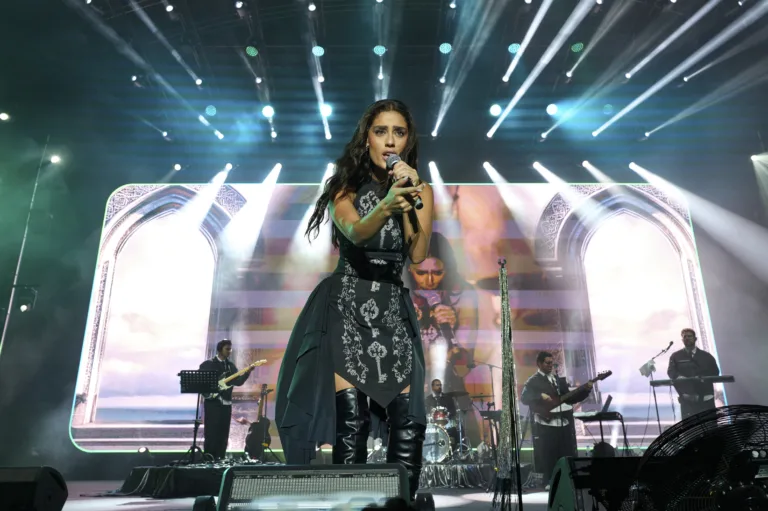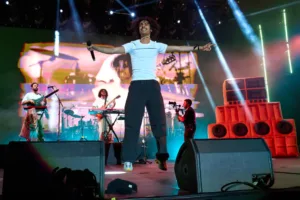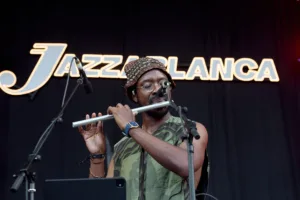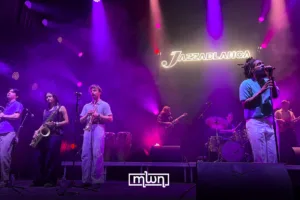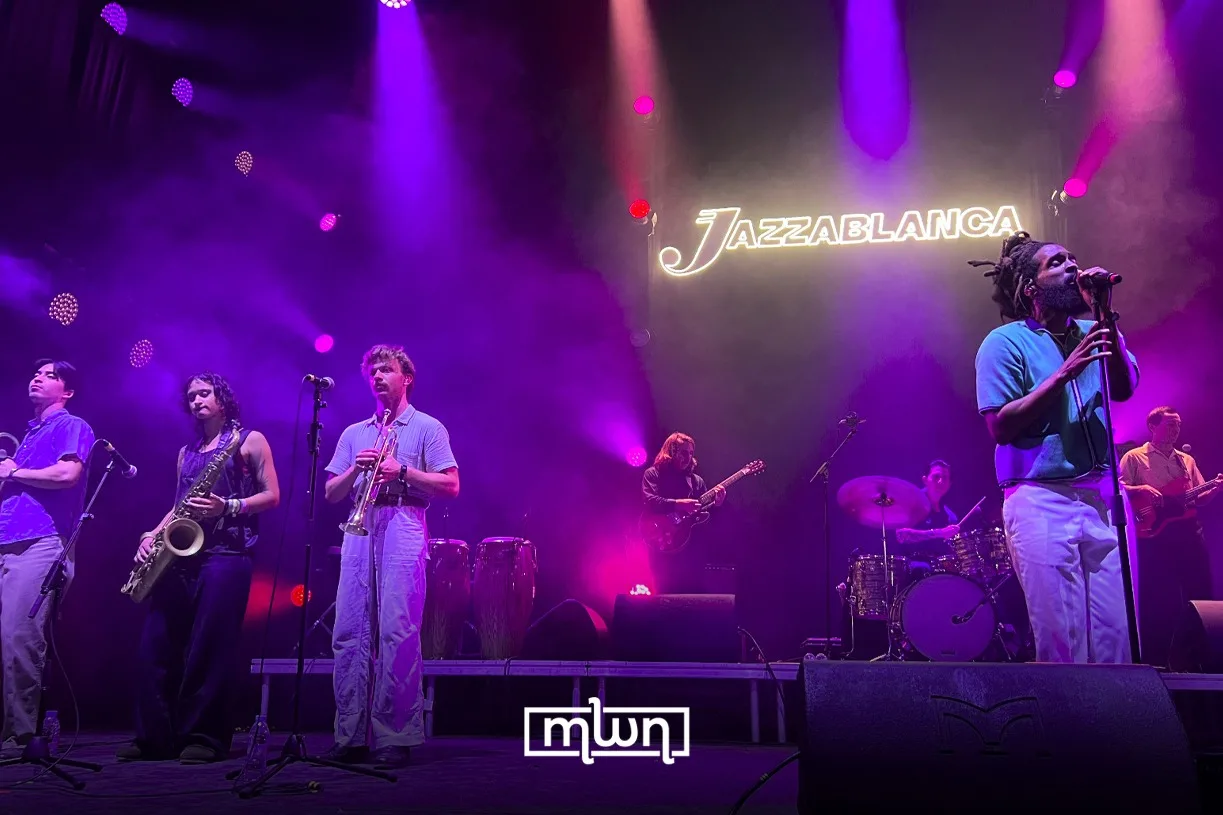
Fez — Thee Sacred Souls brought a soft glow to Jazzablanca last night, giving Scène 21 one of its most tender and quietly powerful performances of the week.
The San Diego trio performed on July 8 at Anfa Park, bringing a sound rooted in soul, R&B, oldies, and warm romantic groove. After a night that also moved through Cuban party energy, Moroccan urban sound, and jazz exploration, their set offered something more intimate: music built for swaying, feeling, and listening closely.
The band’s strength came from restraint. Instead of chasing spectacle, Thee Sacred Souls leaned into atmosphere. Their performance felt polished but never cold, stylish but never distant. Every detail served the mood, from the smooth vocals to the patient rhythms and the vintage warmth that shaped the stage.
A voice made for slow soul
At the center of the set was Josh Lane’s voice, carrying the songs with softness, control, and emotional clarity. His delivery had the ease of classic soul singers, but the performance never felt like imitation. It felt lived-in, sincere, and present.
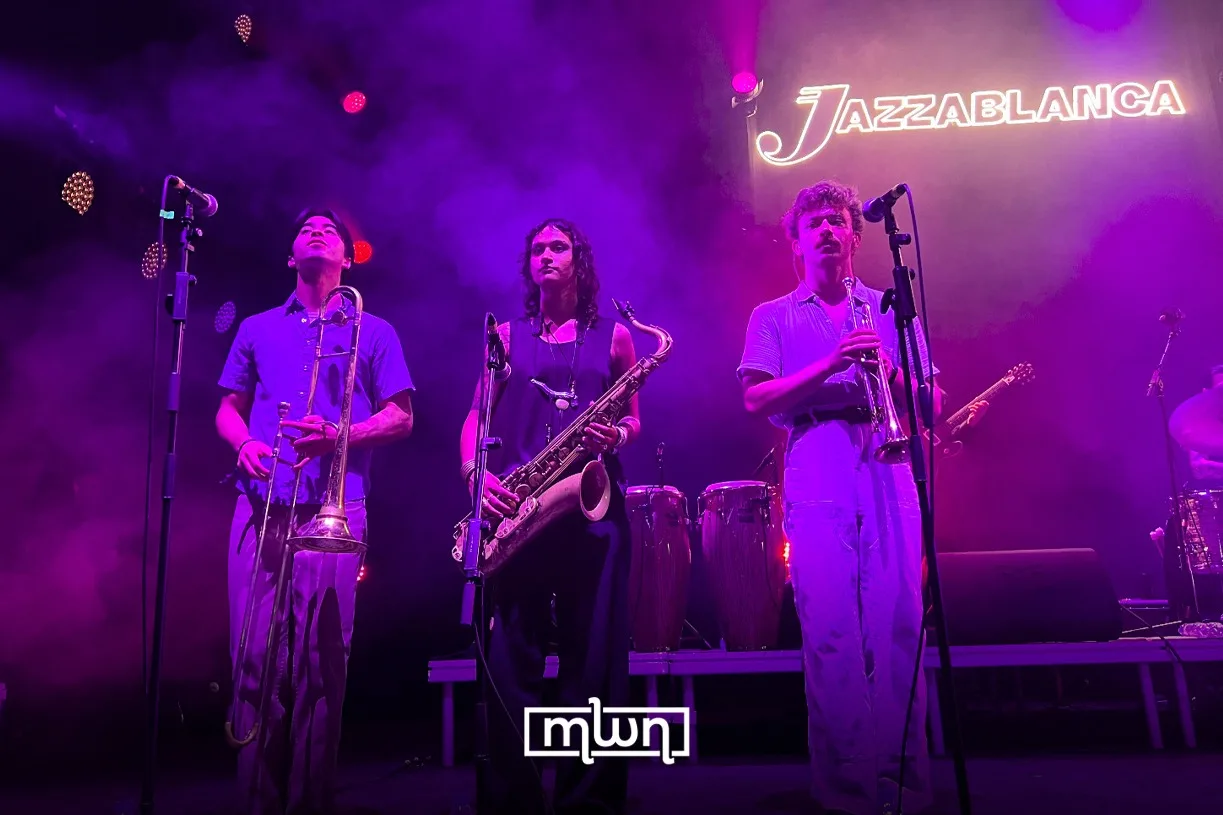
The band’s music draws on a familiar tradition, with echoes of Motown, Chicano soul, gospel, doo-wop, and Jamaican rocksteady running through its sound. Jazzablanca described their latest work, “Got A Story To Tell,” as 12 tracks of smooth, mature soul shaped by Motown heritage and rocksteady influence.
That identity came through strongly in Casablanca. The songs did not rush. They moved with patience, letting bass, drums, and voice create a slow groove that held the audience without needing to overwhelm it.
A set that breathed
Thee Sacred Souls’ performance stood out because it knew how much space to leave. The drums stayed steady, the bass carried warmth, and the vocals sat above the music with a gentle confidence.
Songs such as “Can I Call You Rose?,” “Easier Said Than Done,” and material from “Got A Story To Tell” reflect the emotional world the group has built, one where love, longing, and memory unfold through simple but deeply effective arrangements.
On Scène 21, that simplicity became a strength. The crowd did not need a loud peak every few minutes. The pleasure came from the groove settling in, from the harmonies landing cleanly, and from the feeling that the band trusted the music enough not to force it.
The performance gave Jazzablanca a different kind of high. It was not explosive like a rock set or restless like an improvisational jazz performance. It was warm, slow, and magnetic.
For Casablanca, Thee Sacred Souls offered a reminder that soul music still works best when it feels honest. Their Jazzablanca set did not try to modernize feeling into something flashy. It let the feeling breathe, and Scène 21 was better for it.