Fez — It started with a small stone on a street in Casablanca. Fahd Bouabdallah was around seven years old when a homeless man approached him and his neighborhood friends, picked up a pebble, closed his fist, and made it disappear.
The young boy was convinced he had witnessed someone with supernatural powers. For days, he tried to recreate the trick, repeatedly failing to make his own stones vanish.
Nearly two decades later, Bouabdallah, who performs under the stage name CORVIN, has earned the title of Associate of The Inner Magic Circle with Silver Star (AIMC), the highest distinction attainable through a performance examination at London’s historic Magic Circle.
The 26-year-old magician, who now lives in Toronto, received the recognition in September 2026, marking a major milestone in a career that began on the streets of Casablanca.
The childhood illusion that changed everything
Bouabdallah’s fascination with magic began around 2008, when afternoons after school usually meant playing soccer with neighborhood friends.
The mysterious disappearing pebble introduced him to something he could not explain. Soon afterward, he discovered the British television program “Tricky TV,” which revealed that magic was an art built on techniques anyone could learn.
The show also introduced him to The Magic Circle, the prestigious London-based society that has brought together professional and amateur magicians since 1905.
“To me, those magicians were a little like the Messis of magic,” Bouabdallah told Lifestyle magazine, recalling how he admired the society’s members without imagining he might one day join them.
His path toward professional magic, however, involved several detours.
He briefly worked in a call center, hoping to discover whether corporate life suited him. It did not take long to realize that he wanted something different.
He eventually moved to Marrakech to pursue magic professionally, meeting fellow performers who helped him develop his technical skills and artistic identity.
His early experiences included a free performance at a festival in El Jadida, where he entertained audiences with close-up card tricks.
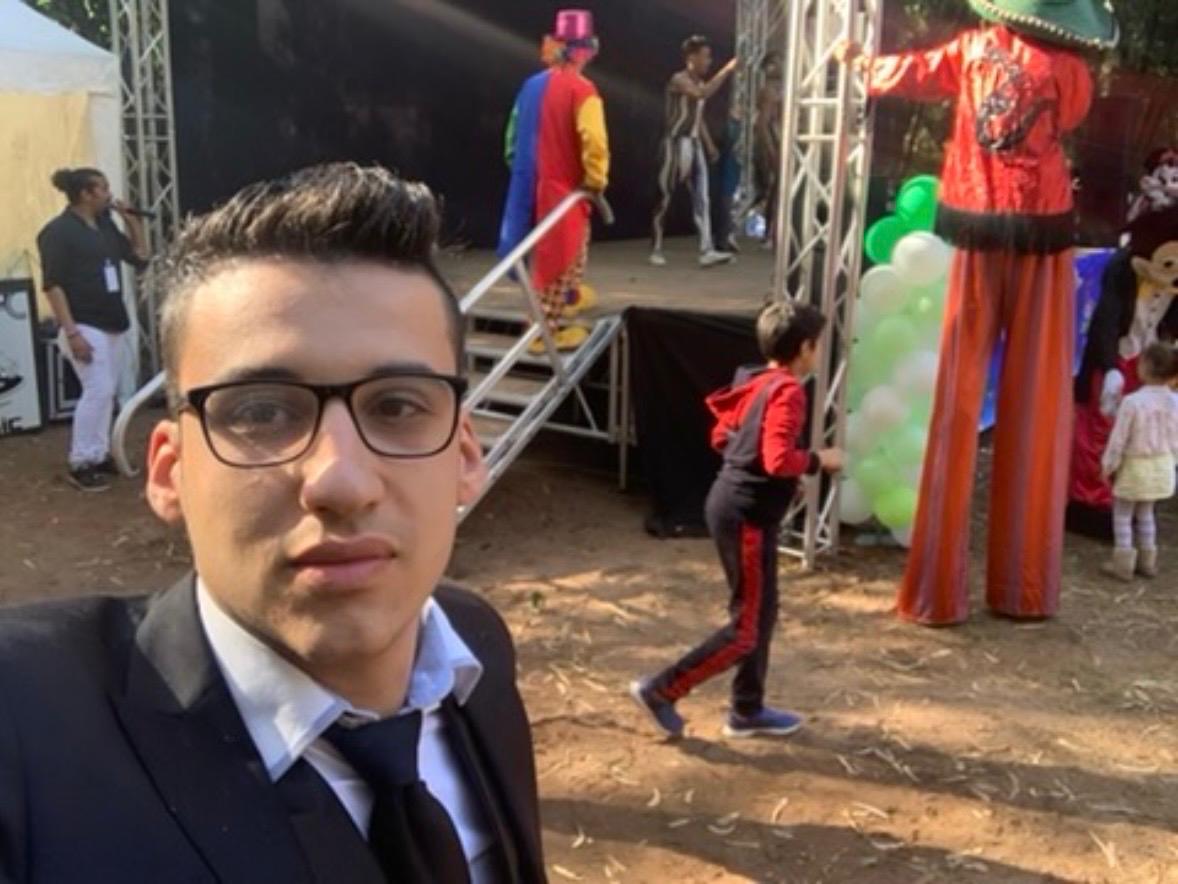
In 2019, he secured his first paid engagement at an event for Cosumar, where he met Moroccan magicians who would become longtime friends and collaborators.
Among them was Simo Outouf, whose encouragement would later prove important during Bouabdallah’s preparation for The Magic Circle examination.
Finding a stage in Toronto
In October 2023, Bouabdallah moved to Toronto at 23, drawn by the Canadian city’s multicultural character and the freedom he associated with its diverse communities.
Having traveled through Europe and performed in Morocco, he found Toronto particularly welcoming to his ambitions.
What surprised him most was how well his Moroccan experience had prepared him for professional magic in Canada.

He explained that Moroccan magicians often develop strong technical abilities despite limited access to specialized equipment and resources.
They also encounter cultural misconceptions surrounding their profession.
“In Morocco, some people still confuse stage magic with black magic, or consider it haram,” he told Lifestyle magazine.
This meant learning not only how to perform illusions but also how to explain his craft, reassure audiences, and earn their trust.
In Toronto, he found that audiences generally approached magic as entertainment, making it easier to establish himself professionally.
Today, CORVIN performs at private celebrations, weddings, corporate events, and family gatherings throughout Toronto and the surrounding region.
His artistic identity also reflects his international ambitions.
The name CORVIN draws inspiration from Matthias Corvinus, the former king of Hungary, and pays an indirect tribute to legendary illusionist Harry Houdini, who was also born in Hungary.

“I’m Moroccan, and I’m proud of it. But when I step onstage, I don’t want people to see a Moroccan, Arab, or European magician first. I simply want them to see a magician,” he explained.
Ten minutes that changed his career
Bouabdallah’s greatest professional recognition came through a performance that challenged conventional advice about structuring magic routines.
Magicians generally recommend limiting the number of props during short performances to avoid interrupting the flow of a show.
For his Magic Circle examination, however, Bouabdallah decided to use five different types of props in just ten minutes.
Many experienced magicians advised against the idea, warning that constantly switching equipment could undermine his performance.
But Bouabdallah saw an opportunity.
“The real problem isn’t the number of objects you use. It’s the transitions between them,” he explained.
He developed a routine called “Magician vs Cheater,” in which a magician faces an increasingly skeptical opponent.
Whenever the magician performs a trick, the cheater accuses him of using a particular technique and challenges him to repeat the illusion under different conditions.
The performance moves between cups, coins, rope, cards, and other objects, using the unfolding confrontation to justify each transition.
The concept drew directly from Bouabdallah’s experiences with Moroccan audiences, who would sometimes challenge him to perform tricks without particular props or methods.
“I simply turned those objections into an actual show,” he said.
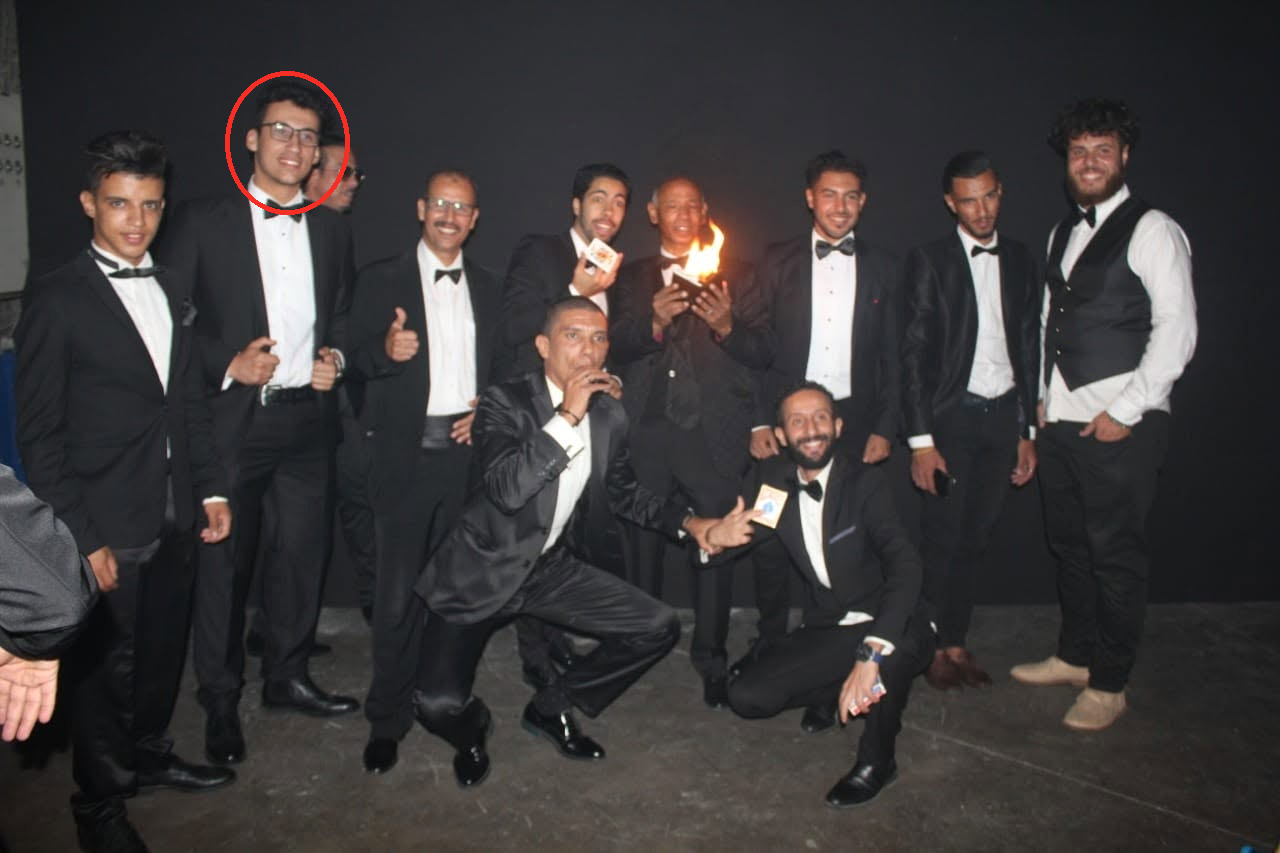
With encouragement from Simo Outouf and other experienced performers, Bouabdallah refined the routine despite lingering doubts about whether the examination judges would appreciate his unusual approach.
According to The Magic Circle’s guidelines, candidates must demonstrate exceptional technical and presentation skills to earn the AIMC distinction.
The Silver Star recognizes performance proficiency at that level, while the society reserves its highest membership grade, Member of The Inner Magic Circle, for appointments made by its president.
When Bouabdallah learned that he had earned the Silver Star, his reaction was immediate.
“I put my computer aside and shouted with joy!” he recalled.
Beyond the recognition, the result confirmed something more personal: his unconventional idea had worked.
A wider ambition for Moroccan magic
Although Bouabdallah now performs internationally, he remains concerned about the opportunities available to magicians in Morocco.
He believes the country has considerable artistic talent but lacks the professional infrastructure that could help performers develop their careers.
Limited access to specialized magic stores, professional competitions, and international networks often forces Moroccan artists to improvise.
Yet he considers that challenge a source of creativity.
“When you don’t have access to everything, you have to become creative,” he said.

He also believes Moroccan social traditions offer performers a particular advantage, especially when it comes to humor, conversation, and audience interaction.
For Bouabdallah, the greater challenge involves changing public perceptions of magic as an artistic discipline.
He hopes Morocco will eventually develop more professional events, competitions, and opportunities for magicians to exchange knowledge.
His Magic Circle distinction has already helped him build relationships with international performers and organizations, connections he hopes to use to support other Moroccan magicians.
He wants to help aspiring performers understand the society’s admission requirements, find professional mentors, and prepare for examinations.
The next illusion
Bouabdallah has another ambition: competing at the FISM World Championships of Magic and attempting to win.
He acknowledges the difficulty of competing at that level but believes his growing international experience could help him pursue the challenge.
Closer to home, he hopes to strengthen Morocco’s magic community through mentorship, collaboration, and greater visibility for emerging performers.
Despite the recognition and professional progress, the same curiosity that captivated him as a child continues to drive his work.
“What fascinates me is that magicians’ creativity seems to have no limits,” he told Lifestyle magazine.
He particularly enjoys watching adults briefly abandon their usual seriousness when confronted with an illusion they cannot explain.
For a few seconds, the questions and responsibilities of everyday life give way to the same wonder that once captivated a young boy watching a pebble disappear in Casablanca.
“Magicians aren’t just artists who perform tricks. In a way, we’re also guardians of an art that has existed for centuries,” he reflected.
For CORVIN, the Silver Star represents more than personal recognition. It offers an opportunity to introduce Moroccan talent to international audiences while helping preserve an art form that continues to inspire curiosity across generations.