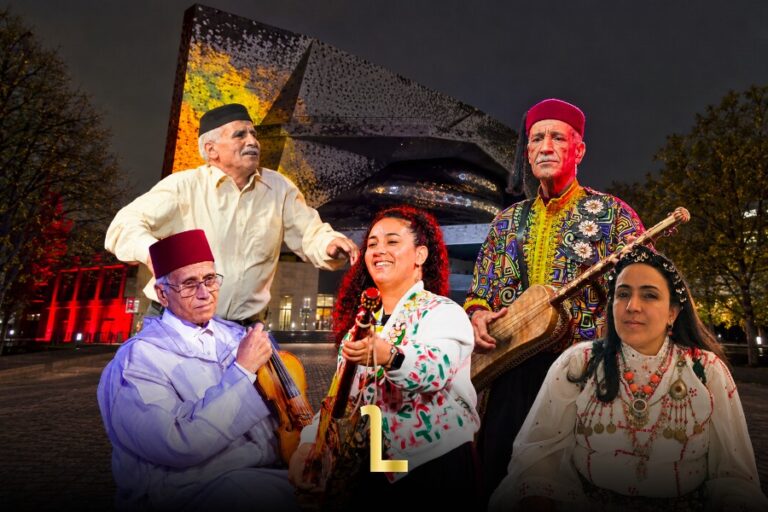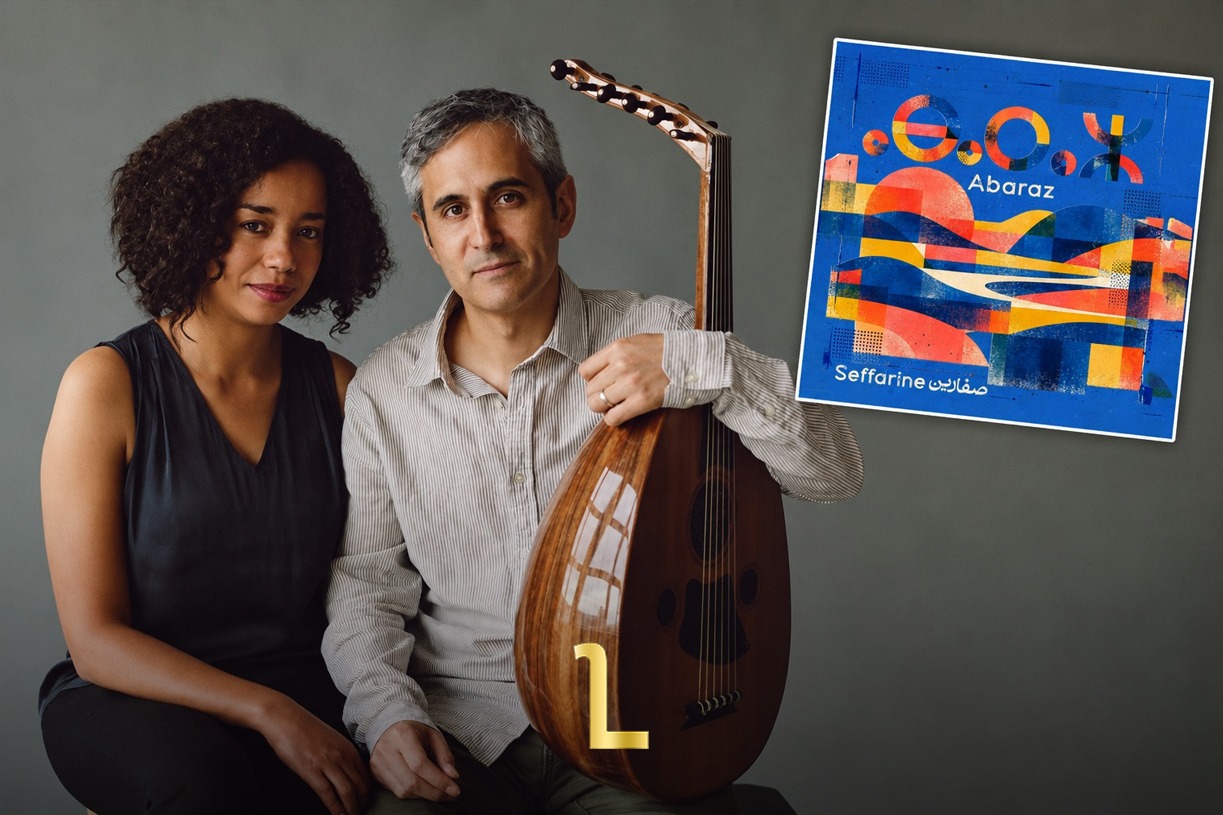
Fez — Moroccan singer Lamiae Naki has released “Abaraz,” a new album with her US-based ensemble Seffarine, drawing inspiration from the music, landscapes, and cultural traditions of southern Morocco.
Released on October 16, the eight-track album grew out of a musical residency in M’hamid El Ghizlane, an oasis town on the edge of the Sahara Desert.
The project brings together Moroccan Arabic vocals, Andalusian flamenco guitar, Gnawa percussion, and musical traditions from across West Africa.
Naki, who was born in Fez, founded Seffarine with American guitarist and multi-instrumentalist Nat Hulskamp. The Portland-based ensemble takes its name from Seffarine Square, the historic metalworking district in Fez known for the rhythmic sounds of its artisans.
A musical journey to southern Morocco
For “Abaraz,” Naki and Hulskamp turned their attention toward Morocco’s southern musical heritage and the cultural connections historically formed across the Sahara.
Their residency in M’hamid El Ghizlane introduced them to musicians preserving local traditions in a region facing increasing environmental pressures.
In an October 12 interview with Oregon Public Broadcasting, the musicians discussed how the project developed through encounters with local performers and their interest in the relationship between music, migration, and climate change.
The region’s changing environment became an important theme in the recording process.
As advancing sand and water scarcity place pressure on oasis communities, the musicians explored how environmental change affects people’s sense of belonging and their connections with home.
The album’s songs reflect these experiences while drawing on the musical exchanges that have connected Morocco with the wider African continent for centuries.
Connecting Gnawa, flamenco, and West African music
“Abaraz” opens with “Ah Ya Liyyam,” a song that brings Naki’s Darija vocals together with Hulskamp’s guitar and traditional percussion.
The recording features Malian musician Daouda Mangara on the djeli ngoni, alongside Gnawa qraqeb, calabash percussion, and instruments associated with Moroccan musical traditions.
Seffarine introduced the track ahead of the album’s release, highlighting its roots in the musical exchanges of southern Morocco.
Other songs broaden the album’s influences.
“Shahal Min Merrah” explores themes of displacement and environmental loss, while “Al Qithara” features Spanish flamenco guitarist Antonio Rey.
The project also includes contributions from musicians working across Moroccan, Spanish, and West African traditions, creating an album that moves between different regional sounds.
For Seffarine, the approach builds on its earlier work connecting Moroccan and Andalusian musical heritage.
Its previous album, “De Fez a Jerez,” explored those connections through collaborations with Spanish flamenco performers.
With “Abaraz,” the group expands that musical conversation southward, tracing connections across the Sahara rather than concentrating exclusively on the Mediterranean.
The album is now available through the group’s official website, which also features its music and accompanying videos.
Beyond the release itself, “Abaraz” offers a portrait of Moroccan cultural traditions shaped by exchange, movement, and the musicians who continue to preserve them.