Melting Antarctic Ice Reveals Remains of Dennis Bell, a Researcher Missing for 66 Years
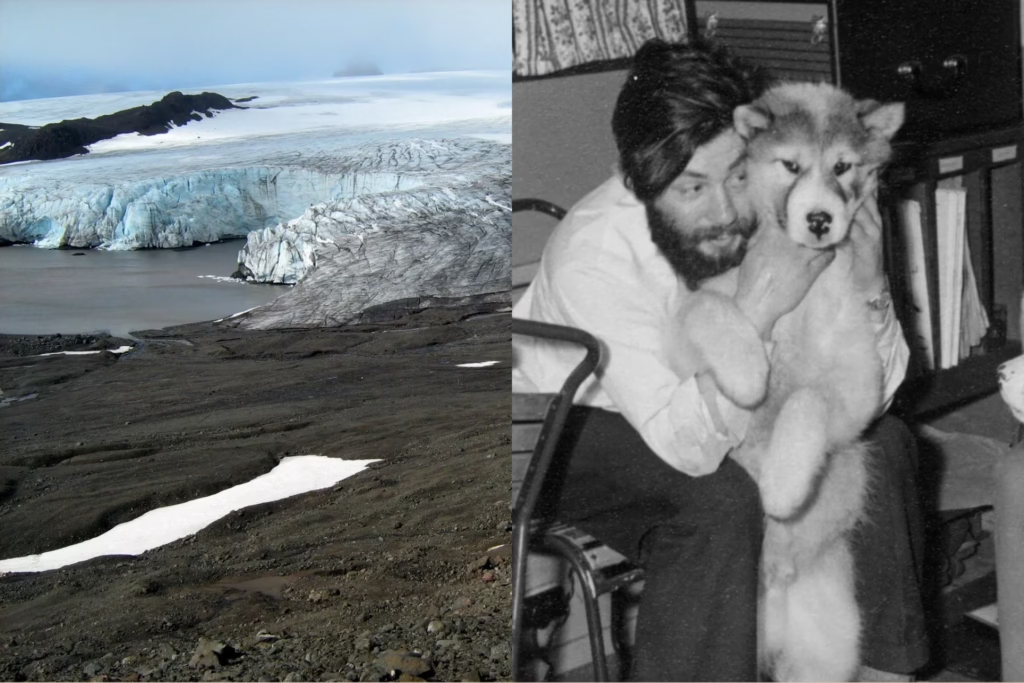
In the frozen silence of Antarctica, a decades-old mystery has finally surfaced, one that lay hidden beneath ice and snow for more than half a century.
Did You Know? Earth Has a Heartbeat and Scientists Are Still Figuring It Out

What if Earth isn’t just alive with life, but alive itself? Fez – We tend to think of Earth as solid, stable, and predictable, until it reminds us it’s anything but. Spinning through space at breakneck speed, our planet isn’t just floating aimlessly in the dark. It’s alive with movement, rhythm, and strange patterns that scientists are still trying to decode. One of those patterns? A mysterious tremor, pulsing deep within the Earth every 26 seconds. It’s so subtle you won’t feel it under your feet, but it’s been picked up by seismic sensors around the world since at least the 1960s. No one really knows where it comes from, or why it’s so regular. Some researchers think it might be tied to ocean waves hitting the coast of the Gulf of Guinea. Others suspect it’s something deeper, more geological. Either way, it’s weirdly precise. A literal tick of the planet. But that’s just one piece of the story. Because recently, the idea of Earth having a “heartbeat” got a whole new, and strangely beautiful, interpretation. A video posted by the X account “Heritage Matters” run by a self-described “history nerd and magician”, has been making the rounds. It uses satellite data that tracks global photosynthesis (yes, plants breathing) to create a time-lapse animation of Earth’s living surface. The result? A pulsing, almost breathing motion that mirrors the natural ebb and flow of plant life throughout the year. Add in the sound of wind and a slow, steady heartbeat, and suddenly Earth doesn’t feel like a rock, it feels like an organism. Now, is this scientifically Earth’s literal heartbeat? No. But as a metaphor, it’s hard to beat. Every tree that grows, every leaf that photosynthesizes, every wave that crashes, it all adds up to a planet that’s in constant motion. Breathing in, breathing out. The blend of science and poetic interpretation is where this gets interesting. Satellite data is real. Plant rhythms are measurable. And our collective reaction to it; fascination, awe, even emotion, says a lot about how disconnected we sometimes are from the natural systems that keep everything alive. Earth isn’t just our home. It’s doing something all the time. And sometimes, if we really pay attention, it almost feels like it’s speaking to us. Read also: Moroccan Artist Younes Megri Returns to Cinema with ‘Shadows of Caravaggio’
A Quantum Breakthrough: Scientists Turn Light Into a Supersolid

Researchers achieve a historic feat in condensed matter physics, opening new frontiers in quantum science. Fez — In a groundbreaking scientific achievement, researchers have successfully transformed light into a supersolid, a bizarre state of matter that behaves as both a solid and a fluid. This discovery, conducted by scientists at Italy’s National Research Council (CNR), marks a major step forward in understanding quantum mechanics and its potential applications in advanced technology. Supersolids are materials that exhibit the structural properties of solids while flowing without resistance, much like a superfluid. Until now, such states of matter had only been observed in ultracold atomic gases under extreme laboratory conditions. However, this latest research introduces a novel approach. Instead of using ultracold atoms, scientists directed laser light onto a semiconductor material, aluminum gallium arsenide, that was engineered with a precise ridge pattern. This interaction produced polariton quasiparticles, which ultimately arranged themselves into a supersolid state. As reported in New Scientist, Dimitrios Trypogeorgos, one of the lead researchers, described the breakthrough with excitement: “We actually made light into a solid. That’s pretty awesome.” The achievement builds on earlier work by CNR scientist Daniele Sanvitto, who demonstrated more than a decade ago that light could behave like a fluid. This new research takes it a step further, proving that light can also form a stable supersolid structure. However, creating the supersolid was only half the challenge. The team needed to gather concrete evidence that their new material displayed both solid-like rigidity and fluid-like zero viscosity. Their experimental validation sets a precedent in condensed matter physics, expanding the possibilities for manipulating light in quantum systems. Physicists like Alberto Bramati from Sorbonne University in France see this study as a significant contribution to understanding quantum phase transitions, the process by which materials change states at a quantum level. While the experiment successfully demonstrated the formation of a supersolid, further research is required to analyze its full range of properties. Scientists believe this discovery could lead to innovative applications in quantum computing, optical technologies, and next-generation materials science. Trypogeorgos expressed optimism about future studies, suggesting that light-based supersolids may be easier to control than those formed from ultracold atoms, potentially leading to unexpected breakthroughs in quantum physics. As research progresses, this milestone serves as a reminder that the quantum world continues to reveal new surprises, reshaping our understanding of reality at the most fundamental level. Read also: Ftour Solidaire: How One Meal Brought Hope to Hundreds of Children